
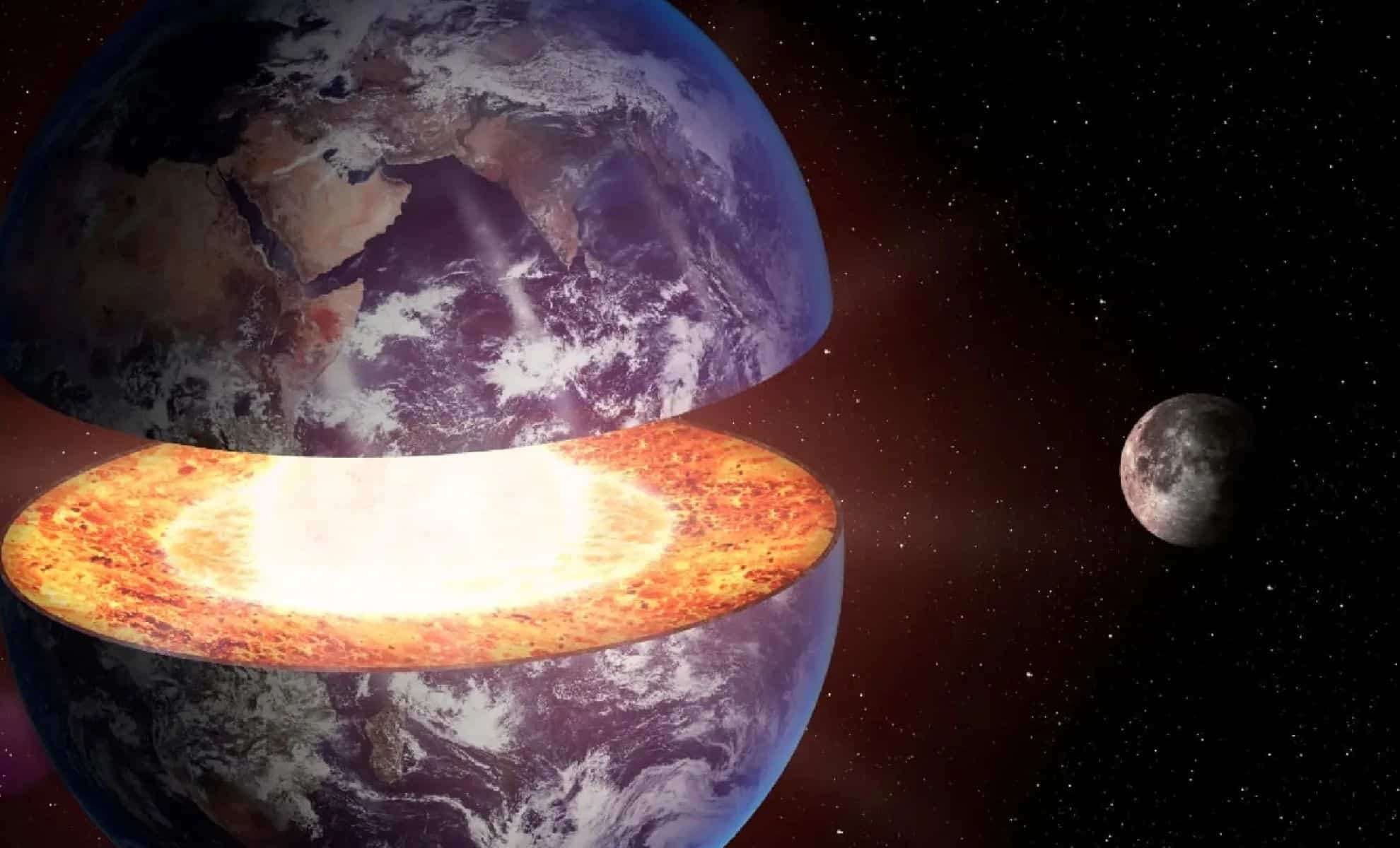
The core at the center of our planet has long fascinated researchers, who recognize its critical influence on Earth’s overall dynamics. New findings reveal that this inner region isn’t just altering its rotational speed but is also experiencing nuanced changes in its shape. This discovery offers promising clues into the mechanisms governing Earth’s magnetic field and even variations in day length.
By analyzing patterns in seismic waves generated by recurring earthquakes, scientists have detected fluctuations in how these waves travel through the inner core. Such variations hint that the core’s structure itself may be continuously evolving, shedding light on deeper planetary processes tied to Earth’s interior.
Unveiling the Inner Core’s Mysteries
Primarily made up of solid iron and nickel, Earth’s inner core remains one of the most elusive components of our planet’s anatomy. It is already known to rotate at a speed slightly faster than the planet’s surface, a phenomenon referred to as "superrotation." Yet, recent work spearheaded by geophysicist John Vidale from the University of Southern California shows the core’s transformations involve more than just rotation rate changes. The shape of the core appears to be fluctuating, based on the subtle differences observed in seismic wave behavior.

"Discovering an entirely new type of internal process is exciting," Vidale shared with ScienceAlert. "Our goal now is to verify these findings and refine our existing models to better represent the core’s dynamics." These shape shifts may be linked to complex movements within the core’s various layers, including convective currents or interactions with dense materials found deeper within Earth.
Seismic waves, generated by earthquakes, have long served as critical tools to probe beneath Earth’s surface. As these waves journey through different layers, their speed and direction change depending on the material they encounter. Examining these changes enables researchers to infer details about the composition and behavior of Earth’s deep interior.
Seismic Insights into Core Morphology
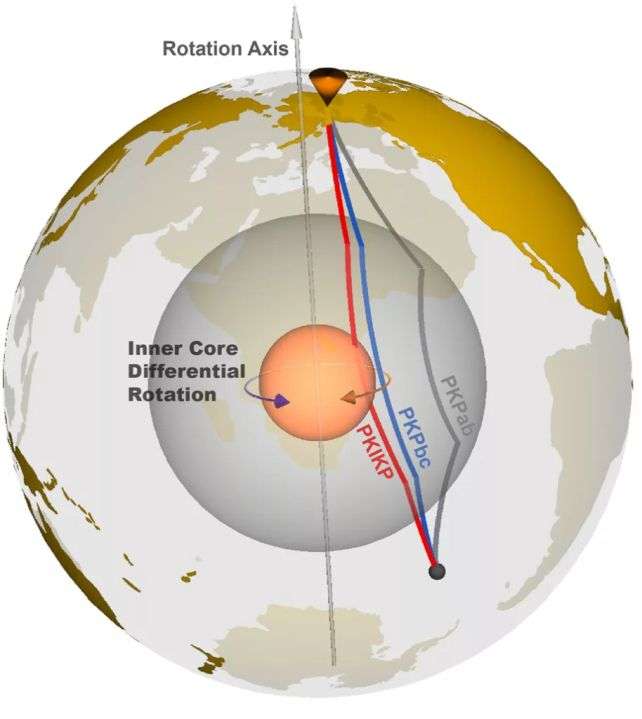
Vidale’s group evaluated data from 168 pairs of repeating earthquakes, which are seismic events nearly identical in origin and characteristics. This approach enables them to detect even subtle alterations in seismic wave travel times, pinpointing changes linked uniquely to interior variations rather than external influences. By examining seismic waves passing through the inner core during periods when it maintained a consistent position, they excluded rotation speed fluctuations as the cause, instead uncovering shifts in the core’s shape.
"Each earthquake pair features nearly identical source properties," Vidale explained. "This lets us attribute any detected wave travel differences to variations along their internal paths." This technique has unlocked novel perspectives on the dynamic behavior of Earth’s deepest layers, revealing phenomena never before documented.
The detected shape changes may involve subtle undulations, such as depressions or elevations along the boundary where the inner and outer core meet. These features could be influenced by the vigorous motion of convective currents in the outer core, which also help generate Earth’s magnetic field.

Investigating Causes Behind Shape Fluctuations
The roots of the inner core’s shape alterations remain an active area of research, but plausible explanations are emerging. One possibility involves large structures called low-shear-velocity provinces (LLSVPs), which are dense regions located deep within the mantle and thought to influence core behavior. These heavy areas might exert forces that deform the inner core over time.
"Though not definitive, small-scale dips and rises at the inner core boundary likely respond to the energetic flow within the outer core," Vidale stated. "While changes originating solely inside the inner core cannot be ruled out, it’s less probable given that the core’s surface is near its melting temperature and may behave plastically." Such softness could allow the core to readily deform under mechanical stresses caused by movements in surrounding layers or dense material pockets.
Although the full picture is still unfolding, this research paves the way for improved understanding of how inner core dynamics influence Earth's broader geological and magnetic systems, including variations in the length of a day and geomagnetic field strength.
This article draws from the original publication. Content may have been adapted for clarity and brevity. For additional details, please refer to the original source.
- Categories:
- News










0 comments
Sign in to Comment