
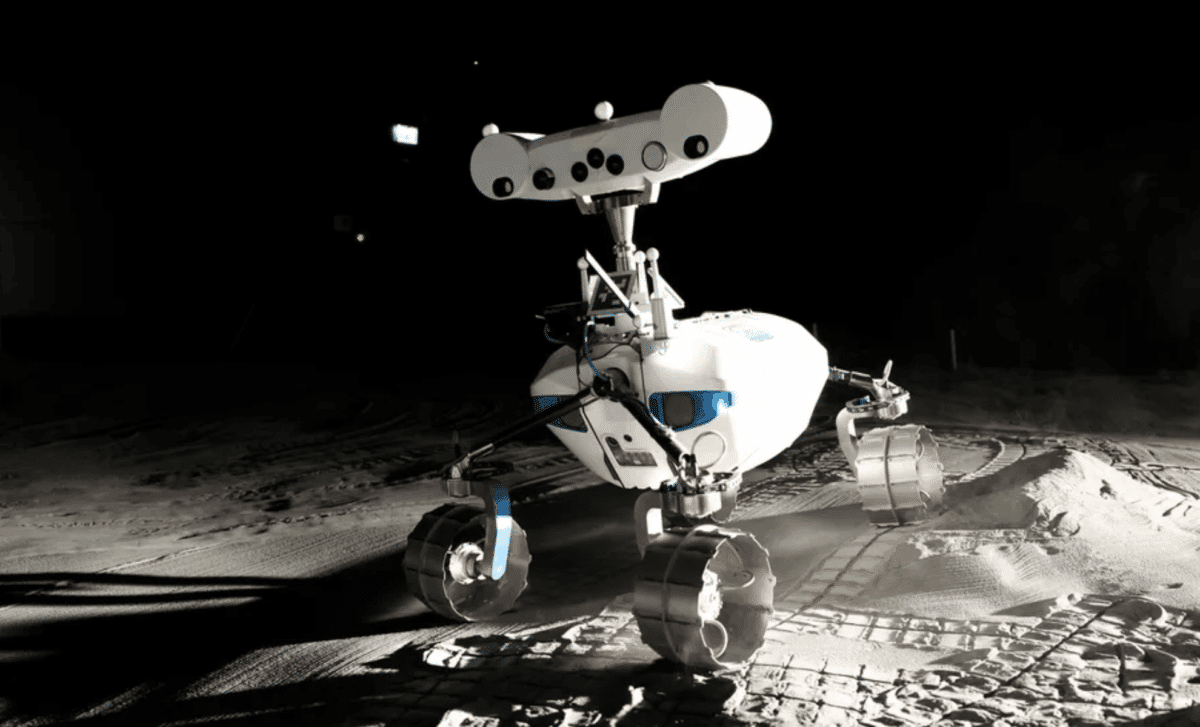
In a cutting-edge project, two rovers developed by the DLR (Germany’s space agency) are experimenting with innovative techniques to discover water ice on the lunar surface. Employing state-of-the-art lasers and imaging systems, these rovers aim to refine methods that could support upcoming Artemis missions by pinpointing vital water resources on the Moon. Success in these trials could transform future approaches to exploring our celestial neighbor.
Innovative Technologies Powering DLR’s Lunar Rovers
Surveying the Moon’s terrain presents significant challenges, especially when searching for scarce water ice deposits. For DLR, creating effective tools to locate these resources is crucial for enabling astronauts to thrive on the Moon with less dependence on Earth. Central to the rovers’ technology suite are advanced cameras combined with ground-penetrating radar systems.
LRU1, which resembles the robot WALL-E, is outfitted with a panoramic camera that captures images in both visible and non-visible wavelengths. This capability allows it to detect minerals and hidden ice beneath the Moon’s surface, a key advantage for identifying water sources in future lunar explorations. Additionally, LRU1 tows a device equipped with ground-penetrating radar to map underground features, providing a comprehensive understanding of subsurface conditions.

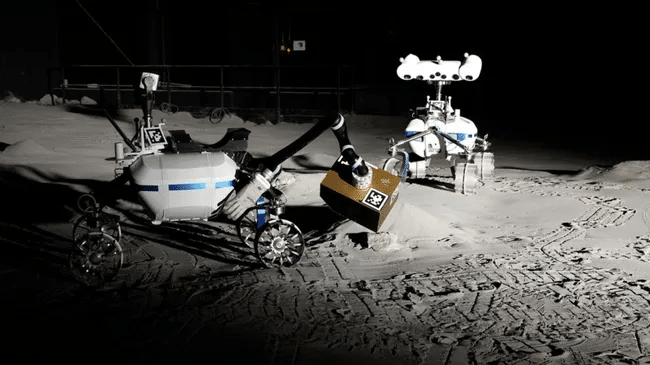
Complementing LRU1, the LRU2 rover utilizes a laser-mounted arm to perform spectroscopic analysis on rock samples. By examining the light emitted from these samples, scientists can determine their chemical makeup. This targeted approach helps identify rocks that may contain traces of water.
“The combination of different methods offers advantages in learning about the surface and what lies below,” said Nicole Schmitz, a planetary scientist at the DLR Institute of Space Research.
These varied instruments are expected to be pivotal when the rovers are ultimately deployed on the Moon itself.
The Vital Role of Lunar Water Ice for Upcoming Space Missions
Moon water ice serves more than just scientific interest; it is an essential element for sustained human presence on the lunar surface. Transporting water from Earth is logistically complex and expensive, but if astronauts can harvest ice deposits locally, it could supply crucial drinking water, oxygen, and fuel.
The DLR team’s experiment at the Luna Analog Facility in Cologne, Germany, plays a key role in tackling this challenge. The rovers’ detection efforts contribute to a larger initiative for mapping water-rich zones on the Moon capable of supporting long-term habitats. This innovation will be fundamental for reducing reliance on Earth during missions like NASA’s Artemis program.
Beyond sustaining astronauts’ needs, lunar water ice can also be processed to produce rocket fuel by splitting it into hydrogen and oxygen, vital components for propulsion. Knowing where ice reserves are buried would allow refueling operations that facilitate deeper space travel without continuous Earth-based supply.
Simulating Lunar Extremes: Preparing DLR’s Rovers for Real Missions
Emulating the Moon’s severe conditions is a challenging task. DLR’s rovers undergo testing in an environment designed to mimic lunar features including rugged landscapes, thick regolith, and extreme temperature variations. These trials ensure the rovers are capable of maneuvering through tough conditions.
A particularly difficult part of the simulation involved detecting subterranean water beneath a fabricated lava cave. Using an array of seismic sensors and artificial "moonquakes," the rovers successfully identified water hidden underground. This technique might be employed on the Moon to find natural water deposits based on seismic activity.
According to DLR, “this mission, which was the first prove-out of the tech provided by several participating entities, showed all the elements are working.”
Encouraged by these outcomes, researchers are now advancing the technology for deployment in actual lunar exploration missions.
- Categories:
- News




0 comments
Sign in to Comment