
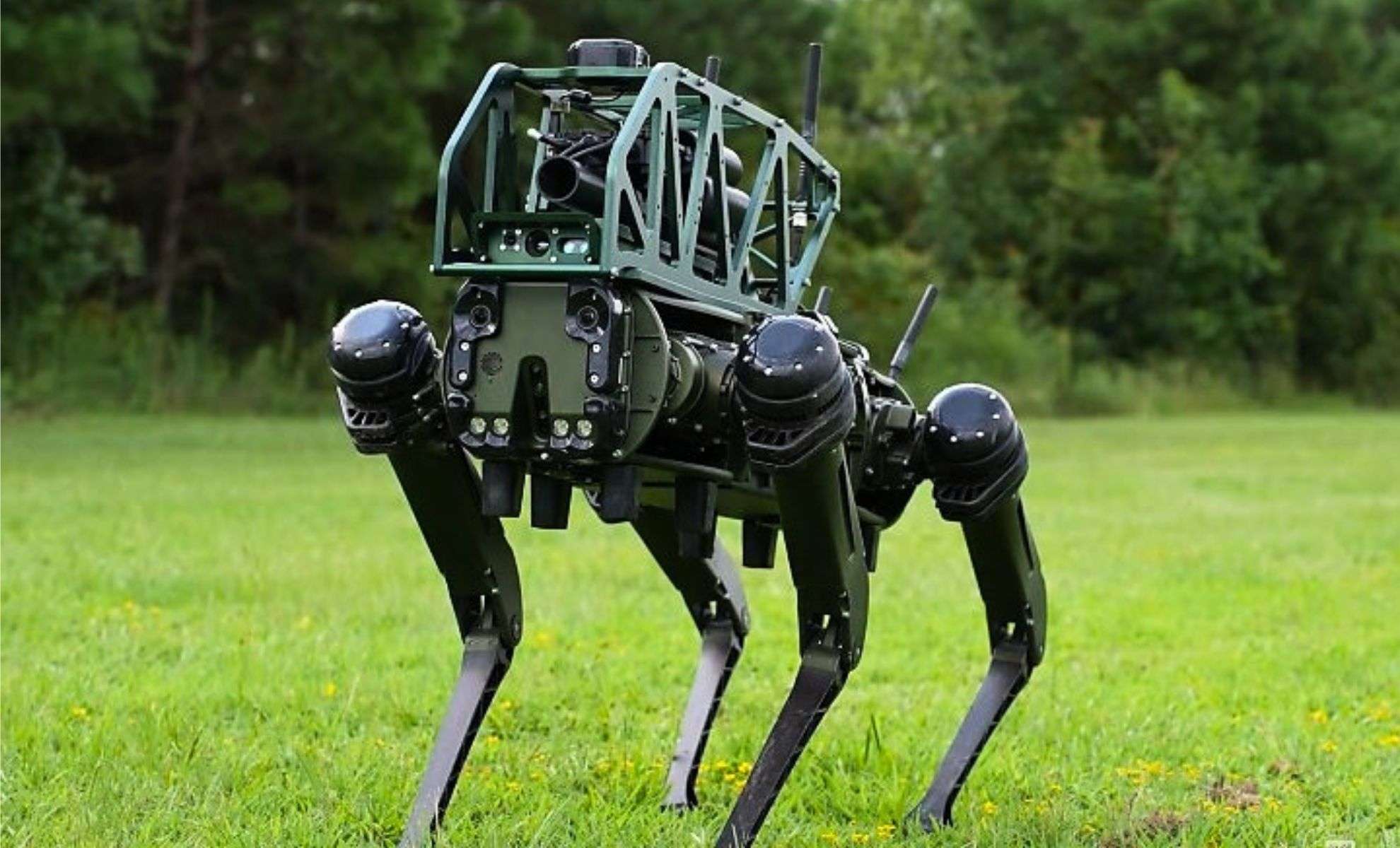
At the recent Association of the United States Army (AUSA) exhibition in Washington, a futuristic machine quietly captured attention. CODiAQ—short for Controller-Operated Direct-Action Quadruped—is a compact robotic dog standing under a meter tall, developed by Australian company Skyborne Technologies. Unlike conventional robotic platforms, CODiAQ is armed with a grenade launcher and powered by artificial intelligence.
The robot’s sleek yet robust frame supports four nimble legs, while its central compartment can be fitted with either a HAVOC 40mm grenade launcher or the proprietary CHAOS 12-gauge shotgun module. A soldier uses a rugged tablet to remotely command the robot, sending it to scout locations, acquire targets, and engage threats in all environmental conditions. Beyond its weaponry, CODiAQ distinguishes itself through its autonomous operations, rapid deployment capability, and the strategic potential of deploying a weaponized robotic quadruped now undergoing evaluation by the U.S. Department of Defense.
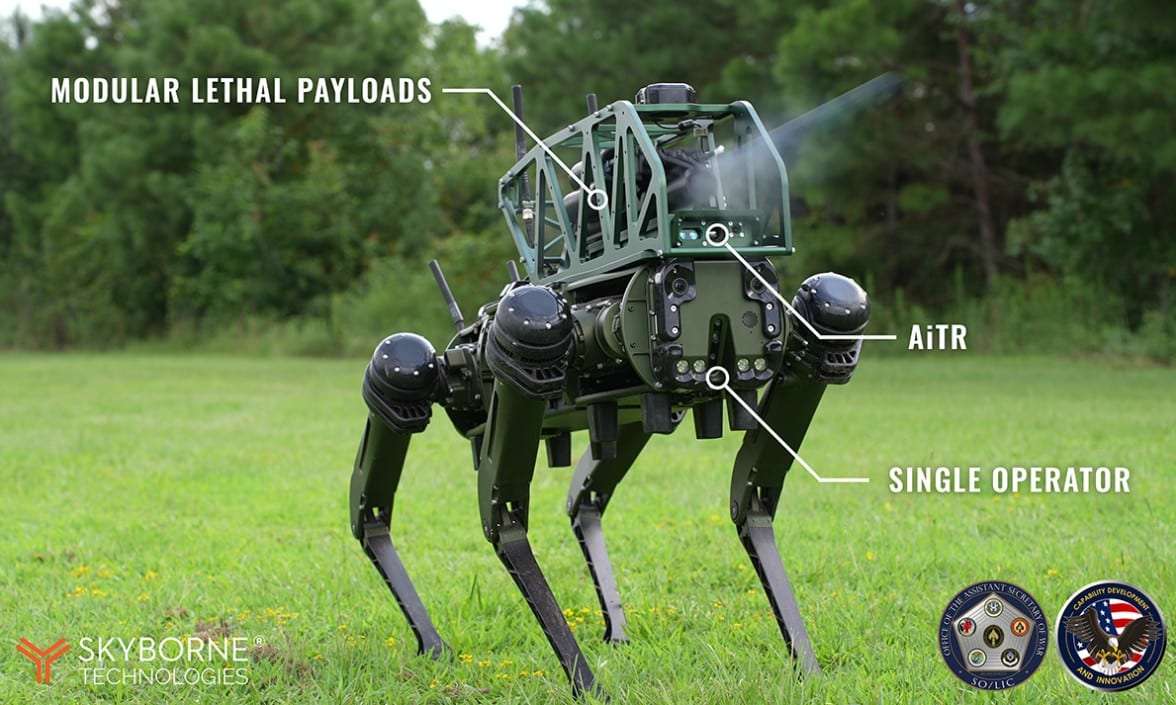
Robotic systems have been part of military operations for years—from bomb disposal units in Iraq to unarmed robotic pack mules developed by DARPA—but CODiAQ represents a new class. It is among the first four-legged robots specifically engineered for lethal close combat scenarios. Unlike experimental models, this device is actively being sent to the field for trials and deployment with U.S. military and allied forces, adaptable across environments ranging from urban warfare zones to thick woodland, according to Skyborne’s official announcement.

Adaptive Weaponry and Intelligent Targeting
CODiAQ’s standout feature is its modular weapon system. The robot’s interchangeable armaments are paired with the integrated Targeting Electronics Optical Box (TEOB), housing sensors and processors that detect, track, and rank threats dynamically. This AI-powered targeting adjusts to changing visibility, distance, and movement, enabling effective operation in both bright and low-light conditions.
Unlike a mere proof of concept, the CODiAQ offers practical battlefield utility. Training for soldiers to operate it takes only a few days. Its under-ten-minute deployment time and IP-67 rating ensure resilience against dust, moisture, and mud, which is critical for unpredictable mission conditions. Capable of managing stairs, debris, and firing while maintaining stability, it is engineered as a genuine force multiplier rather than a technological novelty.
This technology promises to improve operational tactics significantly. One operator, stationed safely away from frontline combat, can remotely deploy a robot capable of forcefully breaching entrances or neutralizing threats prior to a team’s entry. This innovation could reshape urban close-quarters combat, where maneuverability is critical and human risk needs to be minimized.
The Rising Role of Robotic Warfare
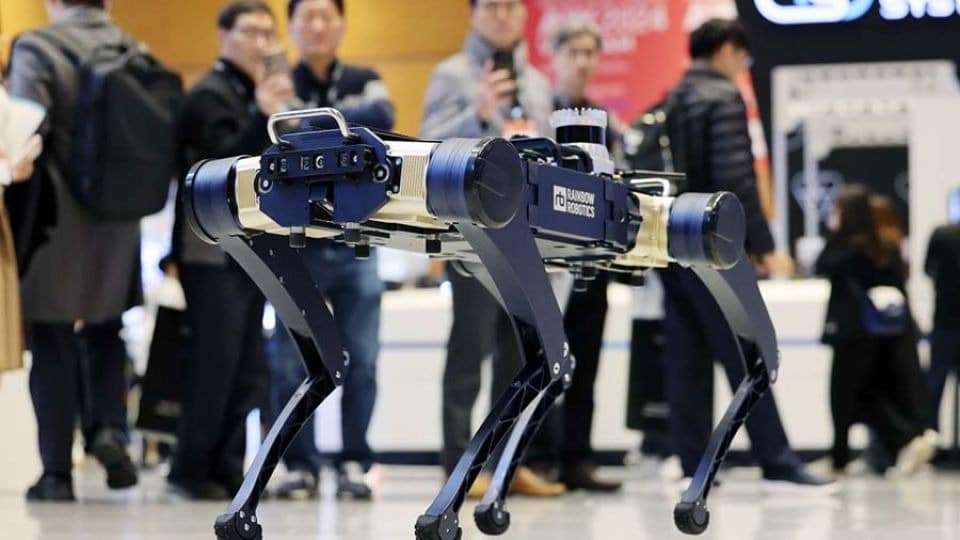
The emergence of robotic combat units is gaining traction worldwide. In 2023, South Korea’s defense forces experimented with quadruped robots in subterranean mission simulations related to potential conflicts with North Korea. Israel has integrated robotic dogs with UAVs to enhance urban monitoring. In Ukraine, both sides have increased deployment of ground drones, some adapted to carry explosives or deliver medical assistance across contested zones.
The U.S. military, already extensive users of unmanned ground vehicles for logistics and bomb disposal, is now exploring CODiAQ-style units for use in irregular warfare. This initiative is supported by the Office of the Assistant Secretary of Defense for Special Operations and Low-Intensity Conflict, which specializes in asymmetrical warfare technologies.
However, these developments prompt ethical and legal dilemmas. Who determines when an autonomous weapon deploys lethal force? How are accountability and rules of engagement enforced if the robot wrongly targets civilians? The United Nations Convention on Certain Conventional Weapons has yet to issue firm guidelines for AI-operated lethal systems, leaving experts in ethics and military law urging prudence.
Transitioning from Development to Deployment
Skyborne Technologies, a relatively new company, gained recognition for its Cerberus MI, a lightweight combat drone. CODiAQ represents its boldest venture, aiming to create a network of coordinated land and air robotic systems sharing targeting information and synchronizing actions.
“This is a major advancement in autonomous ground platforms for irregular combat,” explained Adrian Dudok, Skyborne’s engineering lead. “We strive to provide warriors with tools that combine lethality, dependability, and simplicity.” The system’s accelerated rollout and innovative design suggest it may soon move beyond experimental stages.
Sources like Interesting Engineering report that CODiAQ is already undergoing field trials with U.S. military partners, including special operations units. These tests will assess not only its technical effectiveness but also its compatibility with existing command infrastructures and impact on mission outcomes.
- Categories:
- News













0 comments
Sign in to Comment