
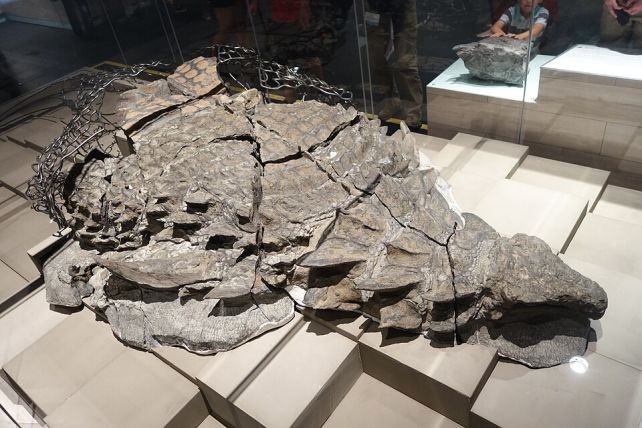
Recent fossil discoveries reveal a dinosaur from 165 million years ago that sported unusually long spikes fused to its bones, potentially representing one of the first tail weapons developed by dinosaurs.
This breakthrough is detailed in a recent publication in Nature, centering on fossils uncovered near Boulemane in central Morocco. These remains, now identified as belonging to the earliest known ankylosaur, imply that hallmark traits of this group—such as tail clubs and protective body armor—emerged far earlier than scientists once thought.
An Unprecedented Form of Dinosaur Armor
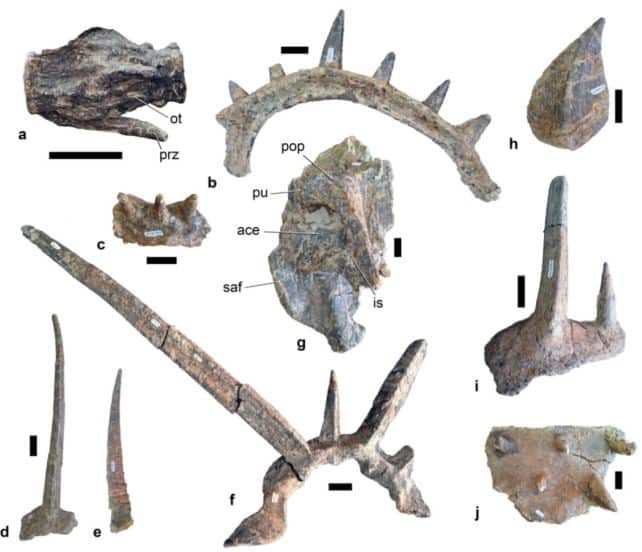
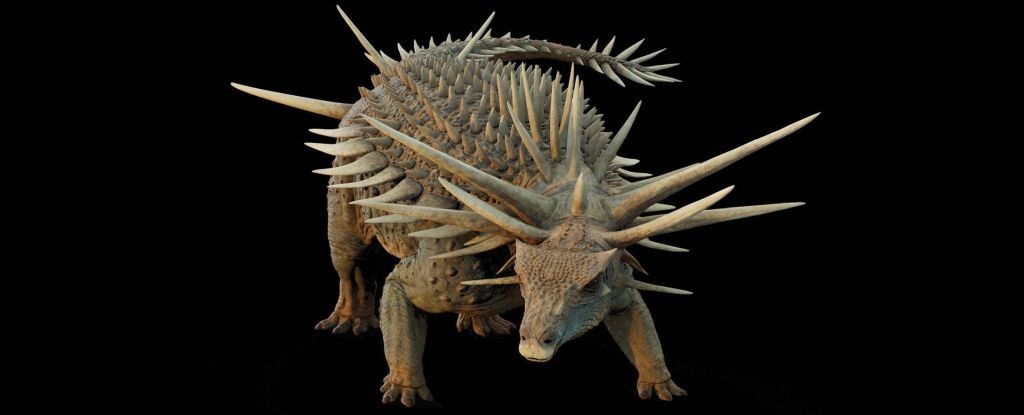
The skeletal structure of Spicomellus afer is exceptionally distinctive. Most notably, it features enormous, blade-like spikes that are not just attached to skin or muscle but are actually fused to the ribs. This extraordinary adaptation, verified through detailed fossil examinations, appears to be unique among vertebrates. Professor Susannah Maidment from London’s Natural History Museum, a co-author of the research, commented:

“To find such elaborate armor in an early ankylosaur changes our understanding of how these dinosaurs evolved. It shows just how significant Africa’s dinosaurs are, and how important it is to improve our understanding of them.”
These protective neck spikes, reaching up to 87 centimeters in length, likely formed a defensive collar extending around the animal’s neck in life. Additional armor components included prominent spikes rising above the hips, paired blade-shaped plates on the shoulders, and a generally widespread distribution of bony armor across the body.
The fusion of these spikes directly to the skeleton distinguishes Spicomellus from all subsequent ankylosaurs, which possessed more conventional armor that was not integrated with their bones.
Emergence of Tail Weaponry in Early Ankylosaurs
Although the tail’s tip was not recovered, some preserved tail vertebrae exhibit traits indicative of Spicomellus having an early version of a tail weapon. The study published in Nature notes that parts of the tail bones are fused into a stiff structure—a defining feature also seen in later ankylosaurs equipped with tail clubs. Professor Richard Butler from the University of Birmingham remarked:
“We just couldn’t believe how weird it was and how unlike any other dinosaur, or indeed any other animal we know of alive or extinct. It turns much of what we thought we knew about ankylosaurs and their evolution on its head and demonstrates just how much there still is to learn about dinosaurs”.
Previously, tail clubs were considered a feature exclusive to ankylosaurs from the Cretaceous period, which lived millions of years after Spicomellus. The precise function of this tail structure remains unclear due to incomplete preservation of fossils. Nevertheless, the fusion in the tail bones strongly supports the presence of an early form of tail weapon.
Groundbreaking Discovery for African Dinosaur Research
Driss Ouarhache from Université Sidi Mohamed Ben Abdellah, who led the excavation team in Morocco, emphasized:
“This study is helping to drive forward Moroccan science. We’ve never seen dinosaurs like this before, and there’s still a lot more this region has to offer.”
The fossils were carefully prepared and analyzed at the university's Department of Geology in Fez, utilizing equipment funded by the University of Birmingham’s international partnership. These vital specimens are now cataloged and preserved locally.
- Categories:
- Science












0 comments
Sign in to Comment