
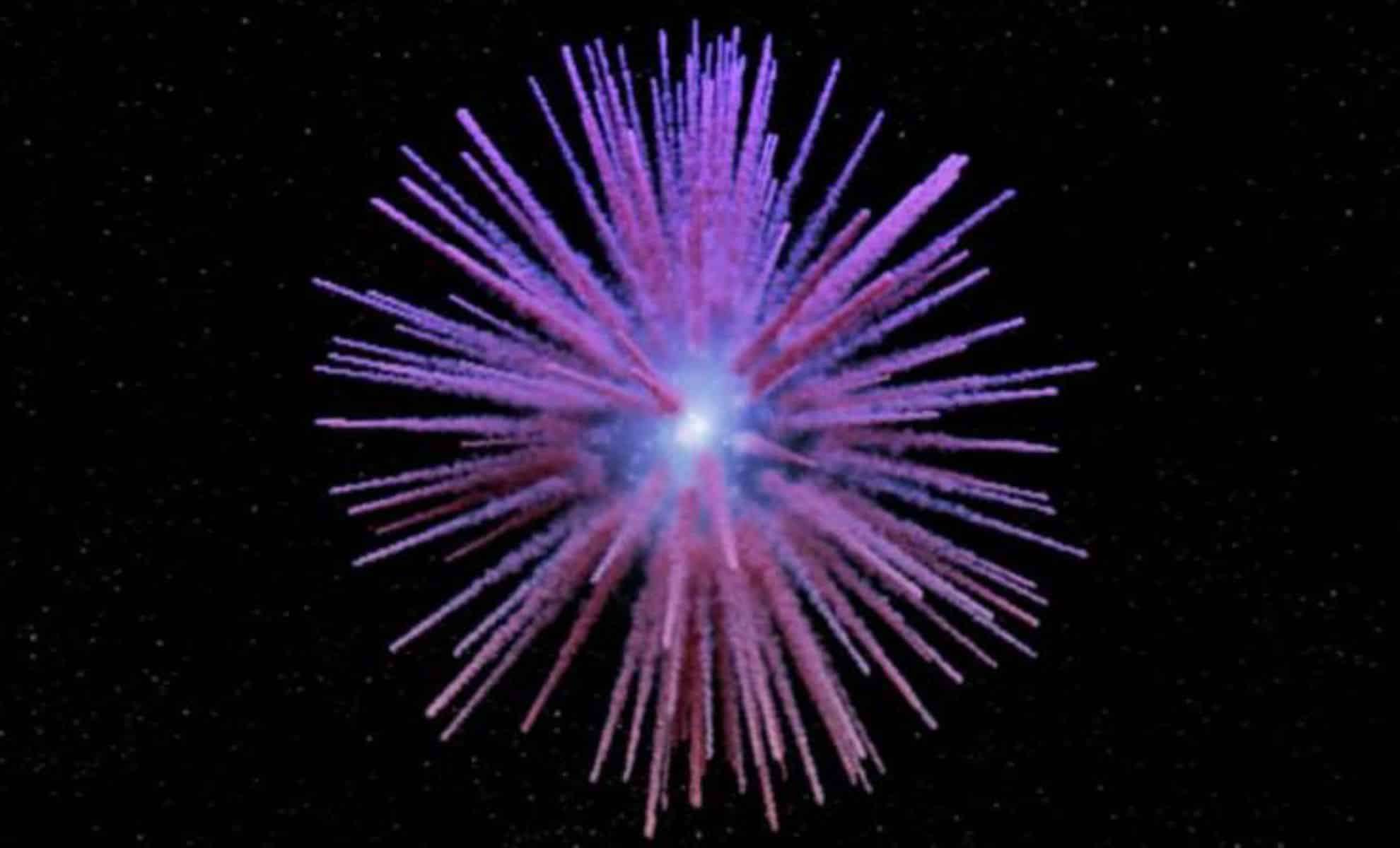
Researchers have made groundbreaking observations of the rare supernova remnant SN 1181, originating from an explosion in 1181 CE. Situated within the Pa 30 nebula, this remnant harbors a surviving “zombie star,” a white dwarf star partially left intact after an explosive event. This discovery offers vital clues into the nature of Type Iax supernovae, a seldom-seen category characterized by incomplete stellar destruction. The findings challenge existing supernova theories and deepen our understanding of stellar lifecycle processes.
Tracing the Legacy of SN 1181 and the Peculiar Pa 30 Nebula
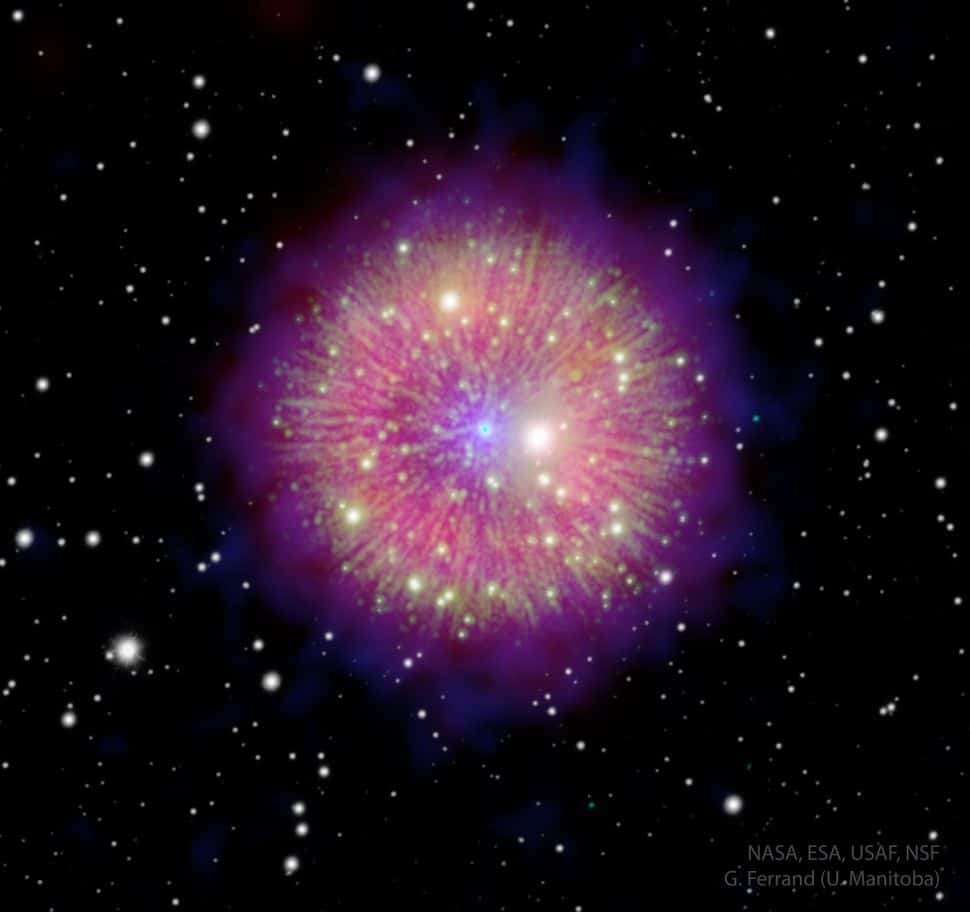
SN 1181 first captured the attention of astronomers in 1181 CE when Chinese and Japanese skywatchers recorded a “guest star” near the constellation Cassiopeia. This celestial event was visible for about half a year before vanishing, baffling scientists for centuries. The Pa 30 nebula was discovered in 2013 by amateur astronomer Dana Patchick and later linked to SN 1181 in 2021. Remarkable for its unusual form and connection to this historic supernova, Pa 30 was studied using the Keck Cosmic Web Imager (KCWI) at the W.M. Keck Observatory in Hawaii. Detailed analysis unveiled a dense network of sulfur-rich filaments encircling the central remnant star. Lead researcher Tim Cunningham, a NASA Hubble Fellow, highlighted that these filaments “have not been slowed down, or sped up, since the explosion,” enabling precise dating of the supernova to 1181 CE based on their velocity and trajectory.
The filamentary structures of Pa 30 create a pattern reminiscent of a “dandelion” around the core star, with material shooting outward at consistent speeds near 1,000 kilometers per second. This first-ever 3D visualization of the nebula reveals an asymmetric supernova explosion, which left an inner cavity surrounding the leftover star — a feature rarely seen in supernova remnants.

Understanding Type Iax Supernovae and Their Surviving Stars
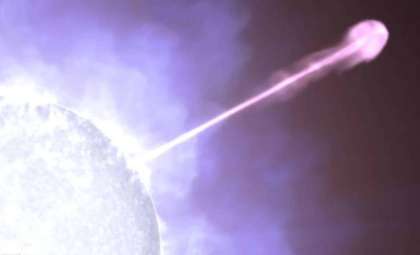
Type Iax supernovae, comprising roughly 5% of all Type Ia explosions, are distinct due to their incomplete detonation, leaving fragments of the original star behind. Unlike conventional supernovae that obliterate their progenitors, Type Iax events yield remnants like the powerful “zombie star” at Pa 30’s center. This surviving white dwarf boasts an exceptionally hot surface temperature of about 360,000 degrees Fahrenheit (200,000 degrees Celsius), resisting destruction from the initial blast. ISTA assistant professor Ilaria Caiazzo, co-author of the research, remarked, “Our first detailed 3D characterization of the velocity and spatial structure of a supernova remnant…raises new questions and sets new challenges for astronomers to tackle next.”
The intense heat and radiation from the Pa 30 remnant signal an ongoing energetic state, with stellar winds streaming at velocities up to 36 million miles per hour. This vigorous activity designates the star as an “undead” object, reigniting interest in how Type Iax supernovae operate. Unlike typical supernovae that mark a star’s demise, these partial explosions allow the star to persist, fueled through fusion with companion star material. This process creates markedly asymmetric remnants and preserves portions of the stellar core.
Keck Observatory’s Pivotal Role in Exploring Pa 30
Utilizing the advanced capabilities of the Keck Cosmic Web Imager (KCWI), scientists transformed Pa 30 into a dynamic, 3D visualization of expanding supernova debris. KCWI’s spectral mapping enabled precise measurement of filament velocities and spatial arrangement, allowing researchers to observe the remnant’s evolution like a cosmic event replayed in real time. Cunningham explained, “The ejected material has not been slowed down, or sped up,” which was a crucial factor in confirming the supernova’s historical timing.
The asymmetric filament arrangement in Pa 30 distinguishes it from typical supernova remnants, reflecting the uneven distribution of matter during the explosion. Additionally, the sharp inner void around the central star points to an incomplete shedding of material — characteristic of the partial supernova explosion that spared the “zombie” white dwarf.
- Categories:
- Astronomy ,
- News ,
- Science










0 comments
Sign in to Comment