
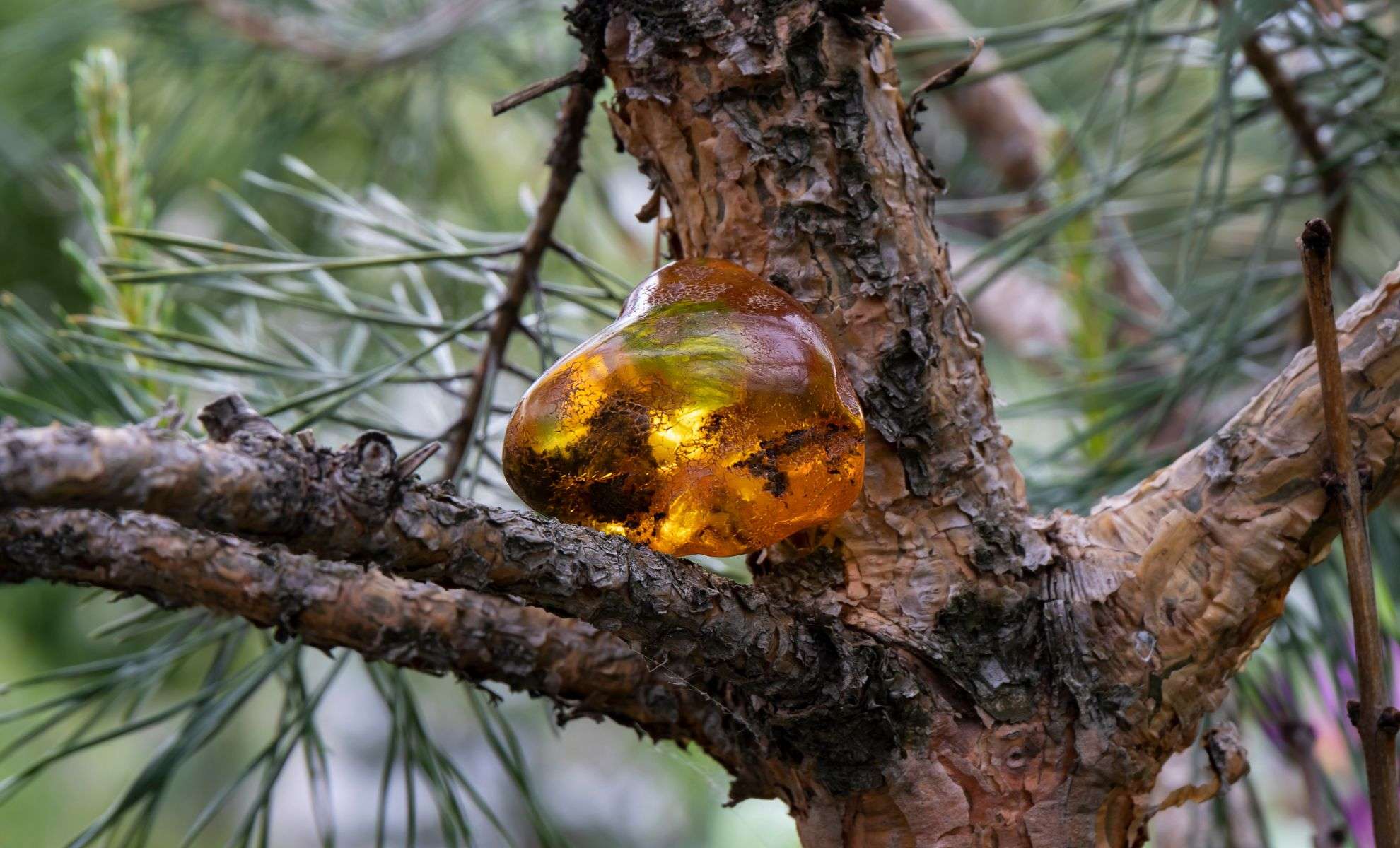
Scientists have uncovered a 99-million-year-old dinosaur tail fossil preserved within amber, a remarkable find that includes bones, soft tissue, and fully intact feathers. This is the first instance of a dinosaur skeleton fragment being found in such a pristine, three-dimensional state.
Rather than being excavated through traditional paleontological digs, the piece emerged from a market in northern Myanmar, where it was almost sold as a decorative trinket. This amber sample provides a unique and vivid insight into a feathered dinosaur from the late Cretaceous era.
Unexpected Market Discovery Leads to Scientific Breakthrough
The fossil was first noticed by Chinese paleontologist Xing Lida during a visit to an amber market near Myanmar's border with China. Vendors had mistaken the embedded remains for a plant inclusion and were offering it as ornamental amber.

“I realized that the content was a vertebrate, probably theropod, rather than any plant,” Xing told CNN, adding that the trader didn’t raise the price despite its scientific value.
Ryan McKellar, a paleontologist at the Royal Saskatchewan Museum and co-author of the study, described the find as extraordinary from the beginning.
“It’s a once in a lifetime find,” McKellar said. “The finest details are visible and in three dimensions.”
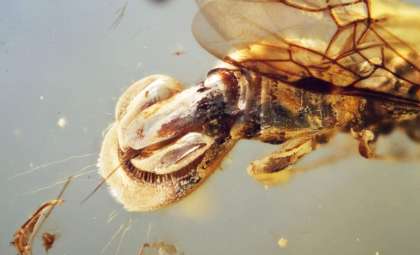
Although the amber weighs only 6.5 grams, it encloses remarkably preserved tail vertebrae and feathers from a small dinosaur that would have fit within a person’s hand when it was alive.
This Dinosaur Boasted Feathers, Not Scales
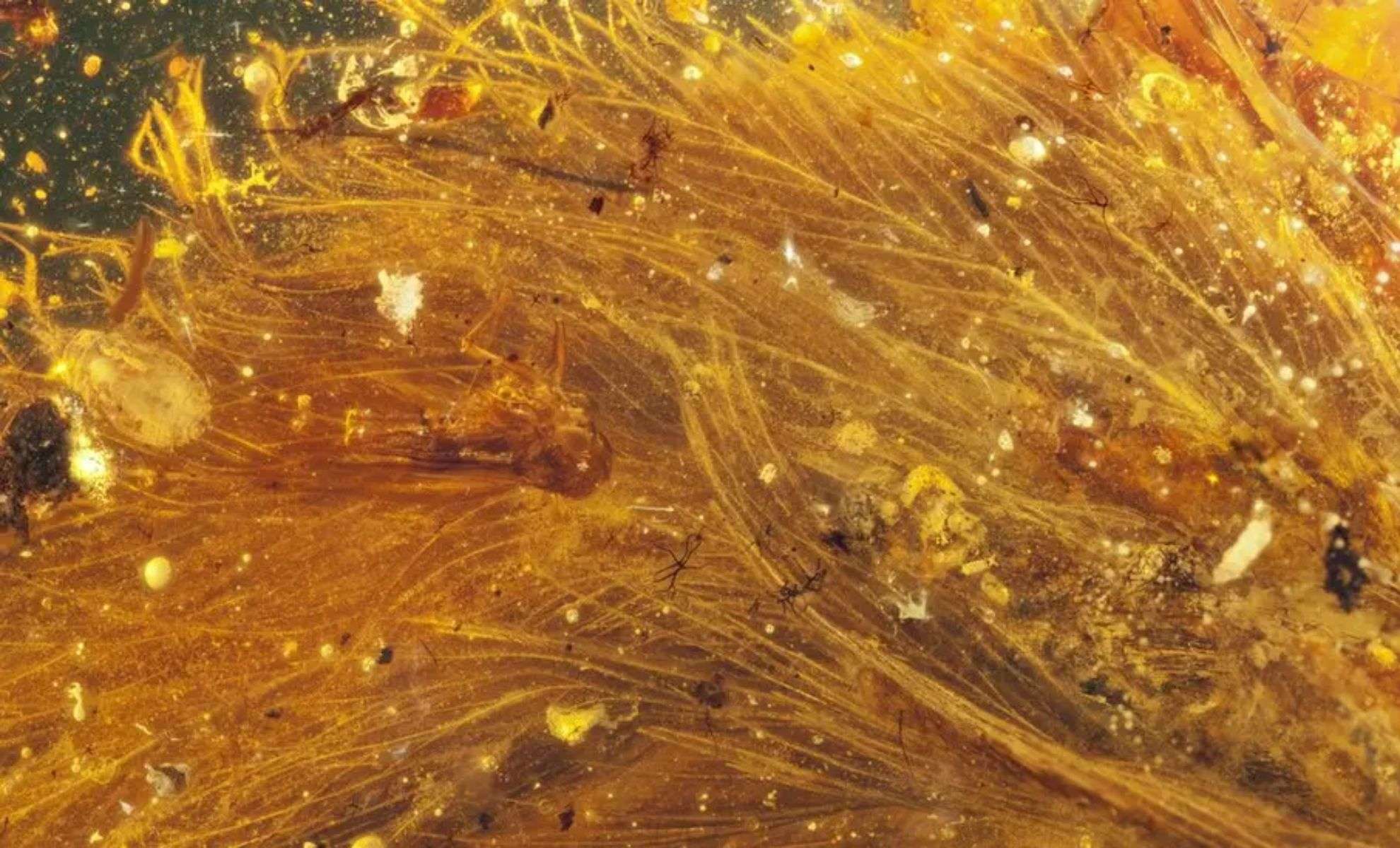
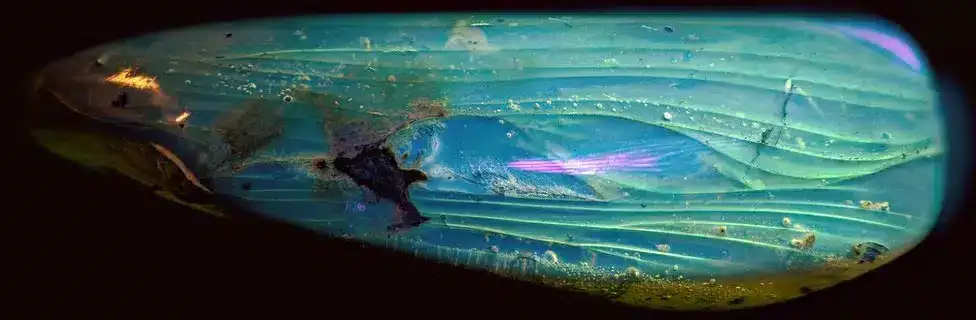
Advanced microscopic analysis revealed that the tail was adorned with contour feathers—the same type responsible for shaping the appearance of modern birds. The fossil retained traces of pigmentation, showing a combination of chestnut brown and white hues. The three-dimensional preservation in amber allowed scientists to examine feather structures in a way impossible with typical flattened fossils embedded in rock. McKellar emphasized how crucial this type of preservation is for reconstructing the appearance of these ancient animals.
“This really underlines the importance of amber as an anchor for future study,” he said.
A research article published in Current Biology studied dinosaur feather colors by analyzing melanosomes—microscopic pigment-containing structures—and comparing them to those in modern birds. However, this fossil’s preservation allowed direct observation of feather features. The absence of prominent central shafts suggests the tail was likely not adapted for flight.
A Biological Snapshot of a Long-Lost Dinosaur
Contrary to popular fiction, no intact dinosaur DNA was recovered from the amber. CNN reports that small fragments of soft tissue and dried blood were found, but no viable genetic material could be extracted.
“Unfortunately, the Jurassic Park answer is still a ‘no’, this is firmly in the realm of science fiction,” McKellar confirmed.
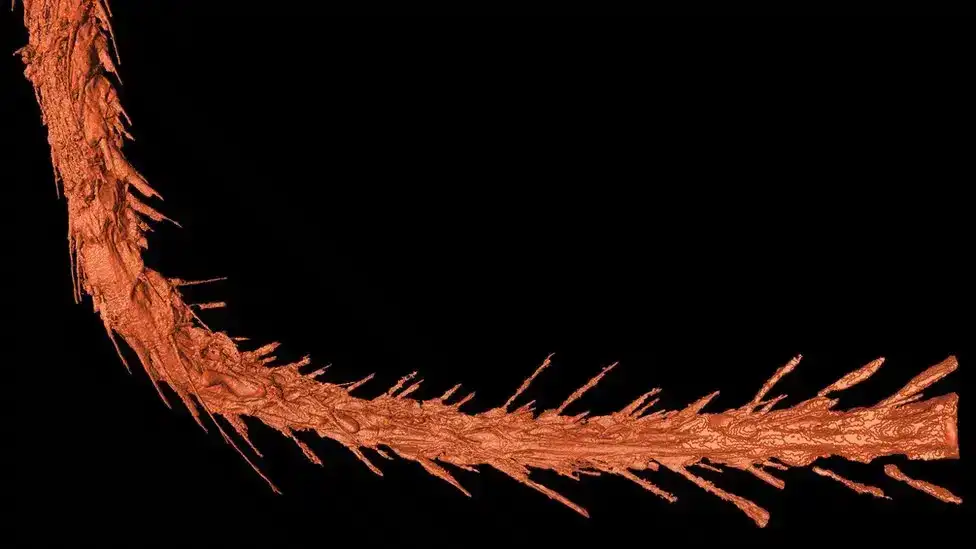
Even without DNA recovery, the soft tissue preservation offers invaluable scientific insights, revealing details of ancient anatomy far beyond what typical rock fossils provide. McKellar highlighted the significance of amber in capturing even microscopic features.
A piece that was once just another market item now serves as a striking portal into prehistoric times, preserving not only the form and colors but also the delicate biological materials of a creature that disappeared millions of years ago.
- Categories:
- Science




0 comments
Sign in to Comment