
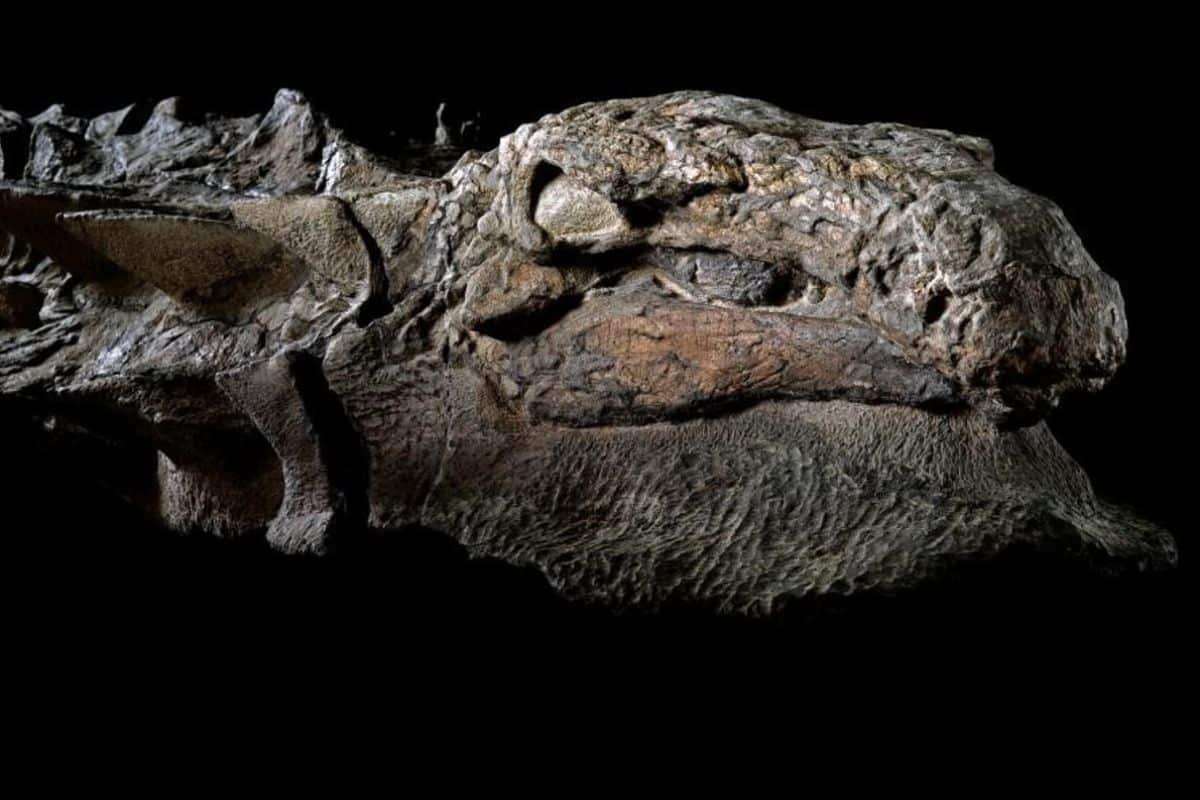
Paleontologists have, for the first time, discovered fossilized footprints belonging to ankylosaurid dinosaurs, which are the armored relatives known for their distinctive tail clubs, different from the nodosaurids. This extraordinary find was made within the Canadian Rockies, enriching our knowledge of prehistoric armored dinosaurs.
Groundbreaking Ankylosaurid Tracks Featuring Three Toes
These footprints, estimated to be about 100 million years old, were uncovered at two locations: Tumbler Ridge in British Columbia and northwestern Alberta. What makes these tracks notable is the presence of three toes rather than the usual four toes seen in nodosaurid dinosaurs.
This points to their creators being members of the ankylosaurid family, which is known for their heavy armor and iconic tail clubs.
While ankylosaur footprints like Tetrapodosaurus borealis have been documented widely across North America and typically show four toes, the newly discovered tracks display three distinct toe marks, making them the first-ever ankylosaurid footprints verified worldwide.

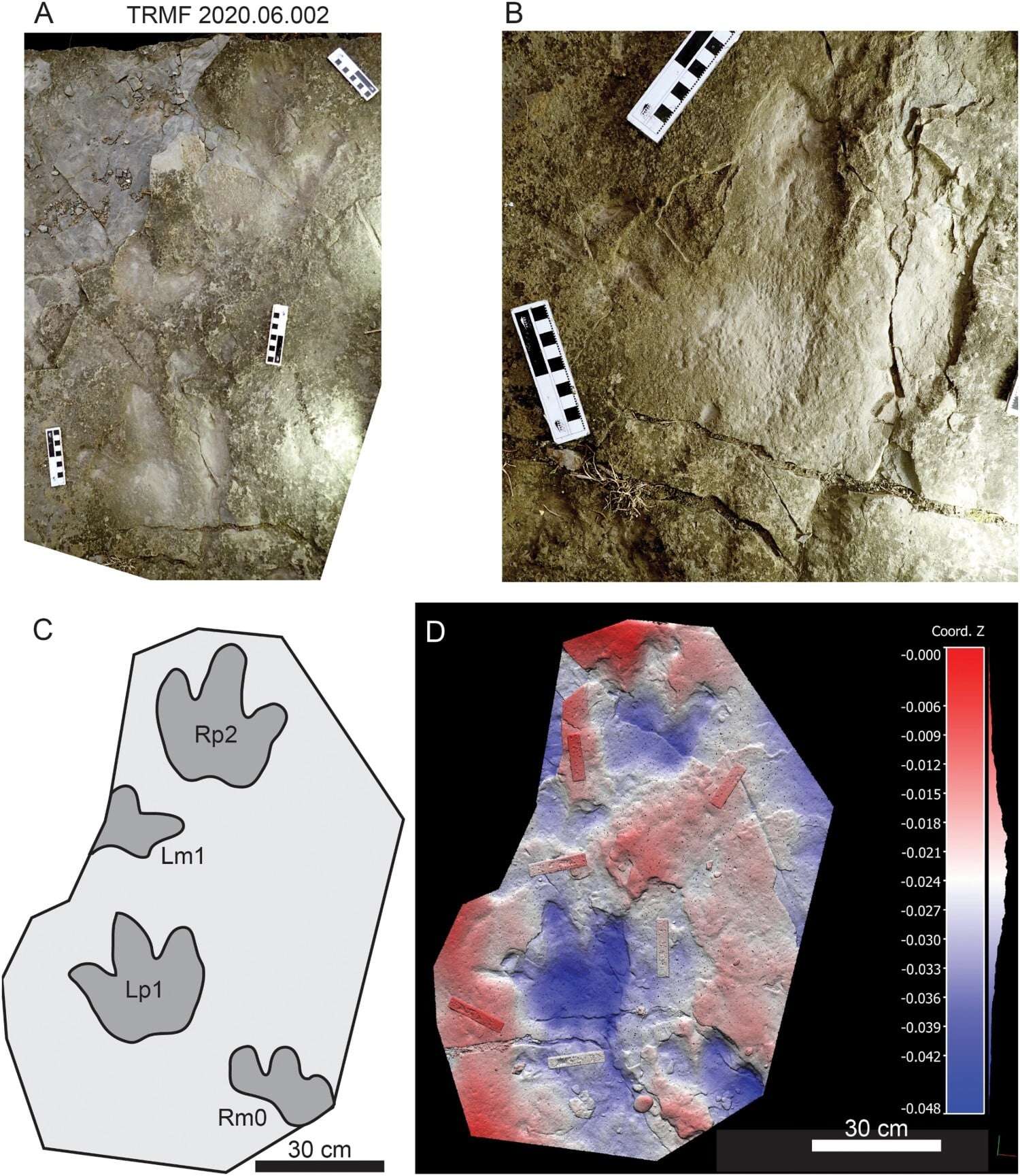
Introducing a New Species: Ruopodosaurus clava
As a result of this discovery, researchers have proposed a new dinosaur species named Ruopodosaurus clava, which translates to “the tumbling lizard with a club.” This name honors the rugged terrain where the footprints emerged and nods to the fierce tail weapon these creatures bore.
“While the exact appearance of the animal behind the Ruopodosaurus footprints is unknown, we estimate it would have measured approximately 5–6 metres in length, featuring armored plates, spikes, and a rigid tail possibly capped with a club,” explained Dr. Victoria Arbour, palaeontology curator at the Royal BC Museum and the study’s lead scientist.
A Rare Snapshot from the Cretaceous Era
These footprints add invaluable insight into the Cretaceous period, especially between 100 and 84 million years ago, a time frame during which ankylosaurid skeletal fossils were notably absent in North America. Their seeming disappearance had led some experts to speculate that these dinosaurs vanished from the continent at that time.
“These footprints confirm that tail-clubbed ankylosaurs survived in North America throughout this apparent fossil void,” the report states.
This discovery implies that both nodosaurids and ankylosaurids likely inhabited the same ancient environments now located in northeastern British Columbia.
Cross-Generational Teamwork in Paleontology
This research is the culmination of efforts across multiple institutions and decades. Dr. Charles Helm, a scientific advisor at the Tumbler Ridge Museum, had observed multiple three-toed trackways in the area for years. He invited Dr. Arbour in 2023 to help identify these unusual tracks.
“Since two boys first found an ankylosaur track near Tumbler Ridge in 2000, ankylosaurs have been connected closely with this region. It’s thrilling to now reveal through this study that two distinct ankylosaurs roamed here, and that Ruopodosaurus tracks are unique to this part of Canada,” Helm remarked.
A Landscape Steeped in Ancient Life
The team includes experts from the Tumbler Ridge Museum, the Tumbler Ridge UNESCO Global Geopark, and the late Martin Lockley of the University of Colorado. They emphasize that these footprints underscore the Peace Region’s vital role in advancing our understanding of North American dinosaur development.
“This research highlights the importance of northeastern BC’s Peace Region as a key window into dinosaur evolution — and there remain many discoveries yet to be made,” Dr. Arbour concluded.
- Categories:
- Science





0 comments
Sign in to Comment