
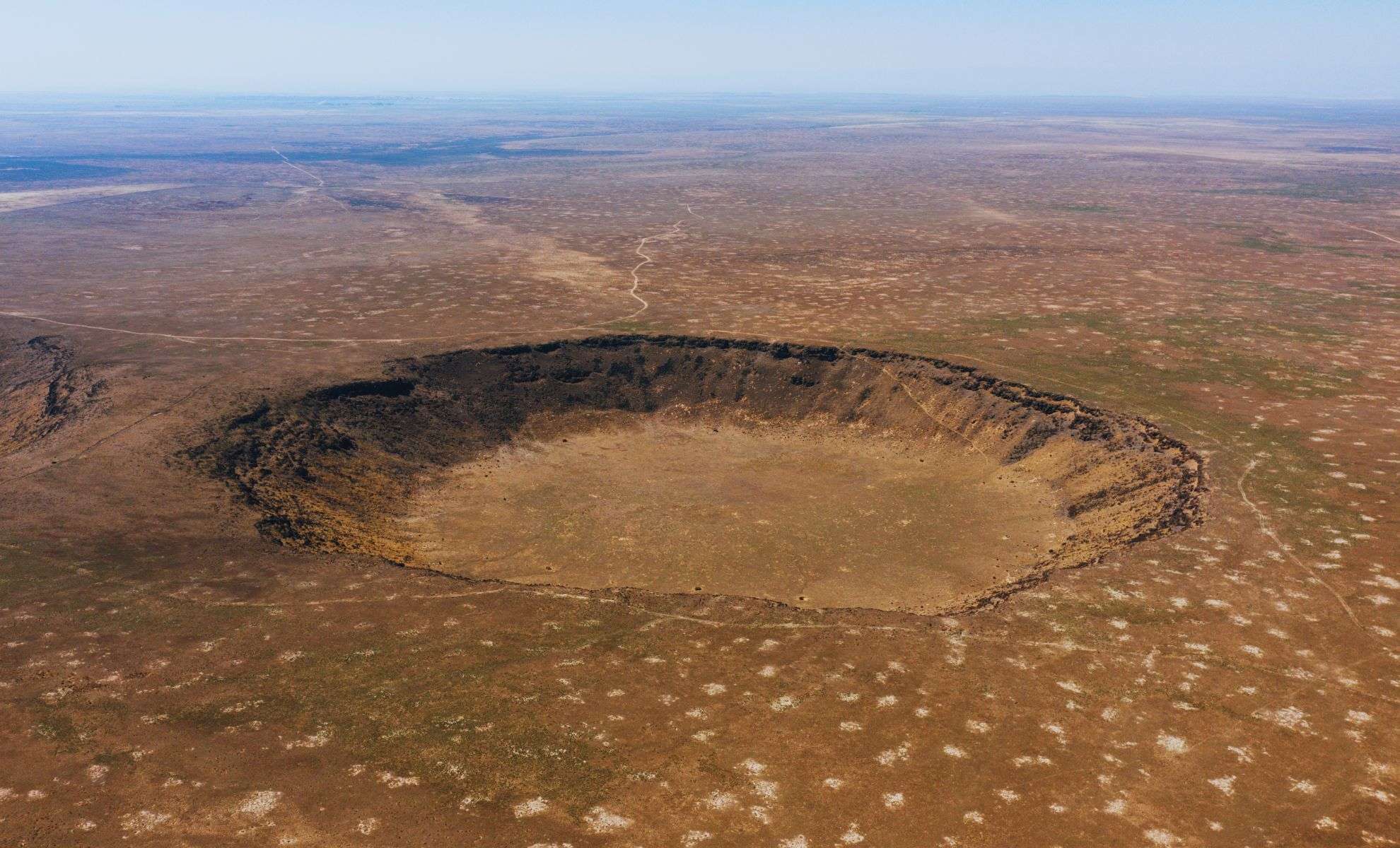
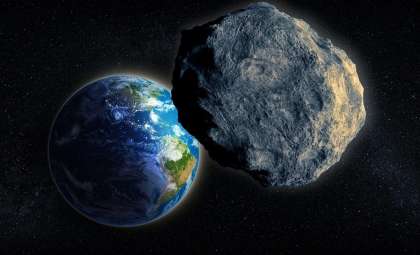
Researchers have uncovered evidence of a massive asteroid collision that occurred near the East Coast of North America about 35 million years ago, identifying the continent’s largest impact crater hidden beneath Chesapeake Bay.
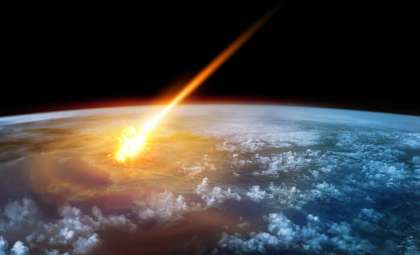
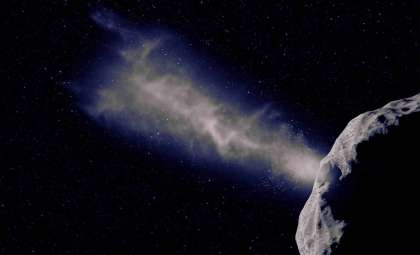
The force of this collision was immense, triggering widespread devastation including large-scale wildfires, seismic disturbances, and molten glass fragments blasted into the atmosphere. The event generated a powerful shockwave and a tsunami that profoundly altered the terrain in the present-day states of Virginia and Maryland.
Transformative Cataclysm Reshaped the Region
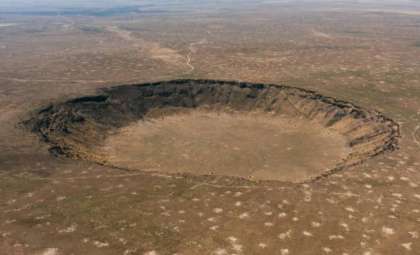
A recent study, featured in Meteoritics and Planetary Science, highlights that this asteroid impact in the Atlantic was a pivotal moment in Earth’s geological timeline. The explosion carved out a crater roughly 25 miles in diameter. Over millions of years, sediment accumulation concealed the site until its initial detection in the early 1990s.

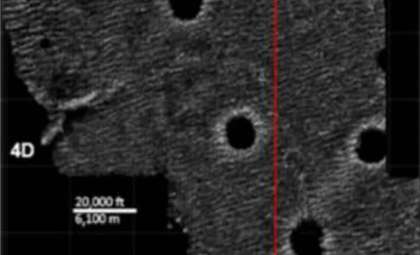
Using marine geophysical techniques and core drilling, scientists have validated this vast impact structure as the largest in the U.S. and the 15th biggest worldwide.
The Widespread Fallout from the Impact
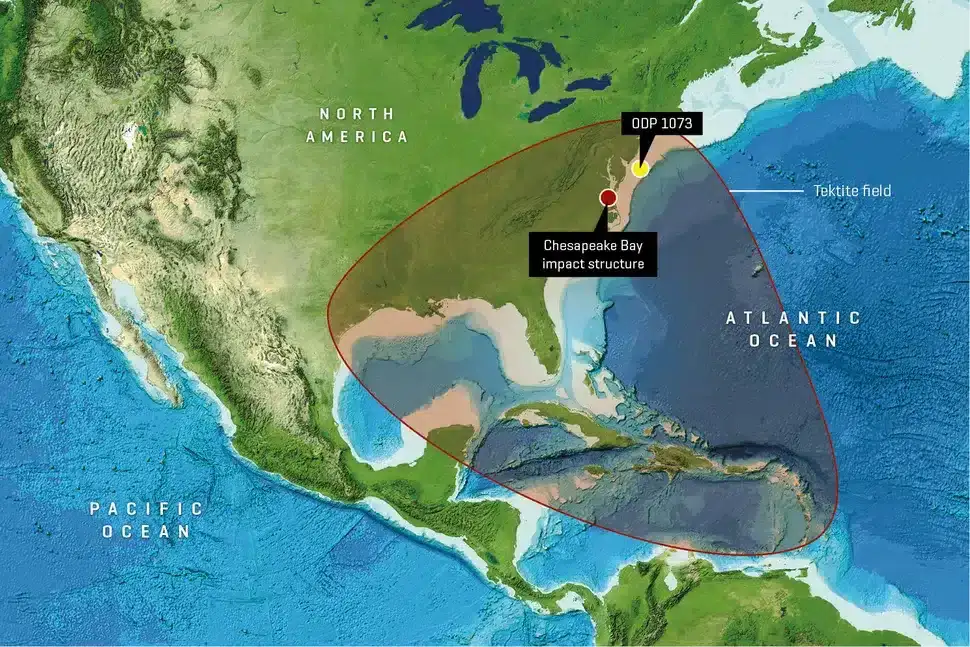
The collision catapulted enormous amounts of debris skyward, including tektites—glassy fragments formed by extreme heat during meteorite events—and zircon crystals propelled by the shockwave. This material settled over a vast area now known as the North American tektite strewn field.
Covering nearly 4 million square miles, the ejecta blanket stretches across a region about ten times the size of Texas. While much of the debris landed on the ocean floor, significant deposits also scattered across the continent.
Unraveling the Sequence of the Impact Event
To pinpoint the timing and effects of the impact, scientists examined samples from the Ocean Drilling Project’s site 1073. Under the leadership of Arizona State University’s Marc Biren, the team applied uranium-thorium-helium dating, a precise method that established the asteroid strike’s exact date.
This approach also shed light on the cooling and deposition timeline of the ejected materials, enhancing our understanding of this dramatic episode in North America's geological past.
The findings offer significant new insights into a catastrophic event that has left a lasting mark on the U.S. landscape and provide a deeper perspective on how asteroid impacts influence Earth’s environment and history.
- Categories:
- News




0 comments
Sign in to Comment