
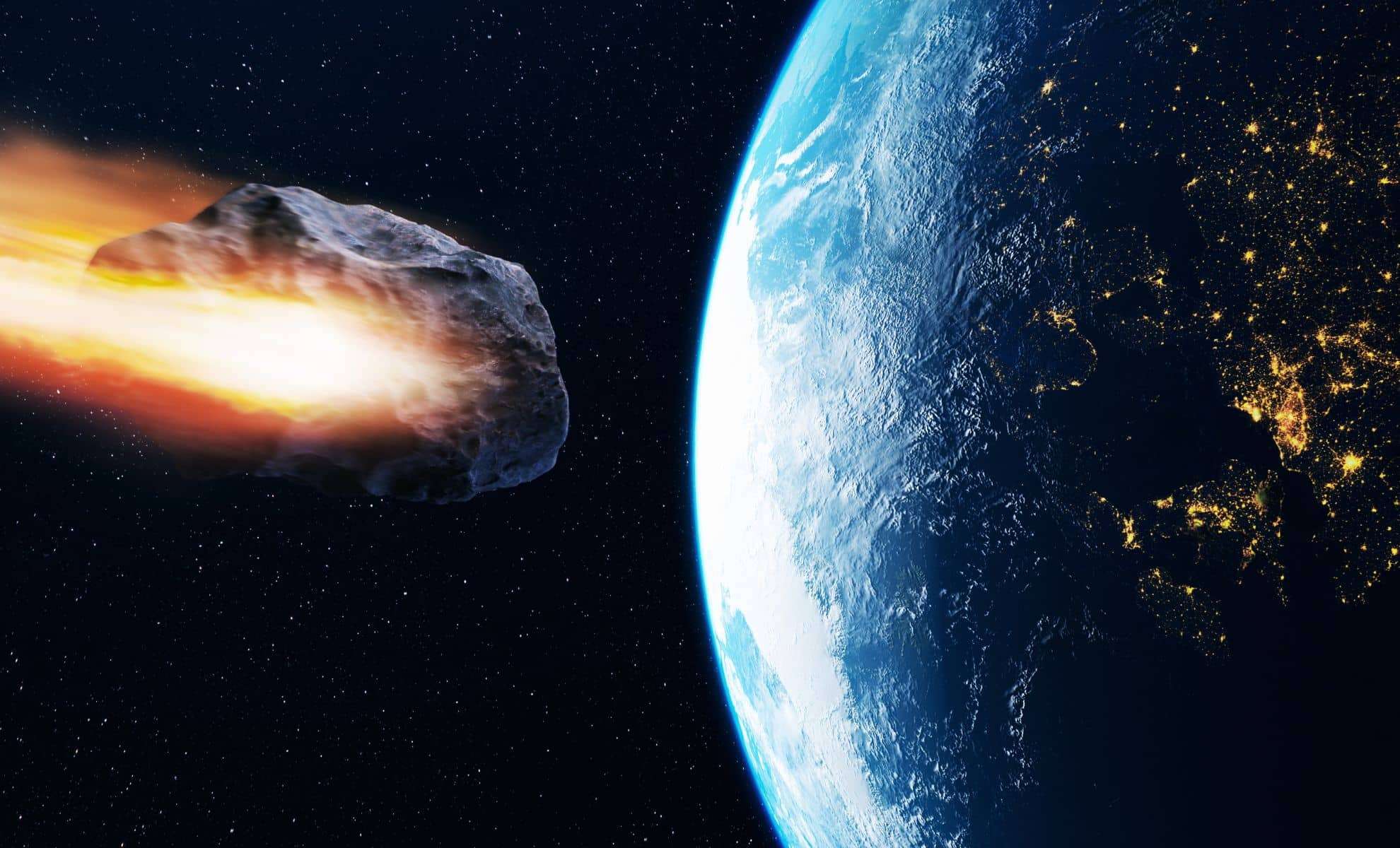
A newly identified 60-meter-wide asteroid, named 2024 YR4, has gained significant attention from the astronomical community after calculations indicated a 1 in 83 chance it could collide with Earth on December 22, 2032. While this likelihood remains relatively low, it represents one of the highest impact probabilities recorded for an object of this size. At present, the asteroid is located roughly 27 million miles away, and it is projected to make a close approach, passing within 66,000 miles (106,200 km) of Earth. Nonetheless, uncertainties in tracking its orbital path mean a collision cannot yet be ruled out.
This asteroid’s risk rating has elevated 2024 YR4 to the forefront of both the European Space Agency’s NEO Impact Risk List and NASA’s Sentry Risk Table, prompting intensive monitoring efforts. Should it impact Earth, the asteroid could trigger a powerful airburst in the atmosphere or produce a surface impact crater, contingent upon its physical characteristics.
Challenges in Predicting 2024 YR4’s Trajectory
Charting the course of an asteroid involves complex observations over time to minimize uncertainties. Currently, 2024 YR4’s chance of impact sits at 1 in 83, marking it as a notably high-risk near-Earth object.

“The odds have edged up slightly to 1 in 83,” explained David Rankin, an engineer with the Catalina Sky Survey and a leading expert on asteroid tracking. “This represents one of the highest impact probabilities observed for an object of significant size.”
Nonetheless, astronomers urge the public to remain calm. Rankin reassures that a close flyby remains the most probable outcome for the foreseeable future. “There’s no immediate cause for alarm,” he added. “The chances of impact continue to be low, and it is far more likely the asteroid will pass safely by Earth.”
The projected impact corridor—the possible swath where an impact might happen—extends from South America across the Atlantic Ocean to Sub-Saharan Africa. However, Rankin noted that as additional data arrives, this forecast will evolve. “Since the orbit remains uncertain, impact cannot be confirmed, and the corridor may change with updated observations,” he explained. “Its most probable path is still a miss, and this corridor is expected to be refined or discarded with new measurements.”
Understanding the Asteroid’s Properties
One obstacle in fully assessing 2024 YR4’s threat level lies in the limited knowledge about its exact size and makeup. Both attributes significantly influence the potential devastation if an impact occurs.
“Size and material composition are critical factors for impact damage, alongside the impact location,” Rankin pointed out. “Determining these traits is complicated now because the asteroid is moving away from us. Radar observations, which are ideal for size estimation, aren’t feasible at the moment.”
Scientists estimate the asteroid to be approximately 196 feet (60 meters) across, based on measurements of its brightness, which depends on how much sunlight it reflects. Due to the absence of radar data, this figure is uncertain. “If 2024 YR4 has a dark surface, the size estimate may be too small; if it’s more reflective, the estimate could be too large,” Rankin said.
Knowing its composition is equally important in predicting impact effects. If the asteroid is mainly rocky, it might disintegrate in the atmosphere, causing a tremendous fireball and airburst reminiscent of the 1908 Tunguska event that devastated an extensive Siberian forest area. “It’s roughly the same scale as the Tunguska or Meteor Crater impacting objects,” Rankin noted. “Though its effects would be localized rather than widespread, it could still cause serious destruction locally.”
Conversely, if 2024 YR4 consists largely of iron, it could likely survive entry and strike the ground, forming a sizeable crater, similar to Arizona’s Meteor Crater, which was forged by a roughly 160-foot-wide iron asteroid. “An iron composition would allow it to punch through the atmosphere and create a crater,” Rankin warned. “This underscores the importance of understanding not just its orbit but also its size and makeup.”
Essential Facts About Asteroid 2024 YR4
When Will More Information Be Available?
Ongoing observations of 2024 YR4 continue, but researchers expect that more definitive information won’t be attainable until around 2028. At that time, the asteroid will approach within 5 million miles of Earth, providing an opportunity for detailed radar imaging to better measure its size, shape, and material.
“Our team plans to observe this object through February using powerful 8-meter telescopes at Catalina Sky Survey,” Rankin explained. “It’s possible that even by then, we won’t have full certainty on the 2032 outcome. By 2028, however, when the asteroid returns into better view, we should have a much clearer understanding.”
These future observations will either confirm the asteroid’s threat level or dismiss the possibility of impact, helping to provide a vital assessment of potential danger.
Earth’s Ongoing Cosmic Risks
Although a close pass remains the most likely scenario, the case of 2024 YR4 highlights that Earth remains susceptible to asteroid hazards. Asteroid impacts in the past century, such as the Tunguska event in 1908 and the 2013 Chelyabinsk airburst, which caused injuries to roughly 1,500 people, demonstrate the potential for localized catastrophe. While extinction-level events are rare, even midsize impacts near populated areas could produce serious consequences.
Therefore, planetary defense continues to be a critical concern worldwide. Agencies including NASA and ESA are advancing efforts to develop early warning systems and techniques to divert threatening asteroids, exemplified by the successful DART mission in 2022, which altered an asteroid’s course. Should 2024 YR4 prove dangerous, similar interventions may be considered.
For now, scientists remain vigilant, carefully tracking this asteroid’s progress and refining impact risk estimates to ensure preparedness if intervention becomes necessary.
- Categories:
- News












0 comments
Sign in to Comment