
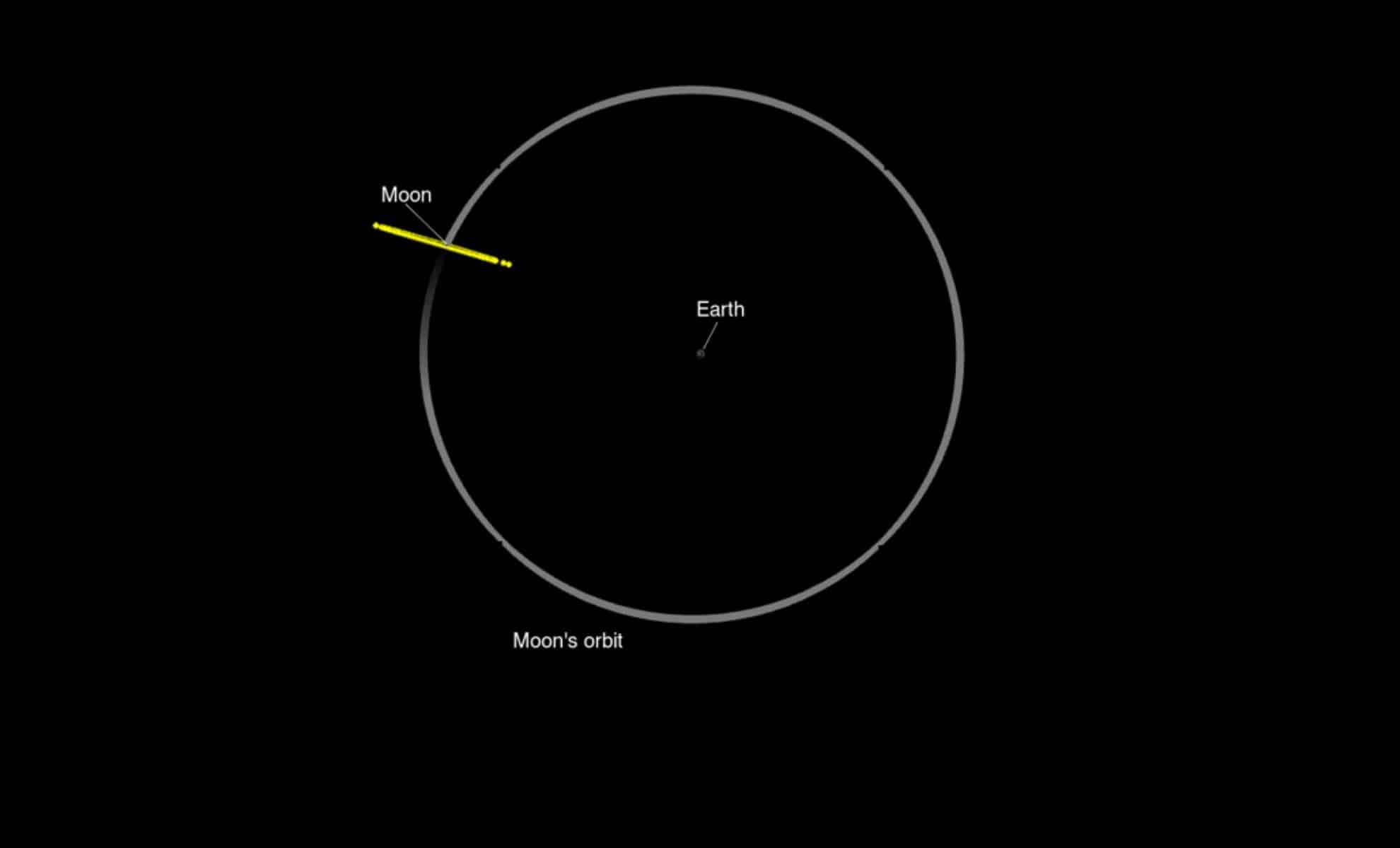
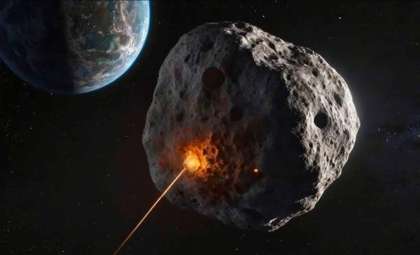
The James Webb Space Telescope has delivered fresh insights about asteroid 2024 YR4, enhancing scientists' understanding of its trajectory. This space rock, which raised some concerns for a possible Moon collision, is now being monitored with increased precision. NASA’s latest update reveals that the likelihood of a Moon impact has nudged upward slightly from 3.8% to 4.3%. However, experts stress that even if an impact occurs, it wouldn't noticeably alter the Moon’s orbit.
Understanding Asteroid 2024 YR4 and Its Significance
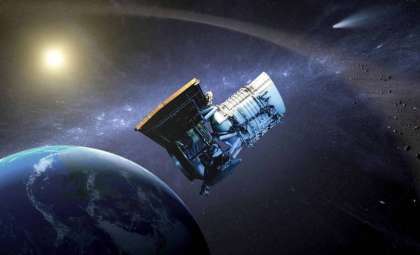
Discovered in December 2024, asteroid 2024 YR4 initially presented a low but measurable risk of Earth collision. Further observations ruled out any threat to our planet. Still, its approach near the Moon in December 2032 remains an area of concern for planetary defense specialists. Since it’s too far away for ground-based telescopes to observe clearly, NASA's James Webb Space Telescope—with its sophisticated Near-Infrared Camera—plays a crucial role in studying it.
Data from Webb has improved the characterization of the asteroid's orbit, leading researchers to slightly raise the estimated chance of it striking the lunar surface. Though this increment from 3.8% to 4.3% is modest, it underscores the necessity of ongoing surveillance of objects approaching Earth and its nearby environment.

Refining Impact Predictions Through Webb’s Infrared Imaging
Previously, the vast distance of 2024 YR4 complicated attempts to follow its movement. Early assessments raised concerns about a possible Earth impact, but subsequent analyses clarified that risk away and focused instead on the Moon. Webb’s advanced infrared instruments have provided new orbital data, enhancing trajectory predictions by about 20% accuracy.
This improved understanding prompted NASA’s Center for Near-Earth Object Studies (CNEOS) to adjust the Moon impact odds slightly upward. Although this change is minor, it reflects the intricate and dynamic nature of asteroid monitoring. As noted by Dr. Andy Rivkin of the Johns Hopkins Applied Physics Laboratory, these observations are key to sharpening prediction models and bolstering preparedness.
Implications for Planetary Defense Strategies
Space telescopes such as Webb are essential tools in detecting and tracking near-Earth objects critical to planetary defense initiatives. Although the probability of Earth or Moon impacts remains low, their potential effects cannot be dismissed. Continuously tracking these bodies allows space agencies to improve readiness for any future threats. In the case of 2024 YR4, even slight changes in its forecasted path aid scientists in understanding the behavior of celestial objects passing through our solar system.
Moreover, Webb's capacity to detect infrared signatures from distant asteroids illustrates the growing importance of space-based observation platforms. Enhanced asteroid detection and tracking increase the likelihood of identifying and mitigating hazardous encounters, contributing to the protection of Earth and its natural satellite alike.
Looking Ahead: Tracking Asteroid 2024 YR4
Currently positioned too distant for ground or space telescopes to observe effectively, asteroid 2024 YR4 will come closer to Earth again in 2028, allowing more detailed study. These future observations will facilitate further refinements in impact risk assessments, particularly for the 2032 lunar approach.
Even with the increased lunar impact probability, the event remains unlikely and would have minimal effects due to the asteroid’s size and the Moon’s lack of atmosphere. Scientists continue vigilant monitoring of this and other near-Earth objects to guard against any serious threats. NASA’s planetary defense efforts will rely heavily on Webb’s data to track and analyze distant bodies that could endanger Earth or the Moon.
- Categories:
- News









0 comments
Sign in to Comment