
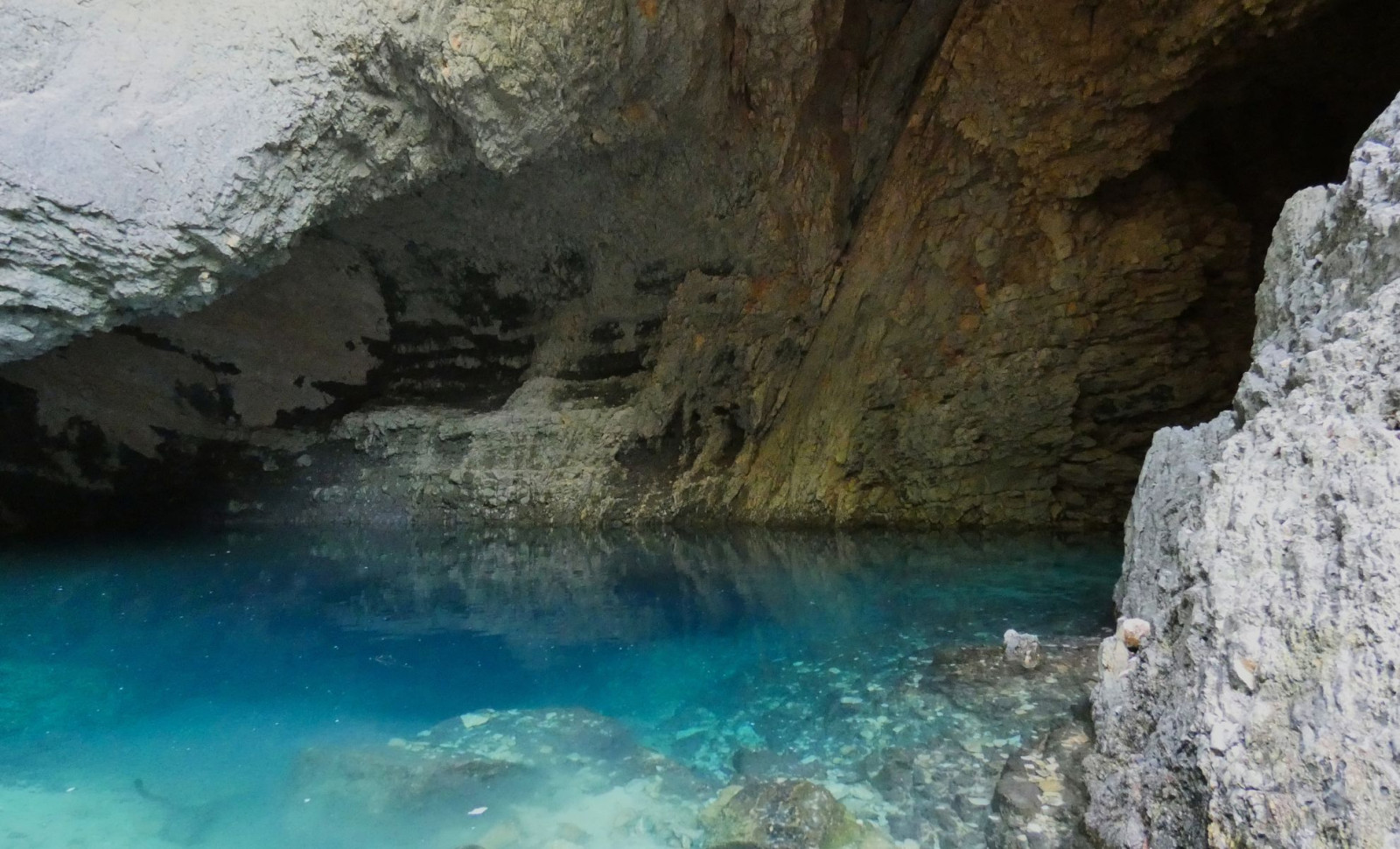
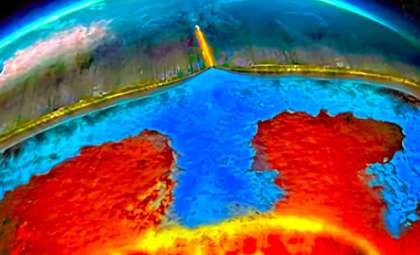
Researchers have uncovered an immense water reservoir buried roughly 700 kilometers beneath Earth's crust, potentially holding up to three times the volume of all our planet's oceans combined. This concealed ocean is contained within deep mantle minerals, making it invisible and unreachable through direct means.
This groundbreaking finding points to a significant origin of Earth's water existing within the planet itself, challenging the notion that much of it arrived solely from extraterrestrial sources like comets or asteroids. It may also clarify how ocean levels remained relatively constant over hundreds of millions of years despite shifting continents and changing climate conditions.
Understanding the behavior of water trapped deep in the mantle offers valuable insight into Earth’s geological processes and the long-term endurance of our surface oceans.

Water Encapsulated in Ringwoodite
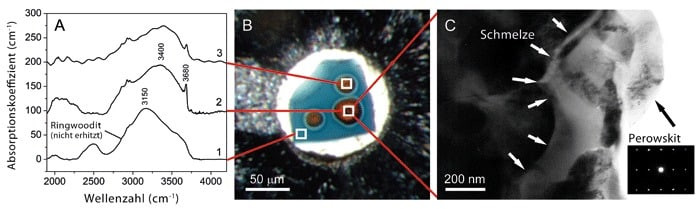
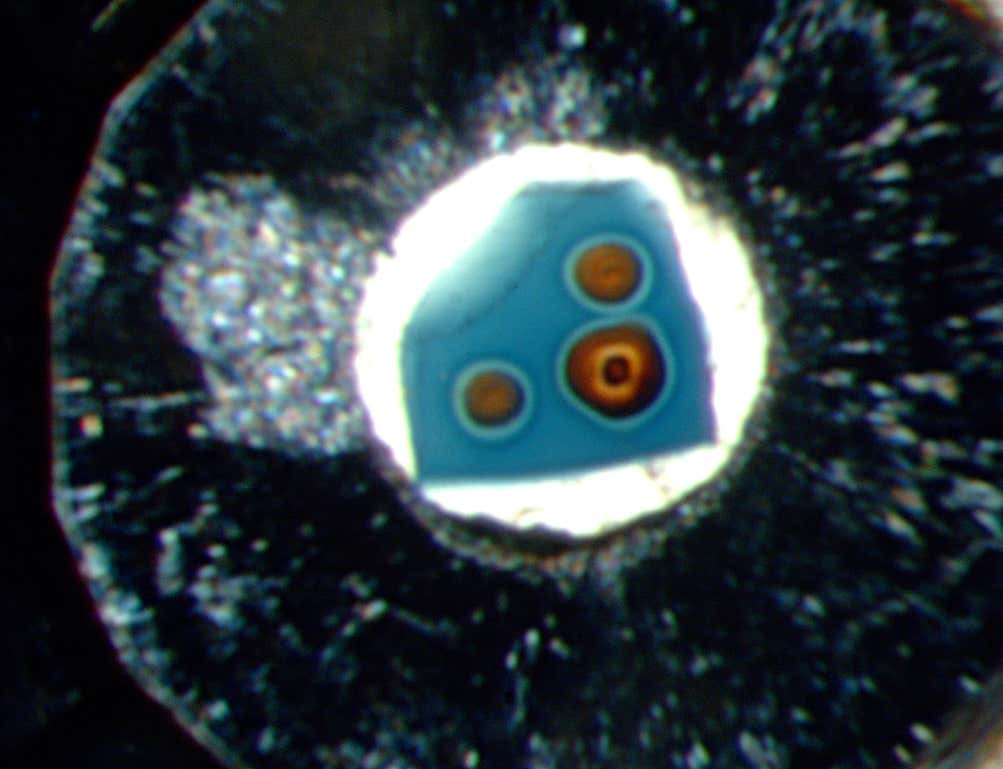
Rather than flowing freely, this water is chemically bound inside ringwoodite, a rare blue mineral stable within the mantle's transition zone, which lies roughly 410 to 660 kilometers below the surface. The study, published in Science, reveals that ringwoodite absorbs water molecules, functioning like a sponge that enables the mantle to store vast amounts of water.
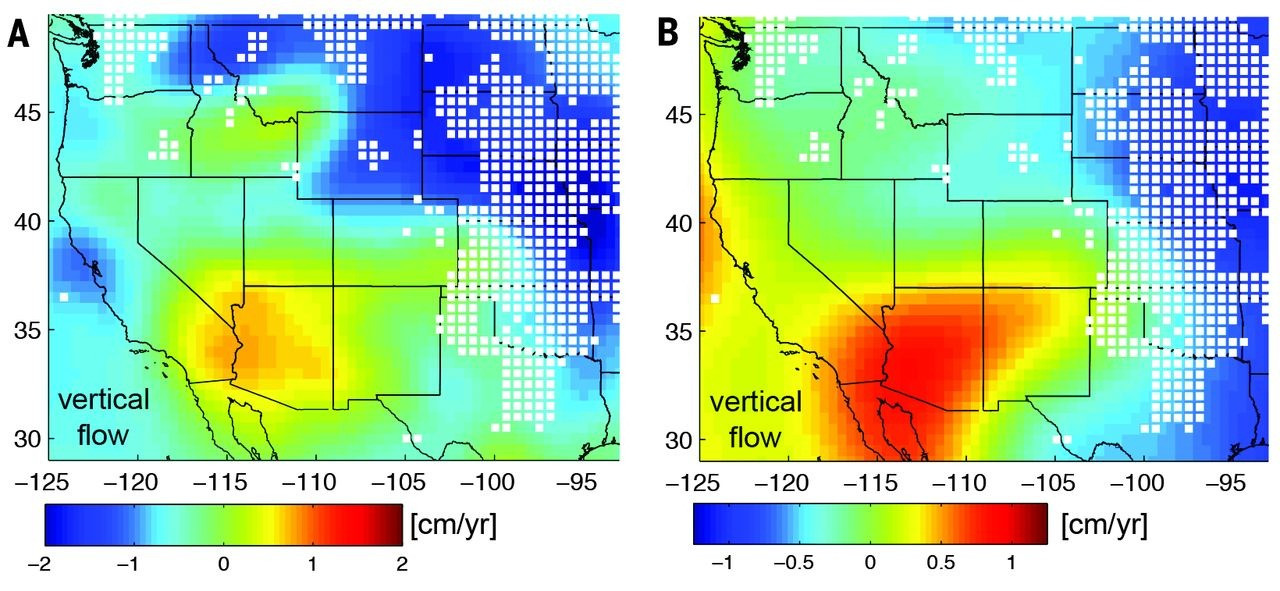
Steven Jacobsen, who led this study at Northwestern University, described how his team analyzed data from about 2,000 seismographs across the United States and examined seismic waves generated by over 500 earthquakes. Since these waves travel more slowly through wet rock, mapping their speed allowed researchers to identify areas saturated with water. Jacobsen likened this method to a planetary MRI revealing Earth's deep interior.
Jacobsen emphasized that this discovery provides strong evidence for an internal source of Earth’s water, with this subterranean reservoir playing a key role in regulating ocean volumes over geological time.
“We should be grateful for this deep reservoir,” said Jacobsen. “If it wasn’t there, it would be on the surface of the Earth, and mountain tops would be the only land poking out.”
Expanding the Concept of Earth’s Water Cycle
This discovery redefines how scientists view the water cycle by introducing a vast and hidden player. At subduction zones, ocean water is pulled downward into the mantle, where minerals such as ringwoodite trap some portion of it. Over millions of years, some of this water resurfaces through phenomena like volcanic eruptions and mantle convection, thus maintaining relatively stable ocean levels.
Jacobsen pointed out that this extensive cycle indicates Earth's water system extends far beyond visible elements such as clouds and rivers. It also helps explain Earth’s sustained liquid water over billions of years—key for supporting life—unlike planets such as Mars or the Moon, which lost theirs long ago.
Future Directions for Investigation
Currently, seismic data primarily covers regions beneath North America. Researchers plan to expand their observations globally to determine whether the water-rich ringwoodite occurs worldwide or is confined to specific areas. Efforts will also focus on improving estimates of the total water volume held in the transition zone and understanding the rates of water cycling between mantle and surface.
Gaining deeper knowledge about this hidden reservoir is essential for refining models of Earth’s formation, tectonic activity, and oceanic stability over geological timescales. Every earthquake recorded offers a glimpse into Earth's unseen depths, uncovering an immense, ancient system that has quietly influenced life on our planet.
Although humans cannot physically access this underground water, its presence sheds light on why Earth's oceans have persisted for billions of years and continue to support diverse ecosystems worldwide.
- Categories:
- Science



0 comments
Sign in to Comment