
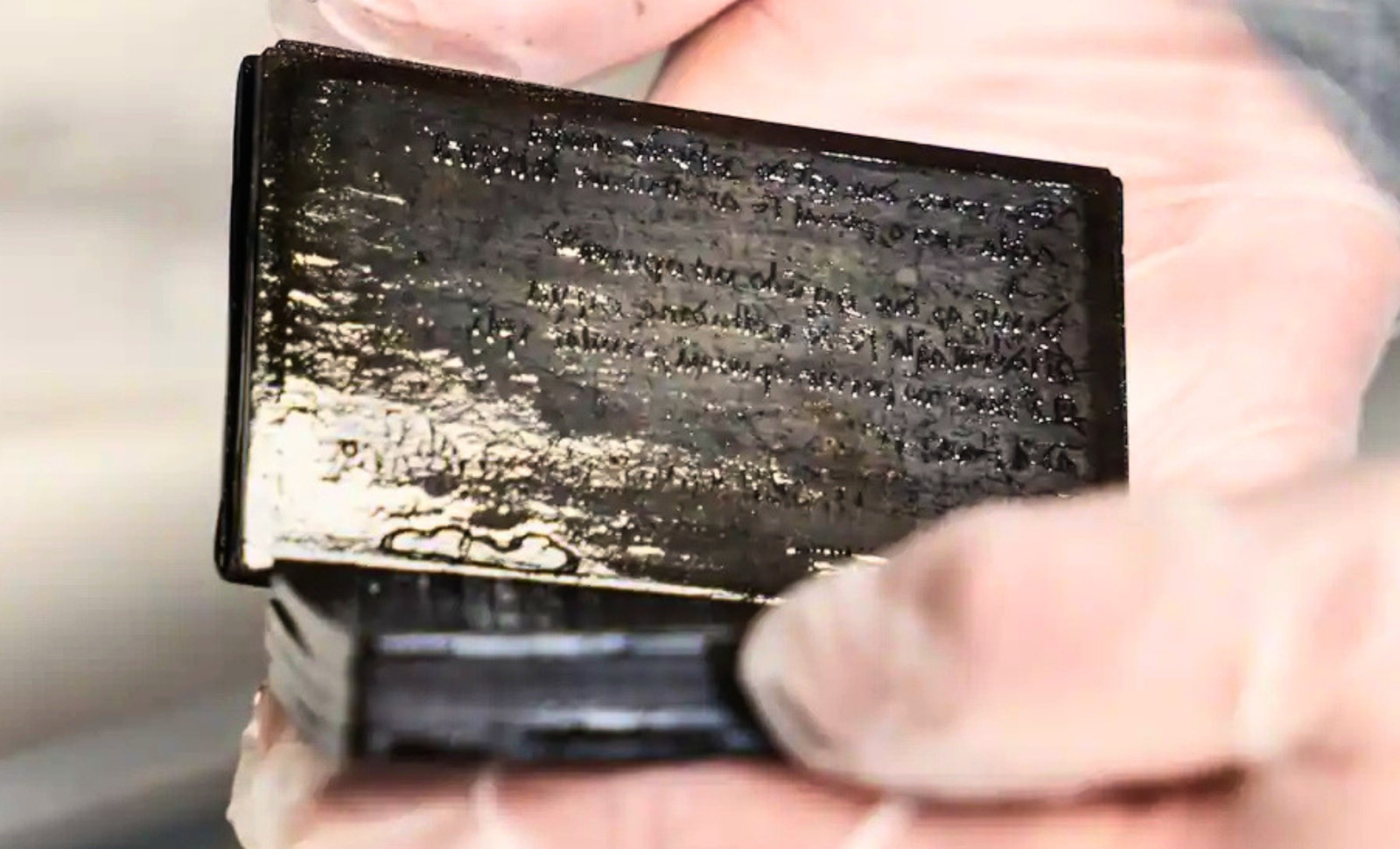
Archaeologists uncovered a 13th-century wax tablet notebook inside a medieval latrine in Paderborn, Germany, with the original writing remarkably still visible. Alongside the notebook, fragments of delicate silk cloth were found, believed to have been used as toilet paper.
The discovery was revealed by the Landschaftsverband Westfalen-Lippe on May 12, 2026. This find represents the only fully intact wax tablet book ever excavated in North Rhine-Westphalia. The artifact surfaced during foundation work for a new city administrative building when construction crews discovered it inside a sealed latrine, where an oxygen-free, damp environment preserved organic material for over seven centuries.

The compact notebook fits comfortably in the palm of a hand. Its leather cover, embossed with a pattern of lilies, encloses ten wooden pages coated with wax. The Latin cursive handwriting remains legible, inscribed with a stylus into the wax surface. "For archaeologists, latrines consistently reveal incredible finds," said Dr. Barbara Rüschoff-Parzinger, LWL’s cultural director, in their official statement.

Comparable wax tablets have been found in Lübeck and Lüneburg, where similar wet, airless soil helped preserve organic objects; however, none in this region contained a complete notebook with its binding and decorative cover.
A Merchant’s Personal Writing Tablet
Eight of the waxed pages are inscribed on both front and back. Dr. Sveva Gai, LWL city archaeologist, observed that the Latin script changes direction relative to how the notebook was held, indicating the writing was done from various angles. The handwriting appears to be from one individual. Its quick, informal style suggests these are notes taken for practical use rather than official documentation.
Gai hypothesizes the notebook belonged to a well-educated merchant residing in Paderborn’s affluent middle class. "Merchants were among the few literate groups at the time," she explained. The reason the notebook ended up discarded in the latrine remains a mystery; Gai speculates it may have been an accidental loss.
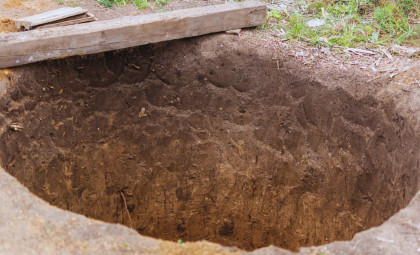
Excavations, ongoing since December 2024, took place within a historically rich sector near the former Abdinghof monastery. As the team reached the 11th-century limestone quarry layer, they encountered five latrine pits. Along with the notebook, items such as barrel staves, knives, fabric scraps, proto-stoneware vessels, and woven basket fragments were also recovered, helping date the find to between the 13th and 14th centuries.
Susanne Bretzel, LWL conservator, was the first to examine the artifact after it was retrieved. She described it arriving encased in damp soil and still emitting a strong, unpleasant odor even after centuries underground. The wet, oxygen-poor conditions had halted deterioration of the leather, wood, and wax, preventing them from drying out or breaking down.
Evidence of Luxurious Hygiene: Silk for Toilet Use
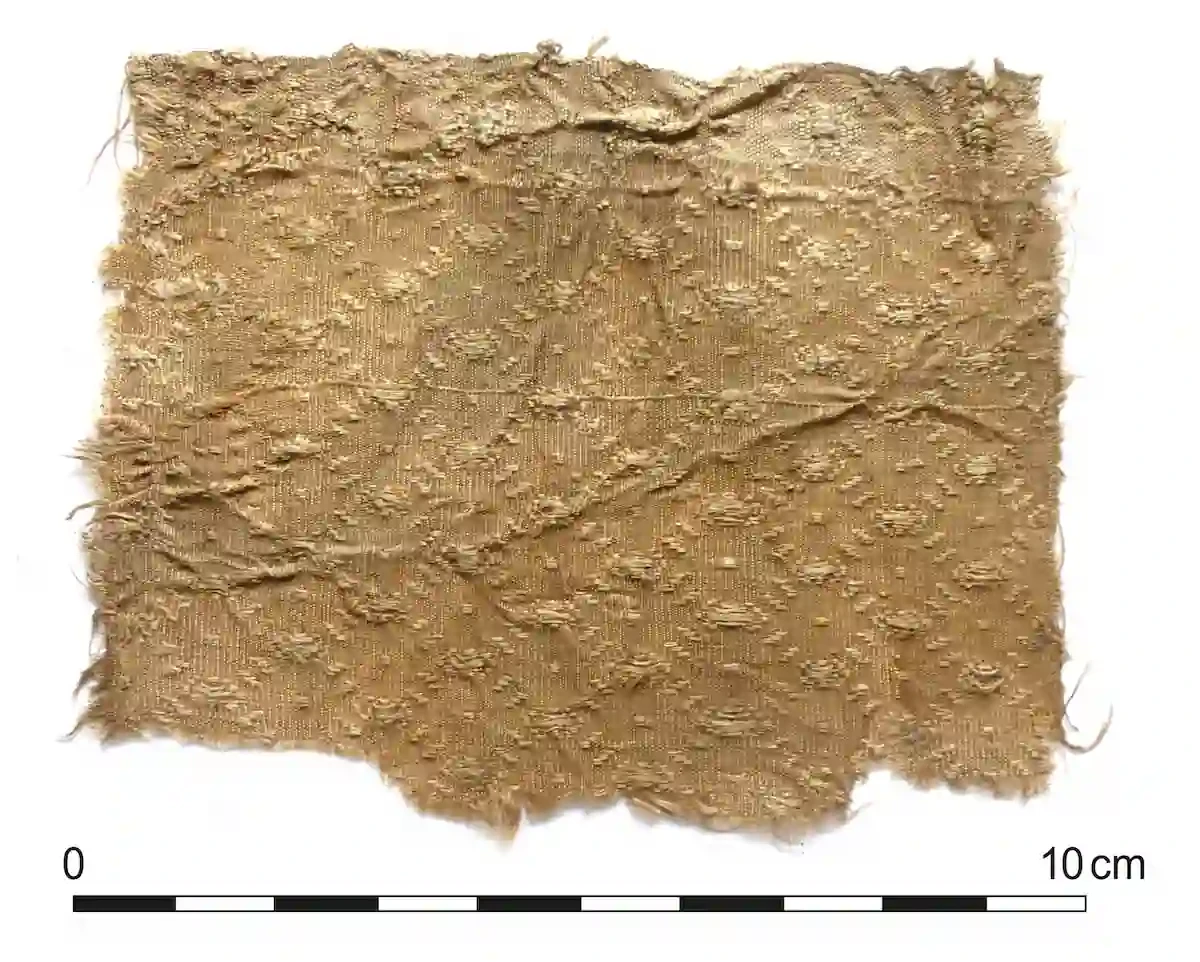
In the same latrine, Bretzel discovered small pieces of silk fabric cut into rectangles. Some pieces featured intricate weaving and ornamental design. Likely once part of an expensive garment, the silk strips appear to have been repurposed as toilet wipes, hinting that the household was of considerable wealth.
Gai noted that Paderborn’s center was home primarily to affluent middle-class citizens rather than aristocracy. The fleur-de-lis pattern on the leather cover reinforces the indication of status. Medieval experts highlight that the lily was a significant emblem symbolizing purity, regal authority, and divine favor.
Should it become possible to associate the latrine with a known property through historical records, the notebook might be linked to a specific individual, Gai explained. She emphasized that the ornate binding, use of Latin, and the presence of silk wipes all point to an owner of wealth and education.
Uncovering Hidden Text Layers
The currently visible script represents only the surface writings. Wax tablet books could be erased and reused; the stylus had a pointed end for inscribing letters and a flat side for smoothing the wax to remove older inscriptions. This process layered multiple generations of writing beneath the latest entries.
Experts at LWL plan to apply advanced imaging techniques to differentiate and recover erased content beneath the visible layer. The handwriting’s orientation and consistency confirm the notebook was employed as a practical tool rather than an ornamental item.
Transcription of the text has started but remains painstaking. Dr. Gai notes that medieval Latin cursive often includes variable spellings that complicate interpretation. While some words are clear, others require slow comparison with contemporary scripts. Once transcription is completed, the Latin will be translated into German. Rüschoff-Parzinger said the LWL is collaborating with regional specialists skilled in script analysis and imaging technologies.
Preservation Efforts Set for a Year-Long Process
Further study must wait until conservation stabilizes the artifact. Bretzel explained that the leather and wooden components are currently soaked in regularly refreshed distilled water to prevent damage caused by drying out after excavation from the waterlogged environment.
Conservation work will include detailed chemical and physical testing of the wax to identify its composition—whether it is beeswax, contains resin additives, or pigments—and determine its softening point. The type of wood will also be analyzed, information critical to planning the tablet’s long-term preservation. Bretzel estimated this extensive process may take up to a year.
The LWL coordinated closely with Paderborn city authorities and the excavation contractors throughout the building project to ensure the fragile item’s prompt transfer to conservation labs. After completion of preservation and research, the 13th-century notebook is slated for exhibition at the LWL-Museum in der Kaiserpfalz, Paderborn.
- Categories:
- Science










0 comments
Sign in to Comment