
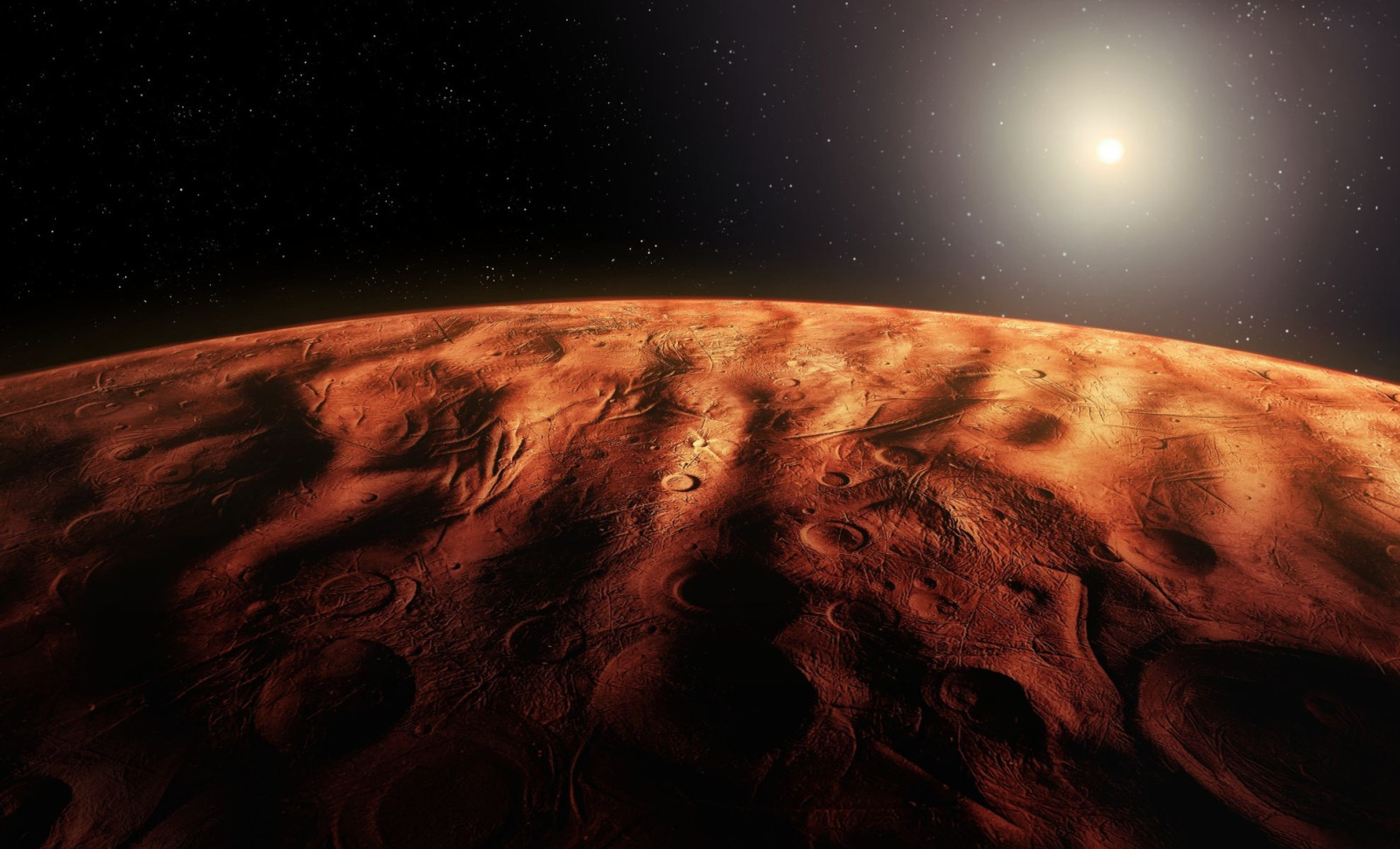
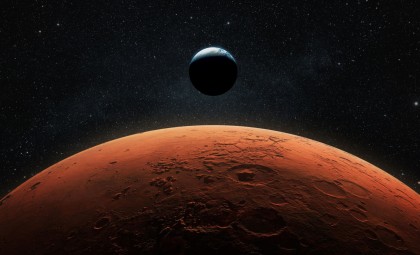
Mars, often considered a cold and barren neighbor to Earth, surprisingly showcases some of the solar system’s most unusual natural phenomena: elusive geysers alongside intricate, spider-like terrain formations unseen on any other planet.
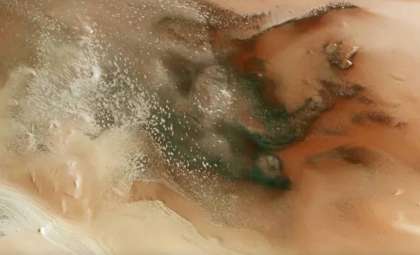
Despite its seemingly deserted landscape, Mars hosts captivating seasonal events. Each winter, carbon dioxide freezes into thick ice sheets over the poles. When spring arrives, sunlight penetrates this ice, triggering dramatic gas eruptions that sculpt fascinating spider-shaped features across the Martian surface, highlighting the planet’s ever-changing climatic activity.
The Dynamic Forces Behind Mars’ Geysers
The formation of these geysers is intimately linked to Mars’ distinctive atmospheric conditions. NASA explains that during the frozen polar winters, CO2 from Mars’ sparse atmosphere solidifies into dense ice layers that persist for months. As temperatures rise with the approach of spring, sunlight filters through this translucent ice, warming and sublimating the CO2 underneath, which accumulates as pressurized gas pockets beneath the surface.

When the pressure builds beyond the strength of the ice layer, it ruptures explosively. Science Alert reports that these gas bursts can propel material across areas spanning up to a kilometer, with gas jets reaching speeds as fast as 160 kilometers per hour.
Decoding the Spideriform Patterns on Mars
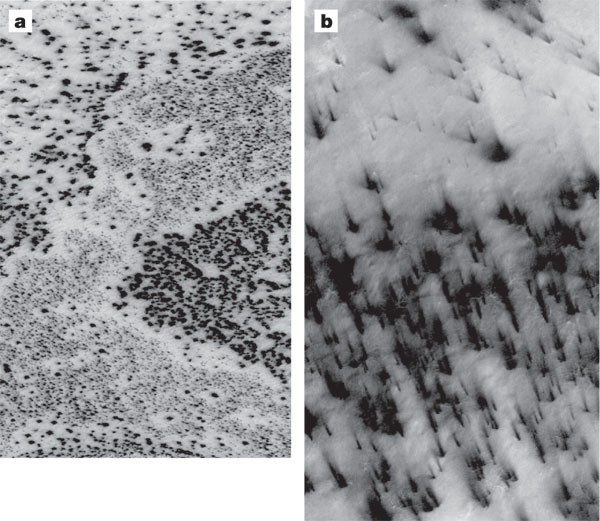
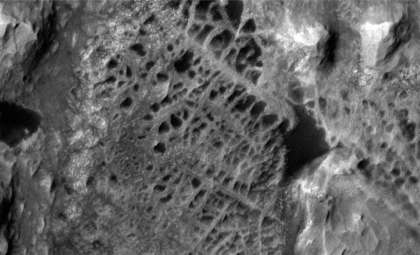
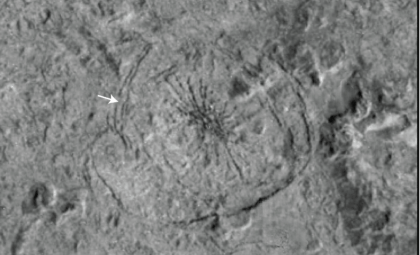
Among the most fascinating outcomes of these eruptions are the so-called “spider” shapes, or araneiform terrain, which appear to spider out across the red soil. These structures result when escaping gas from beneath the CO2 ice carves out branching fractures, leaving dark, radiating patterns reminiscent of spider legs spanning the surface.
The gas emissions leave behind unique radial line networks, sometimes clustering to create strikingly complex motifs that resemble enigmatic surface markings. Lauren McKeown from NASA’s Jet Propulsion Laboratory commented in a NASA press release:
“The spiders are strange, beautiful geologic features in their own right,” she said. “These experiments will help tune our models for how they form.”
Observing these distinctive shapes offers vital insights into the seasonal transformations of Mars’ surface dynamics.
How Martian Geysers Differ Fundamentally from Earthly Phenomena
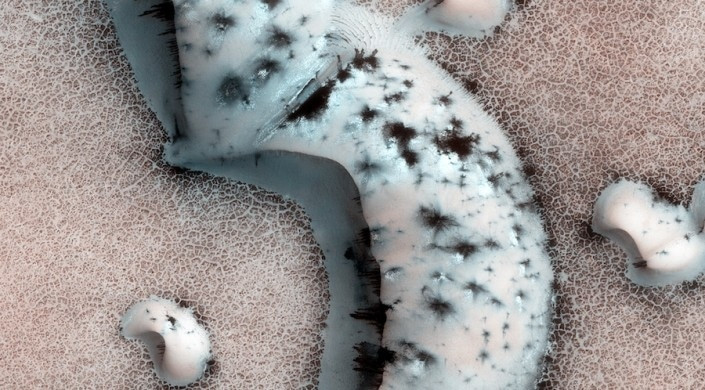
What sets these Martian geysers apart is their uniqueness compared to similar geological processes on Earth. Here on our planet, the shaping forces tend to involve liquid water, tectonic movements, and wind erosion. On Mars, however, gas-driven activity dominates due to a thin atmosphere and absent liquid water, yielding behaviors unlike anything terrestrial.
Planetary scientist Hugh Kieffer noted:
“This gas levitates the ice, which eventually ruptures, producing high-velocity CO2 vents that erupt sand-sized grains in jets to form the spots and erode the channels. These processes are unlike any observed on Earth.”
Research published in Nature details how sublimated CO2 gas builds beneath the ice until it bursts forth in violent jets, dispersing sand-like particles into the Martian atmosphere.
- Categories:
- Astronomy



0 comments
Sign in to Comment