
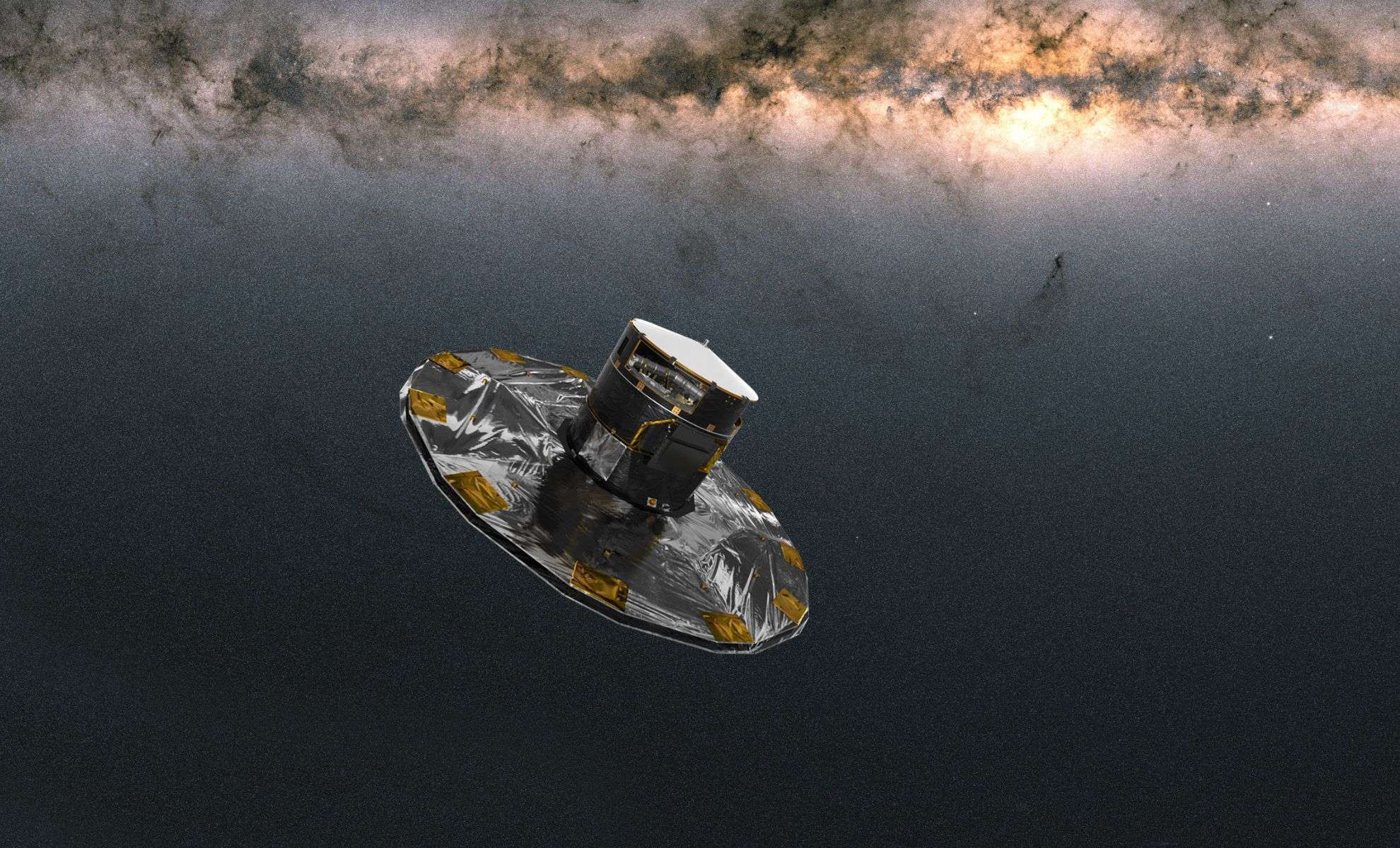
The European Space Agency’s Gaia observatory, tasked with detailed star mapping, recently faced serious obstacles after being hit by a micrometeoroid and enduring a severe solar storm.
Despite these setbacks, engineers implemented innovative strategies that not only restored Gaia’s functionality but also boosted its overall capabilities.
Gaia’s Objective and Recent Setbacks
Since its launch in December 2013, Gaia’s goal has been to precisely map the positions and movements of more than a billion stars within the Milky Way. Stationed at the Lagrange point 2 (L2), roughly 1.5 million kilometers away from Earth, Gaia benefits from a stable gravitational environment and avoids atmospheric distortion. However, this advantageous location also exposes it to rapid space debris and solar particle radiation.

In April 2024, the spacecraft encountered a micrometeoroid impact—a minuscule particle moving at extreme velocities—which pierced Gaia’s protective shield and allowed sunlight to interfere with its sensitive sensors. Edmund Serpell, operations engineer at ESA, remarked, “Gaia transmits more than 25 gigabytes of data to Earth daily, but onboard software filtering false star signals is crucial to managing the volume.”
Solar Storm Exacerbates Problems
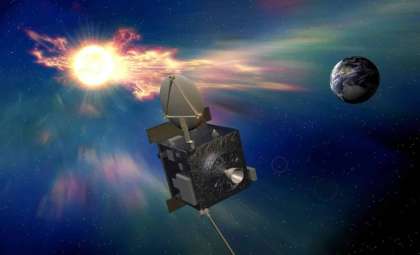
Shortly after the micrometeoroid event, in May 2024, Gaia was impacted by another issue: one of the 106 charge-coupled devices (CCDs) within its imaging system failed. This malfunction coincided with an intense solar storm, one of the strongest recorded in two decades, which likely contributed to the hardware disruption. The CCD failure triggered a surge in false star identifications, complicating data acquisition.
The ESA team noted, “The precise cause of the electronic fault remains uncertain. Although designed for a six-year mission, Gaia has already operated for nearly double that time in harsh space conditions.” They added, “At failure time, Gaia was exposed to a powerful burst of solar energetic particles responsible for auroras across the globe.”
Solutions from Afar
Since Gaia is inaccessible for physical maintenance, ESA engineers devised remote fixes. They modified the detection threshold in Gaia’s onboard software to better distinguish genuine stars from noise, cutting down false positives. Additionally, they recalibrated the spacecraft’s twin telescopes to improve data accuracy.
Serpell emphasized the teamwork behind the recovery: “The recent events overwhelmed our systems with spurious detections. Nonetheless, adjusting the software’s sensitivity has significantly reduced the impact from stray light and the faulty CCD.”
Mission Resilience and Looking Ahead
Gaia has now resumed normal operations, delivering some of the highest-quality stellar data in its history. The adaptations made have effectively tackled current issues and enhanced the spacecraft’s functioning. ESA’s team is continuously monitoring Gaia, ready to tackle any further challenges as the mission surpasses its original timeline.
Gaia’s endurance and the inventive responses by ESA engineers highlight the robustness of the spacecraft’s design and the power of remote troubleshooting. This experience imparts vital insights for upcoming missions, underscoring the value of flexibility and swift intervention in space ventures.
As Gaia continues its stellar survey, it promises to deepen humanity’s cosmic insights, showcasing the remarkable interplay of human innovation and cutting-edge technology overcoming the rigors of space exploration.
- Categories:
- Astronomy ,
- News ,
- Space






0 comments
Sign in to Comment