
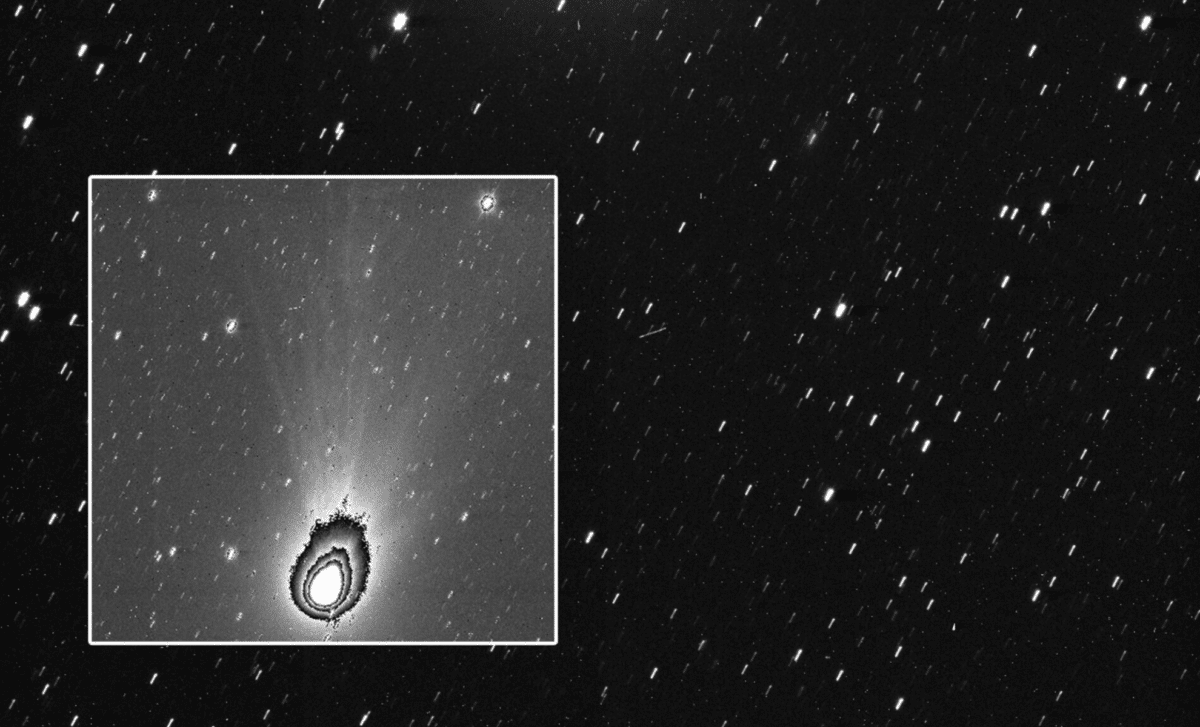
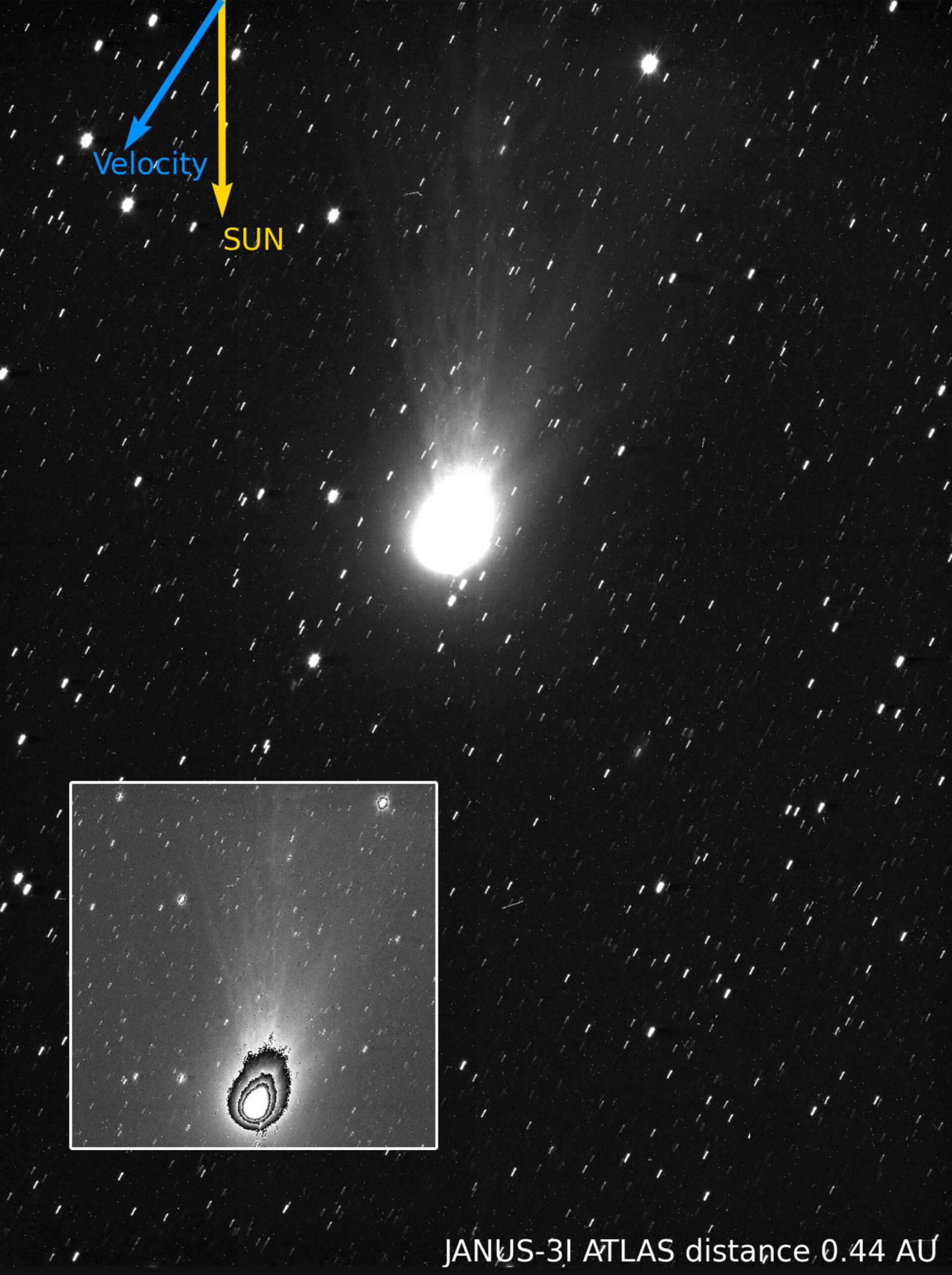
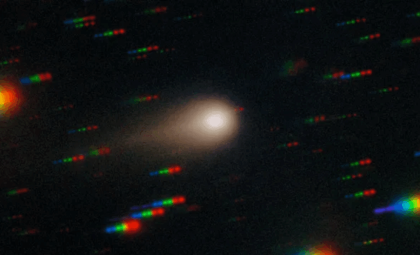
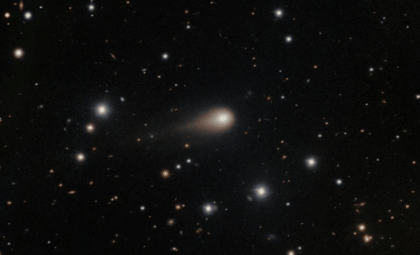
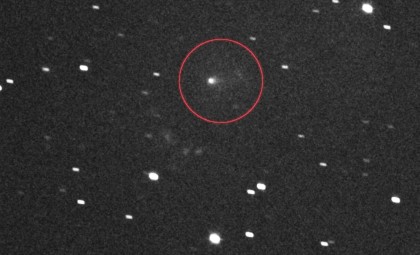
Scientists have for the first time obtained a clear image of an interstellar comet journeying through our solar system. The European Space Agency’s (ESA) Jupiter Icy Moons Explorer (JUICE) spacecraft has delivered an exceptional shot of 3I/ATLAS, a comet originating beyond the boundaries of our solar system. This extraordinary visitor, which passed closest to the Sun in late 2025, offers a unique opportunity to examine how interstellar objects react as they enter and move within our solar environment. Captured by JUICE’s JANUS camera, the vivid image reveals the comet’s surrounding envelope of gas and dust, shedding light on its composition and trajectory.
3I/ATLAS: A Rare Cosmic Interloper
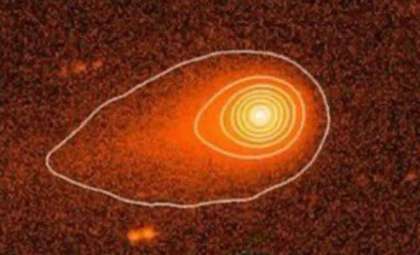
Unlike standard comets native to the solar system, 3I/ATLAS is an interstellar traveler that approached the Sun in late 2025. This unprecedented discovery marks a pivotal moment in astronomical exploration, as it provides direct evidence of material from beyond our solar neighborhood. While its exact starting point remains elusive, tracking its path through the solar system helps scientists understand the behavior and nature of such objects when exposed to solar radiation and gravitational effects. JUICE’s JANUS instrument produced the first-ever detailed images of the comet’s coma, the glowing cloud of gas that envelops the nucleus.
How ESA’s JUICE Mission Contributed to Studying 3I/ATLAS
Primarily designed to study Jupiter and its moons, ESA’s Jupiter Icy Moons Explorer (JUICE) found an unexpected target in 3I/ATLAS. Equipped with advanced instruments such as the JANUS camera, JUICE gathered vital data on this interstellar comet while orbiting roughly 66 million kilometers from it. Over several months, five onboard instruments collaborated to analyze the comet's features, providing an in-depth perspective on its physical traits and chemical constituents. This remarkable find supports ESA’s wider ambitions to investigate objects that originate outside our solar system.

JANUS Camera’s Role in Capturing 3I/ATLAS
The significant image of 3I/ATLAS taken on November 6, 2025, highlights the capabilities of the JANUS camera, a high-definition, color observation device usually focused on Jupiter’s moons. Its team refined the captured data to expose the details of the comet’s coma, enhancing visibility and allowing researchers to study its extent and makeup. The mixture of dust, gases, and particles detected in the comet’s atmosphere reveals essential information about its materials and interstellar journey.
Insights Gained from 3I/ATLAS
Examining 3I/ATLAS offers valuable knowledge about comets formed outside the solar system. Unlike comets made from local solar materials, this visitor carries extraterrestrial components potentially originating from another star system. Scientists are investigating the comet’s tail and coma to understand its response to solar wind and estimate its age. Unlocking these secrets could illuminate conditions present during the genesis of our solar system and the processes that shaped its planets and satellites.
Spectrometry’s Crucial Role in Comet Analysis
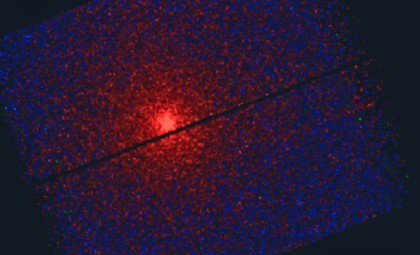
Understanding the chemical profile of comet 3I/ATLAS is a key research focus. ESA’s MAJIS and UVS instruments study spectroscopic data to determine the comet’s molecular and elemental composition. By analyzing the absorption and emission of light, scientists identify unique substances possibly absent on Earth or within our solar neighborhood. This knowledge is vital to comprehend not only this comet but also the broader cosmic building blocks that influenced solar system formation.
Patiently Awaiting Comprehensive Findings
Interpreting the extensive data from JUICE’s instruments is a gradual effort due to the complexity of signals received. After JUICE moved behind the Sun relative to Earth, communication slowed significantly, with smaller antennas transmitting information at a limited pace. Despite this, researchers remain committed to meticulously examining over 120 images and numerous spectrometric datasets. The scientific community eagerly expects detailed results and discussions to be released later this year.
- Categories:
- News







0 comments
Sign in to Comment