
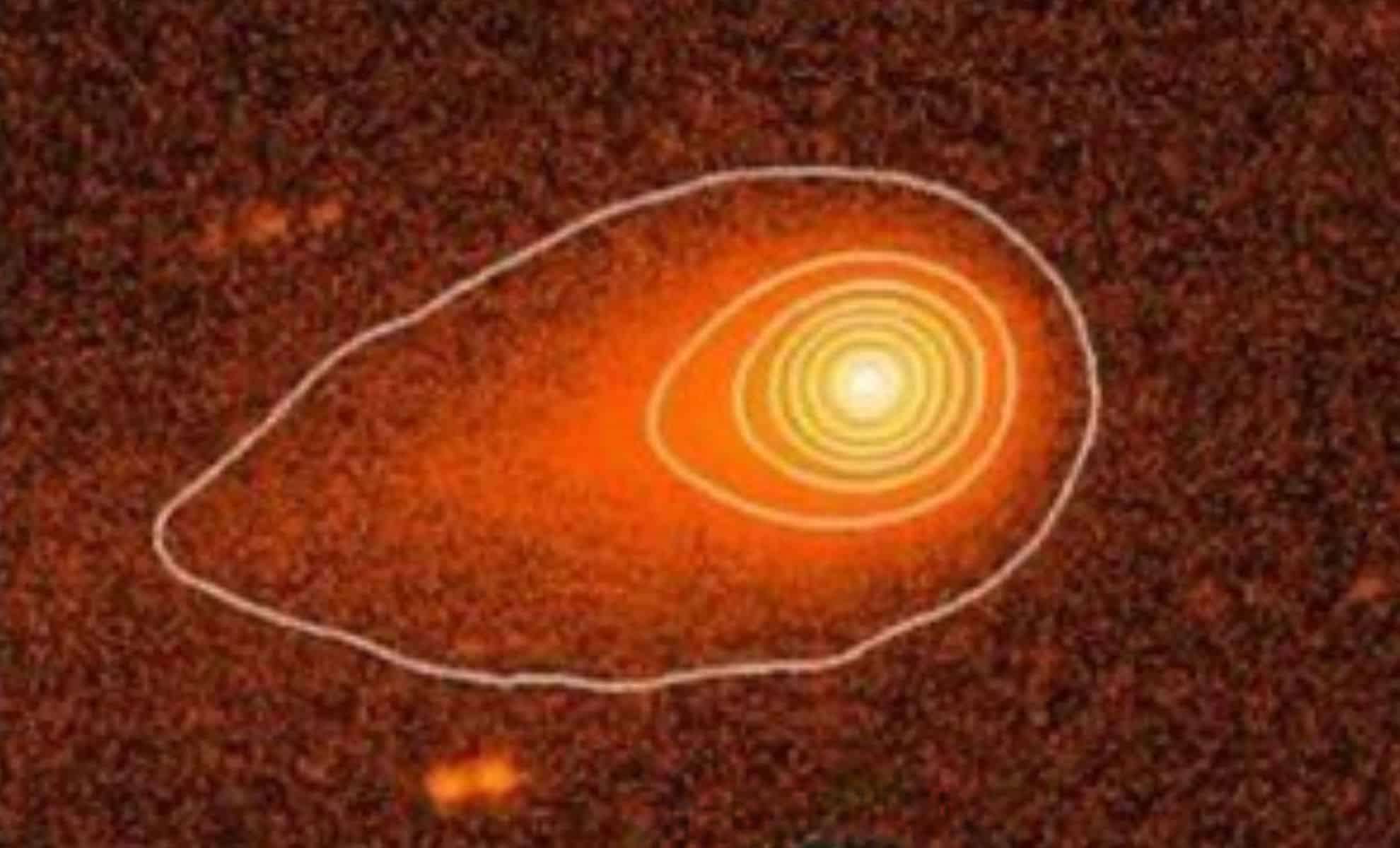
Astronomers tracking the interstellar visitor 3I/ATLAS have identified a subtle, teardrop-shaped tail extending in a direction precisely opposite to the Sun. Physicist Avi Loeb discussed these findings in a Medium article dated August 31, 2025, highlighting yet another puzzling feature of this enigmatic object from beyond our planetary system.
High-resolution images captured by the Gemini South 8.2-meter telescope in Chile provide vivid proof of dynamic activity, despite the object's elusive mass and composition defying conventional expectations.
A Unique Tail Among Interstellar Wanderers
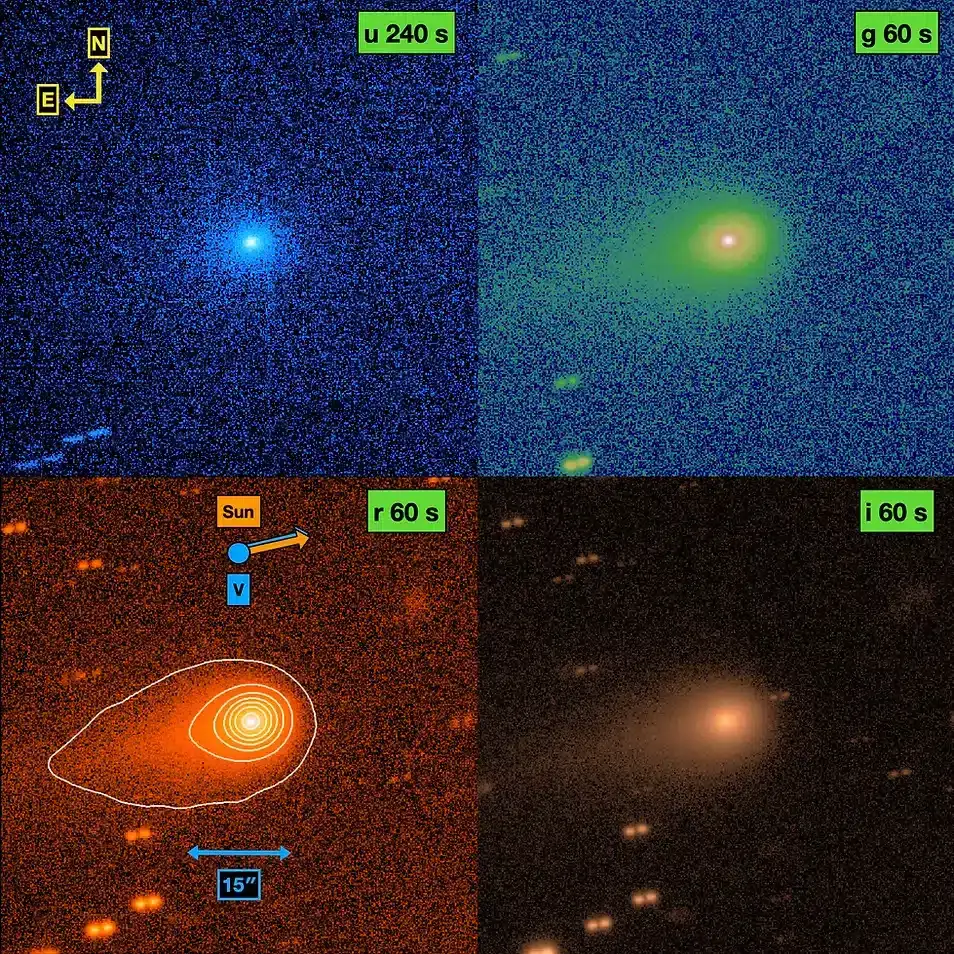
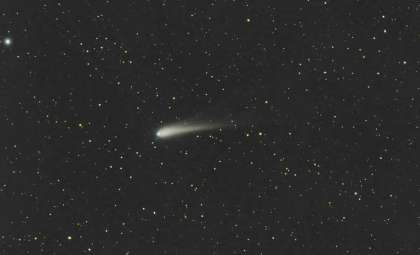
Situated on Cerro Pachón in the Chilean Andes, the Gemini South telescope utilized the Gemini Multi-Object Spectrograph (GMOS) to obtain detailed, multi-wavelength images of 3I/ATLAS. These observations revealed an extraordinary 56,400-kilometer-long tail pointing southeast, directly away from the Sun.

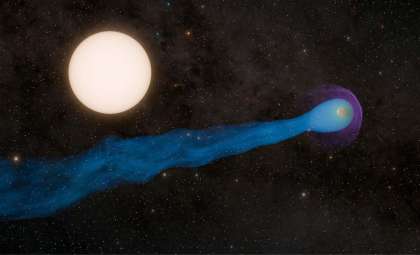
The object is enveloped by a sprawling coma roughly 18,800 kilometers across, significantly larger than measurements taken only weeks before. This morphology strongly implicates the role of solar wind and radiation pressure in sculpting the expelled material into a comet-like tail.
Despite its cometary appearance, 3I/ATLAS exhibits characteristics unlike any known comet, with its orbital path, scale of activity, and chemical emissions hinting at a novel type of interstellar entity.
Carbon Dioxide Dominates the Surrounding Gas
Data from the James Webb Space Telescope and NASA’s SPHEREx mission reveal an expansive cloud of carbon dioxide gas enveloping the comet, extending up to 348,000 kilometers. This gas envelope consists predominantly of CO₂, with only trace amounts of water vapor and carbon monoxide. Specifically, 3I/ATLAS is emitting CO₂ at a rate of 130 kilograms per second, while releasing merely 6.6 kilograms per second of water and 14 kilograms per second of CO.
These emissions starkly contrast with standard comet behavior, where water typically constitutes the majority of volatile outgassing. Here, water represents just 5% of the carbon dioxide release, implying a fundamentally different sublimation mechanism at work.
Loeb suggests the teardrop-shaped gas envelope results from the equilibrium point where the outward pressure of the gas matches the incoming solar wind’s ram pressure.
Conventional Models Challenged by Size and Mass
SPHEREx observations from early August estimate that 3I/ATLAS could measure about 46 kilometers in diameter, inferred from reflected light around one micrometer in wavelength. Should this estimate hold, the object’s mass would dwarf the previously detected interstellar comet 2I/Borisov by a factor of roughly one million.
Astrophysical theories anticipate that smaller interstellar rocks should prevail in number and be detected first. Loeb has argued that the expected density of rocky interstellar debris is far too low to account for observing such a massive object within the ATLAS survey’s timeframe.
Its trajectory is equally puzzling, as 3I/ATLAS follows a path almost perfectly aligned with the ecliptic plane, the flat disk in which the Solar System’s planets orbit, unlike the random courses of most interstellar visitors.
Industrial-Like Chemical Patterns Detected
Spectroscopic measurements from the Very Large Telescope (VLT) identified traces of cyanide and nickel within the comet’s gas emission, yet surprisingly detected no iron. Since iron and nickel usually form simultaneously in supernovae, their separation is notable. Avi Loeb emphasized that the presence of nickel without iron is reminiscent of industrial alloy manufacturing, a process not known to occur naturally in space.
Simultaneously, NASA’s TESS detected a persistent luminosity around the object as far back as May 2025, when it was located about six astronomical units from the Sun — too distant for water ice to sublimate, indicating that the comet’s activity may be driven primarily by CO₂ or other volatiles active at lower temperatures.
As 3I/ATLAS nears its perihelion on October 29, 2025, exposing it to intensified solar radiation, researchers anticipate new revelations. Loeb summarizes, “a high stress environment elicits confessions,” hinting that this cosmic visitor may soon disclose its true nature.
- Categories:
- News








0 comments
Sign in to Comment