
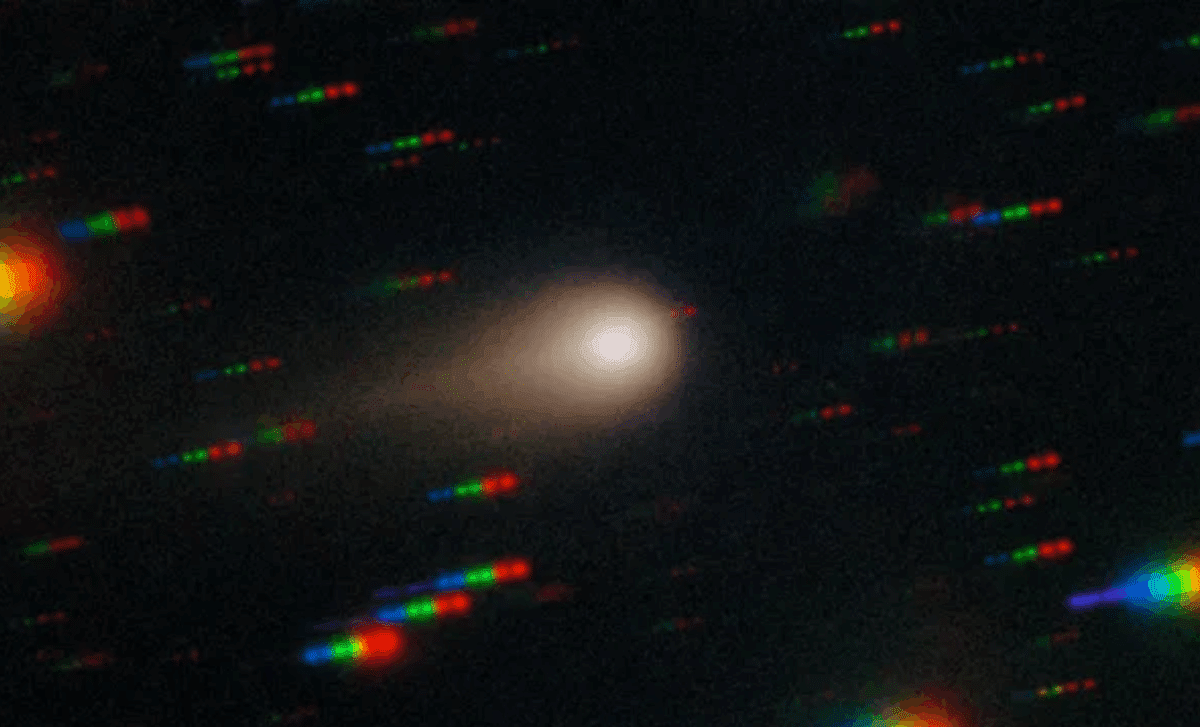
This October, the interstellar comet known as 3I/ATLAS will make a remarkable passage through our solar system, presenting a unique chance for space exploration. Multiple spacecraft currently monitoring Mars and Jupiter missions are preparing to study this intriguing visitor closely. As the comet approaches its nearest point to the Sun, both ESA and NASA craft aim to gather crucial information about its structure and activity.
An Interstellar Visitor
Discovered in July 2025 by the ATLAS telescope in Chile, comet 3I/ATLAS is only the third object identified as coming from beyond our solar system. Its fast trajectory — estimated at around 130,000 mph (219,000 km/h) — indicates it is not orbiting the Sun conventionally, offering invaluable data on materials from other star systems. Scientists are keen to determine whether its makeup resembles that of native solar system comets.
Because interstellar comets like 3I/ATLAS originated outside our cosmic neighborhood, they provide rare insights into the composition and conditions of distant planetary systems. Their unusual orbits challenge existing theories about comet formation, driving an urgent effort to collect observations while the comet remains visible to Earth-based instruments.

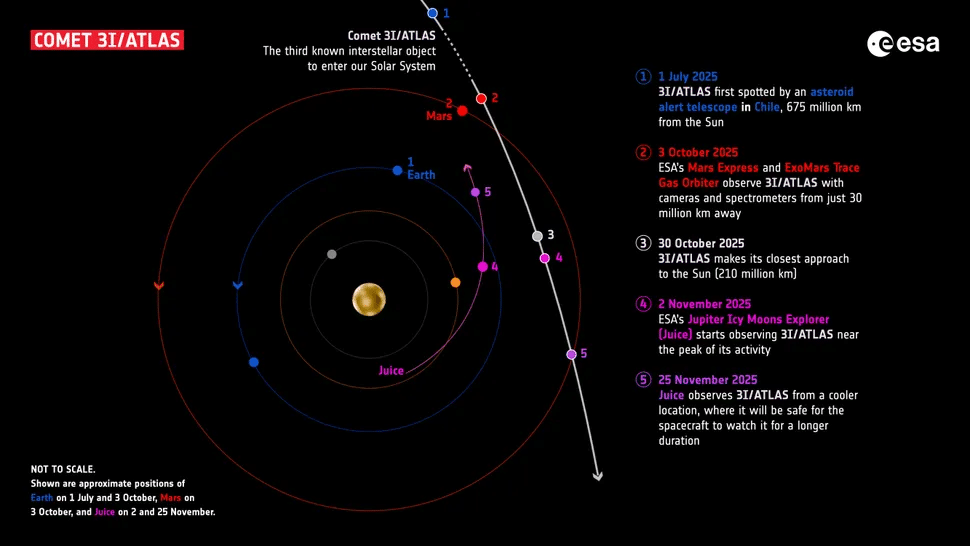
Mars Orbiters Monitoring 3I/ATLAS
During early October, the European Space Agency’s Mars Express and ExoMars Trace Gas Orbiter will observe 3I/ATLAS as it nears Mars. These orbiters, positioned roughly 30 million kilometers from the comet at its closest approach, will capture valuable data on the comet’s surface features, activity levels, and changes triggered by solar heating.
The ESA explained, “Between 1 and 7 October, Mars Express and ExoMars Trace Gas Orbiter will monitor the comet’s passage near Mars, with the closest spacecraft-to-comet distance being 30 million km on October 3.” Their vantage point compensates for the limited visibility from Earth-bound telescopes caused by the Sun’s glare.
How NASA’s Psyche Spacecraft Will Contribute
Alongside Mars orbiters, NASA’s Psyche spacecraft — en route to the metal-rich asteroid 16 Psyche — will also observe 3I/ATLAS. Although Psyche’s primary mission focuses on understanding that asteroid, its path allows a rare chance to gather data on this interstellar comet during its journey through the inner solar system. Even brief observations could shed light on how interstellar comets compare with local solar system objects.
Launched in 2022, the Psyche spacecraft was engineered to study an exposed planetary core believed to be an early planetesimal. However, its upcoming observations of 3I/ATLAS emphasize how versatile space missions can uncover new phenomena beyond their initial objectives.
JUICE’s Key Role in Comet Research
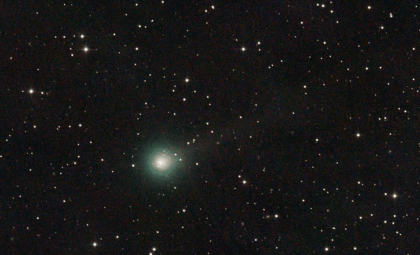
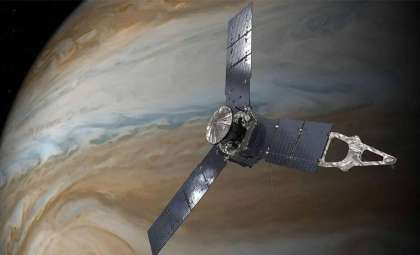
The European Space Agency's Jupiter Icy Moons Explorer (JUICE) will play an essential role in monitoring 3I/ATLAS during its closest approach to the Sun, known as perihelion. At this stage, solar radiation will cause the comet’s ice to sublimate, releasing gas and dust that forms its glowing tail—offering a prime opportunity to analyze its chemical components.
“JUICE’s position during the perihelion of 3I/ATLAS will provide unique observational capabilities when Earth-based telescopes face difficulties,” explained T. Marshall Eubanks, Chief Scientist at Space Initiatives Inc. Thanks to its proximity and advanced instruments, JUICE will capture data on the comet’s response to solar energy, deepening scientists’ understanding of interstellar comet dynamics.
Significance of Observing the Perihelion
The perihelion marks the peak of comet 3I/ATLAS’s activity as it nears the Sun, heating its icy nucleus and generating a vibrant cloud of gas and dust. This active phase releases material that forms a tail, allowing researchers to analyze its composition and contrast it with native solar system comets.
JUICE’s ability to observe during this critical window, when Earth-based telescopes are limited by the Sun’s bright interference, will provide unparalleled insights into the comet’s makeup and behavior, enhancing knowledge of differences between interstellar and solar system objects.
- Categories:
- News






0 comments
Sign in to Comment