
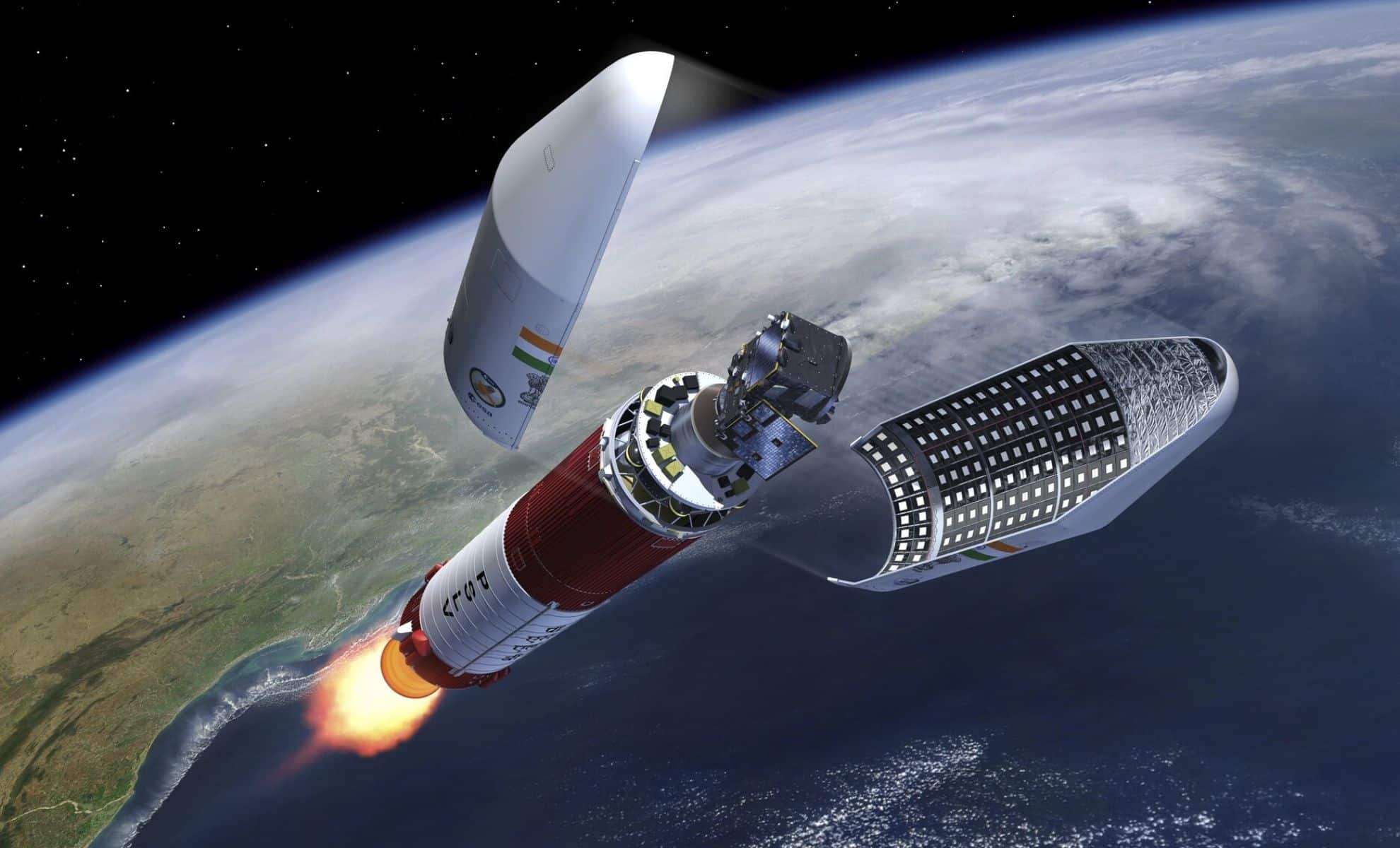
On December 5, 2024, the European Space Agency (ESA) launched its groundbreaking Proba-3 mission, designed to simulate solar eclipses in space. This innovative approach promises to shed new light on the Sun’s elusive outer atmosphere, known as the corona. By orchestrating artificial eclipses, the two Proba-3 satellites will work in tandem to obscure the Sun’s bright disk, enabling scientists to study its outer layers with unprecedented clarity and duration. This approach offers a unique perspective on the corona, previously accessible only during rare natural eclipses.
Innovative Satellite Formation for Creating Eclipses in Orbit
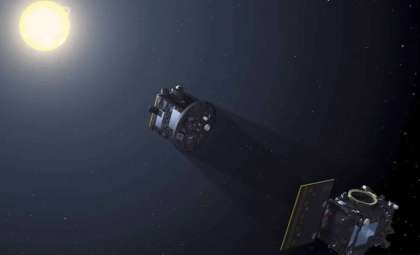
The core of the Proba-3 project involves two satellites named the Occulter and the Coronagraph, which will fly in precise synchronization at a fixed separation of approximately 500 feet. This arrangement will enable the Occulter to cast a shadow onto the Coronagraph, effectively producing a controlled eclipse while orbiting Earth. Unlike fleeting natural eclipses, this configuration will allow prolonged observation periods of the solar corona, lasting up to six hours per event.
ESA describes the positional accuracy as being "finer than the thickness of a fingernail," a level of precision rarely achieved in spaceflight. The satellites employ advanced technologies such as GPS, star trackers, lasers, and radio communication to autonomously maintain perfect alignment. This coordination allows the paired spacecraft to function as one integrated instrument system, delivering the precise optical conditions necessary for groundbreaking solar research.

Delving Into the Sun’s Mysterious Corona
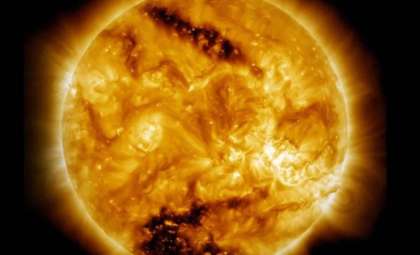
The corona, a tenuous plasma halo extending millions of kilometers, holds many unanswered questions. Notably, it is significantly hotter than the solar surface—reaching temperatures exceeding one million degrees Kelvin compared to the approximately 5,500 degrees Kelvin of the photosphere. Proba-3 aims to fill observational gaps that currently hinder comprehensive understanding, including monitoring Coronal Mass Ejections (CMEs) — massive bursts of solar plasma that can disrupt Earth’s communications and power infrastructure — along with studying solar wind acceleration mechanisms.
Dietmar Pilz, ESA’s Director of Technology, Engineering, and Quality, remarked, “Proba-3 has been many years in the making, supported through ESA’s General Support Technology Programme fostering novel technologies for space. It is an exciting feeling to see this challenging enterprise enter orbit.” His words highlight the mission’s dual nature, combining scientific discovery with experimental advances in autonomous spacecraft technology.
Revolutionizing Satellite Missions Through Formation Flying
Proba-3 represents a breakthrough in how spacecraft can be designed and operated collaboratively. It demonstrates the potential for multiple smaller satellites to function as a single sophisticated observatory, a shift from the traditional reliance on large, singular spacecraft. This approach opens possibilities for complex operations such as simulating solar eclipses or forming distributed sensor arrays in space.
ESA Director General Josef Aschbacher emphasized the mission’s significance by stating, “Proba-3’s coronal observations will take place as part of a larger in-orbit demonstration of precise formation flying. The best way to prove this new European technology works as intended is to produce novel science data that nobody has ever seen before.” He continued, “It is not practical today to fly a single 150-m long spacecraft in orbit, but if Proba-3 can indeed achieve an equivalent performance using two small spacecraft, the mission will open up new ways of working in space for the future. Imagine multiple small platforms working together as one to form far-seeing virtual telescopes or arrays.”
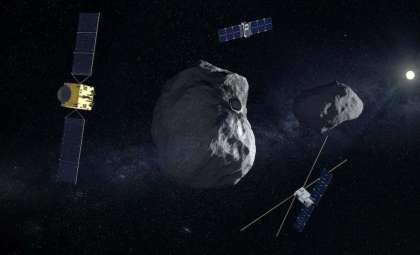
This innovative vision of interconnected small satellites could pave the way for more flexible and cost-efficient space missions, enhancing scientific capabilities across the solar system and beyond—from advanced telescopes to coordinated satellite networks for planetary defense.
Accessing Unparalleled Solar Data
The Proba-3 spacecraft were deployed aboard an Indian PSLV-XL rocket launched from the Satish Dhawan Space Centre, entering a highly elliptical orbit that extends over 37,000 miles from Earth. After a commissioning period in the coming months, the satellites will separate and undergo individual system checks. Full operations, planned for early 2025, will feature up to two artificial eclipses weekly, with resulting imagery and data shared with scientists worldwide.
The mission incorporates an advanced ASPIICS coronagraph, developed in partnership with the Royal Observatory of Belgium. This instrument will capture high-definition images of the corona, bridging observational gaps between Earth-based solar telescopes and ultraviolet space instruments. These insights will deepen our understanding of the Sun’s influence on the heliosphere, planetary environments, and conditions affecting habitability beyond Earth.
- Categories:
- News





0 comments
Sign in to Comment