
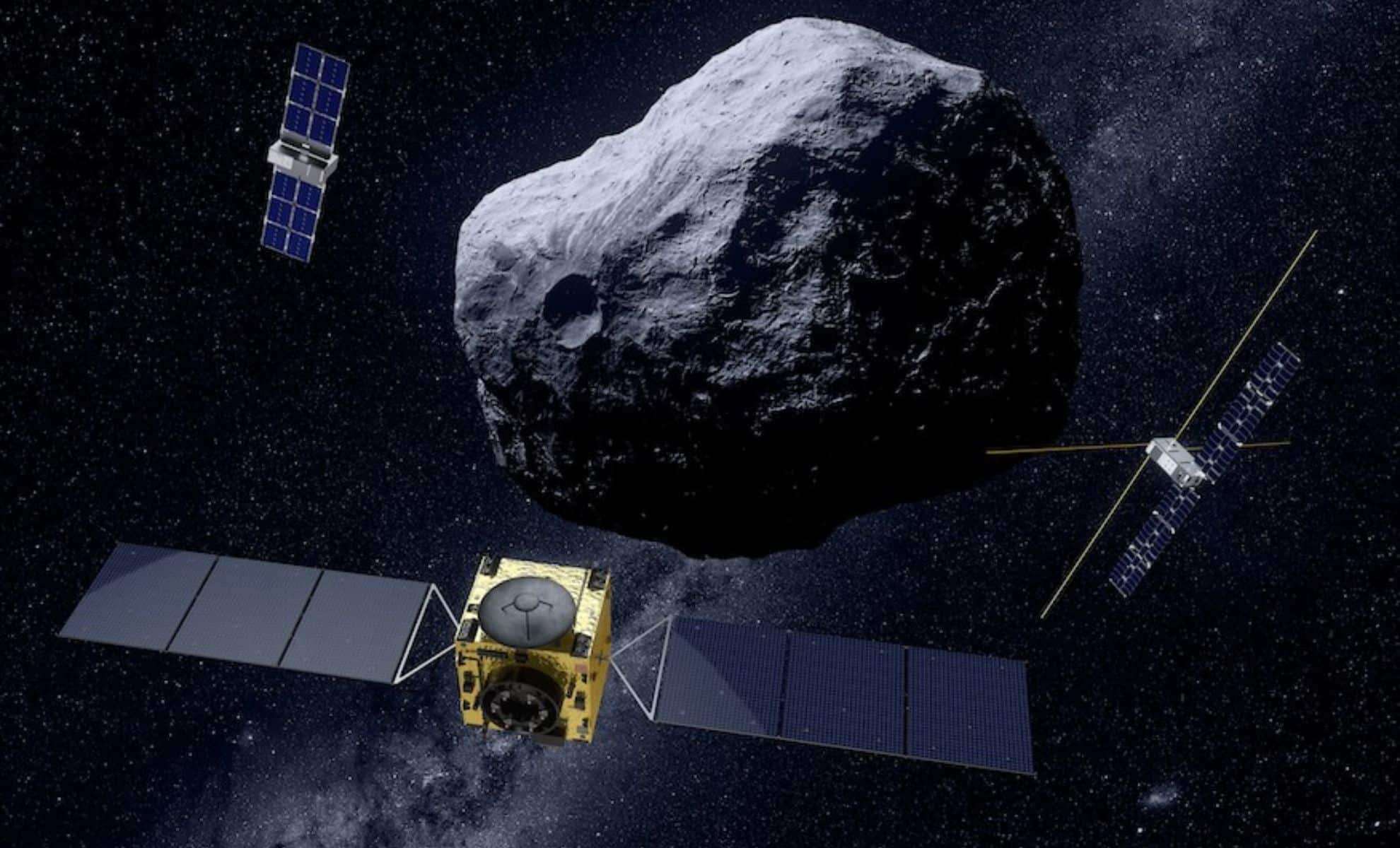
The European Space Agency (ESA) is launching its Hera spacecraft today aboard a SpaceX Falcon 9 from Cape Canaveral.
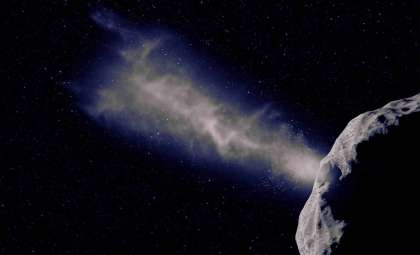
This mission targets the Didymos asteroid system to examine the aftermath of NASA’s DART mission, which altered the path of asteroid Dimorphos in 2022. Hera will deliver comprehensive data crucial for improving asteroid deflection techniques, a key component of defending Earth against potential asteroid impacts.
Mission Details: Enhancing Earth's Planetary Defense Capabilities
Hera’s primary goal is to carry out an in-depth survey of Dimorphos to assess the consequences of the DART mission’s collision. The spacecraft will measure the crater’s dimensions left by DART and investigate the asteroid’s interior and surface properties. These findings will support the development of refined strategies for asteroid threat mitigation.

Michael Kueppers, the mission’s lead scientist, highlighted the importance of Hera’s data for future preparations: “Once we have Hera and we investigate Dimorphos in detail, we know what its properties are, and in case anything happens, we can extrapolate the results from DART and Hera.” This analysis will aid in better predicting effective deflection tactics against hazardous asteroids.
Viewing the Launch Live
The launch of the Hera mission is scheduled for 10:52 a.m. EDT (1452 GMT) today aboard SpaceX's Falcon 9. The event will be broadcast live on ESA's official YouTube channel, providing viewers with real-time coverage of the entire launch sequence.
Launch conditions face uncertainty due to approaching Hurricane Milton. The 45th Weather Squadron reports only a 15% likelihood of optimal weather within the launch window. Despite this, mission officials remain optimistic. The launch opportunity will remain open until October 27 if initial attempts are delayed.
The Falcon 9 booster, designated B1061, is making its 23rd and final flight on this mission. This booster has supported notable endeavors like Crew-1 and Crew-2, but due to Hera’s deep space trajectory, this launch will mark its retirement.
Extended Exploration and CubeSat Partners
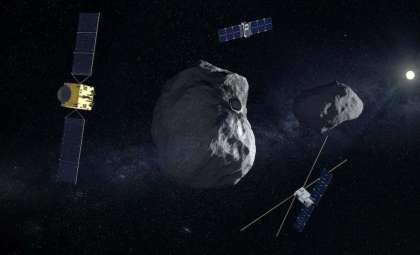
After launch, Hera will embark on a two-year cruise to intercept Dimorphos. Unlike the rapid collision approach of DART, Hera will conduct a meticulous, gradual study of the asteroid, focusing on the crater and overall asteroid characteristics. Additionally, it will release two mini satellites, Milani and Juventas, tasked with enhancing scientific observations.
Milani is designed to examine the asteroid’s surface features, while Juventas will investigate its internal makeup and gravity field. Margherita Cardi, Milani’s program manager, noted that although a landing on the asteroid isn't essential, attempting one could demonstrate new technologies. Juventas will employ radar technology to peer beneath Dimorphos’ surface, pioneering interior asteroid studies.
This mission marks a significant advancement in the study of planetary defense. Jan Persson, Juventas’ project leader, explained that their gravity instrument will analyze the pull of an asteroid roughly the size of Egypt’s pyramids, providing unique insights. Together, Hera and its CubeSats will deepen our understanding of asteroid deflection mechanisms.
Long-Term Impact on Planetary Defense Efforts
Upon its arrival in 2026, Hera will undertake a slow and detailed examination of Dimorphos, allowing prolonged observations unlike DART’s one-time impact. This approach mirrors ESA’s Rosetta mission, which provided invaluable close-up study of Comet 67P through gradual approach.
Cheryl Reed, a notable member of NASA’s DART team, underlined the importance of Hera in conjunction with DART: “These two missions collectively… put planetary defense on the map.” Reed emphasized that while DART captured public imagination about asteroid threats, Hera will extend that knowledge by detailing how impacts can be managed.
By delivering crucial insights for future asteroid deflection, the Hera mission stands as a milestone in strengthening Earth’s protection from asteroid dangers.
- Categories:
- Astronomy ,
- News ,
- Space





0 comments
Sign in to Comment