
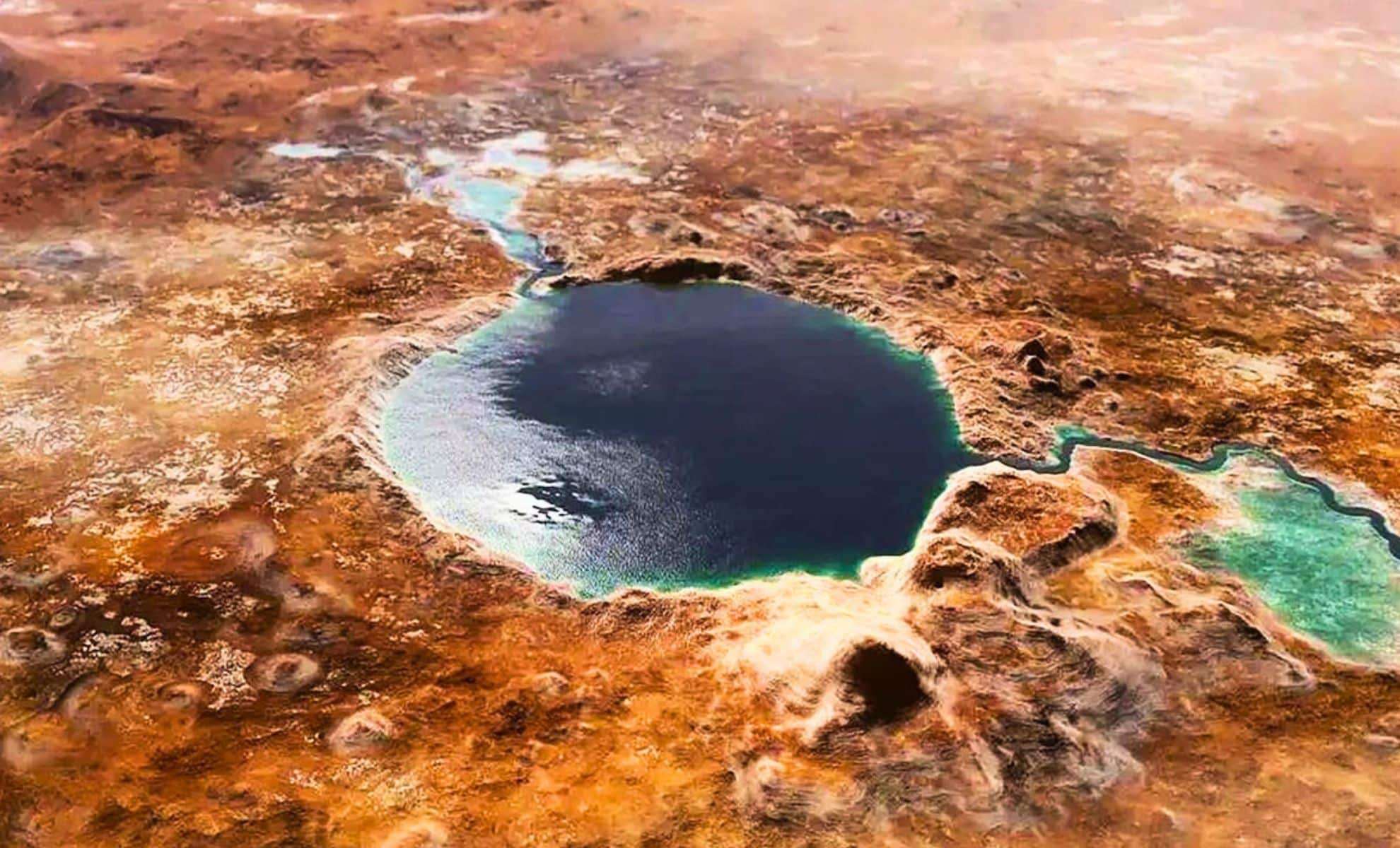
Groundbreaking recent findings reveal the presence of wave ripple formations on Mars, dating back billions of years, which indicate that shallow bodies of liquid water once existed exposed to the Martian atmosphere. This discovery provides fresh insight into Mars’ historic climate and its capacity to harbor life.
Unraveling the Origin of Martian Ripples
Researchers have identified distinctive "wave ripples" on the surface of Mars that formed around 3.7 billion years ago through the combined influences of water and wind. These ripple patterns point to a period when Mars supported liquid lakes, contrasting with its current icy, arid environment.
Claire Mondro, a postdoctoral researcher at CalTech and the principal investigator of the study, remarked, “The ripple morphology indicates formation beneath open water that was influenced by atmospheric winds.”

Climate Clues Encoded in Ripple Structures
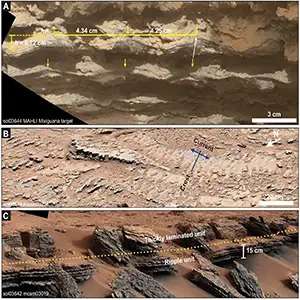
The wave ripples observed are produced when water currents pass over loose sediment, with wind further shaping these formations. Similar structures are commonly found in shallow aquatic environments on Earth, such as lakes and coastlines. The ripples, spaced roughly 4 to 5 centimeters apart, imply a lake depth no greater than 2 meters.
Geologist Dr. Michael Lamb from CalTech used computer simulations to replicate the formation of these ripples, unveiling new details about Mars’ ancient atmosphere. “These ripples are compelling proof of liquid water and suggest a warmer, thicker atmosphere was necessary to maintain these conditions,” Lamb explained.
Transformation of Mars’ Atmosphere and Water Loss
Billions of years ago, Mars’ environment was much different, likely characterized by a denser atmosphere rich in carbon dioxide and water vapor, which created sufficient greenhouse warming to sustain liquid water.
- Dense Atmosphere: A thicker gaseous envelope supported stable lakes and drove climatic mechanisms responsible for wave ripple creation.
- Atmospheric Stripping: Solar winds gradually eroded the Martian atmosphere, leading to its current cold, arid state incapable of maintaining surface water.
- Extended Habitability: The ripple evidence suggests liquid water persisted longer than earlier estimates, offering a prolonged window for possible microbial ecosystems.
The presence of these wave ripples helps refine the timeline of Mars’ climate evolution, highlighting past conditions suitable for liquid water.
Innovative Methods Revealing Mars’ Past
This research combined detailed imagery from NASA’s Curiosity rover with analog studies on Earth and sophisticated modeling techniques.
- Role of Curiosity: The rover’s high-resolution cameras captured detailed ripple formations in Gale Crater during 2022.
- Comparative Earth Studies: By examining similar ripples on Earth, researchers confirmed the role of liquid water and wind interplay in their development.
- Dynamic Simulations: Computer models recreated water and wind interactions, validating the environmental conditions that generated the Martian ripples.
These approaches emphasize the significance of robotic explorers in decoding planetary histories and guiding future research.
The Importance of Water on Mars
Liquid water is a fundamental requirement for all known life forms. Discovering wave ripples on Mars fuels exciting prospects for ancient life and holds vital implications for upcoming manned missions.
- Astrobiology: Ancient lake beds could harbor preserved organic molecules or isotopic markers hinting at past microbial life.
- Human Missions: Water remains critical for astronaut survival and resource utilization, such as oxygen generation and fuel production; locating former lake sites could aid in water extraction.
- Exoplanet Research: Mars' climatic shift provides a valuable template for understanding similar planetary transformations beyond our solar system.
Continuing Discoveries in Martian Exploration
During its mission, NASA’s Curiosity rover documented the ripple features in Gale Crater, while the nearby Amapari Marker Band site revealed evidence of another shallow lake that formed shortly thereafter, broadening our knowledge of Mars’ aqueous history.
John Grotzinger, former Curiosity project scientist, commented, “The identification of these wave ripples marks a major step in reconstructing Mars’ paleoclimate, demonstrating the existence of ice-free lakes and providing new clues about the planet’s early environment.”
The complete research findings are published in Science Advances.
- Categories:
- Science






0 comments
Sign in to Comment