
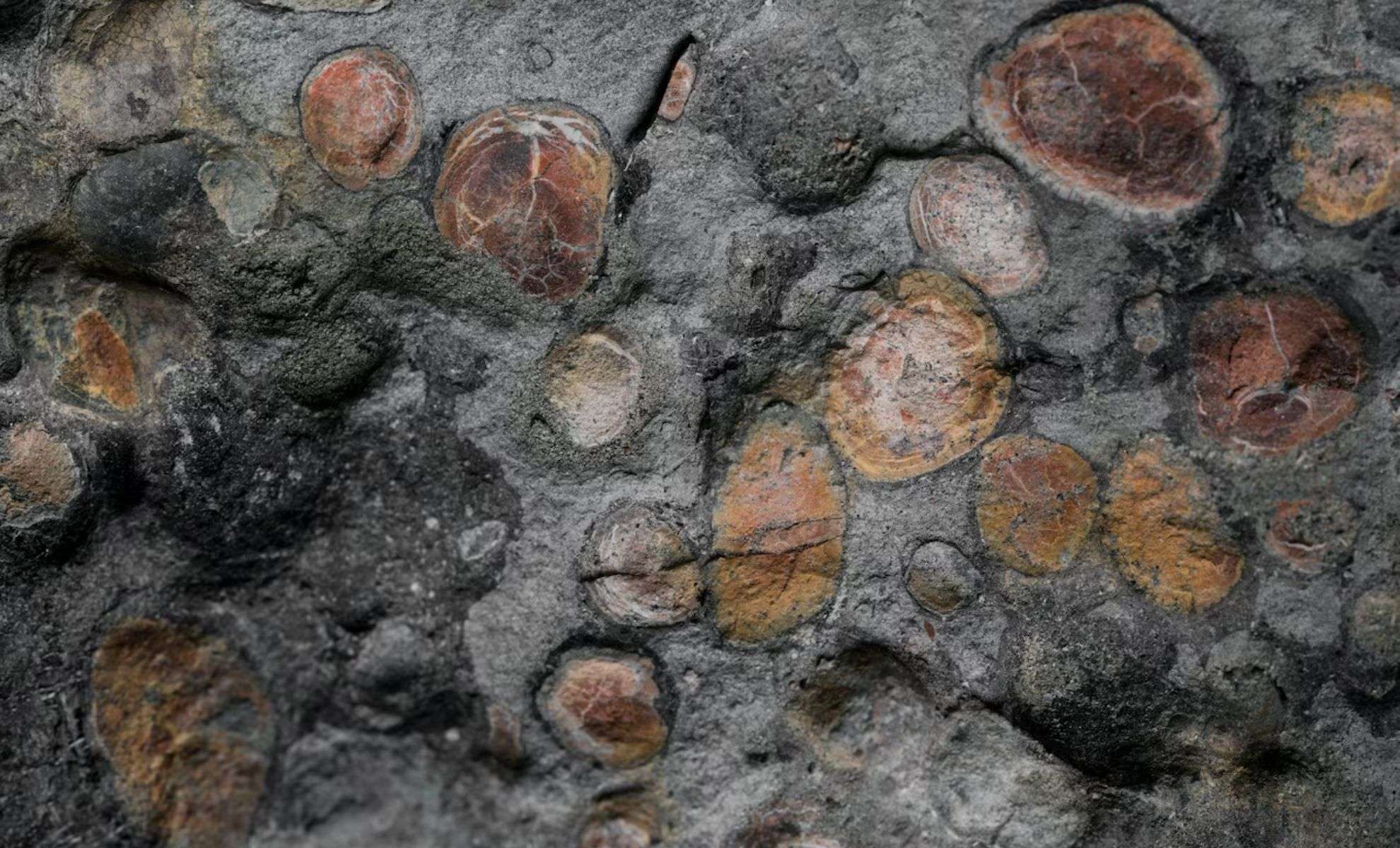
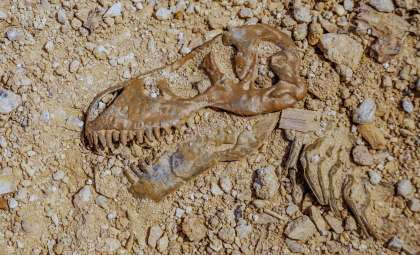
Deep within a secluded Canadian mine, an excavator operator unexpectedly uncovered a remarkable discovery: an astonishingly well-preserved dinosaur fossil that seems almost freshly deceased. This 110-million-year-old nodosaur, remarkably intact from head to hips, is widely regarded as the most complete specimen of its type ever found.
First found by miner Shawn Funk in 2011 and now housed at the Royal Tyrrell Museum, the fossil reveals more than just bones. Its remarkable preservation includes skin, body armor, keratin sheaths, and even traces that might represent its final meal, all meticulously embedded in stone.
A Glimpse into Prehistoric Life Preserved in 3D
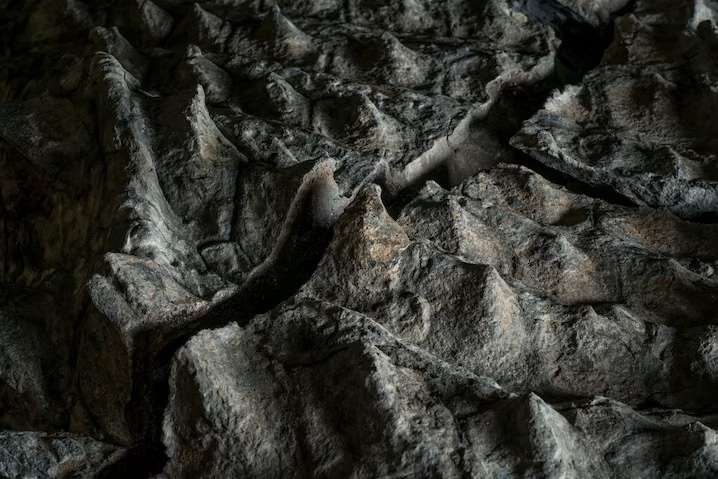
In contrast to the majority of dinosaur fossils, which primarily consist of skeletal remains or isolated teeth, this nodosaur exhibits preserved skin, scale impressions, keratinous spikes, and even remnants of its original coloration. As National Geographic reports, paleobiologist Jakob Vinther from the University of Bristol was amazed by the fossil: “It might have been walking around a couple of weeks ago.”

The dinosaur’s carcass floated belly-up on the surface of an ancient sea, its internal gases keeping it buoyant until it ruptured and sank. Rapid sedimentation then entombed it, creating a protective casing. Remarkably, this fossil retains its three-dimensional shape, preserving everything from the elegant curvature of its neck to the spread toes of its right foot.
Even the keratin sheaths covering its shoulder spikes survived the fossilization process. Royal Tyrrell Museum curator Donald Henderson described the specimen as “the Rosetta stone for armor.”
An Unprecedented Preservation
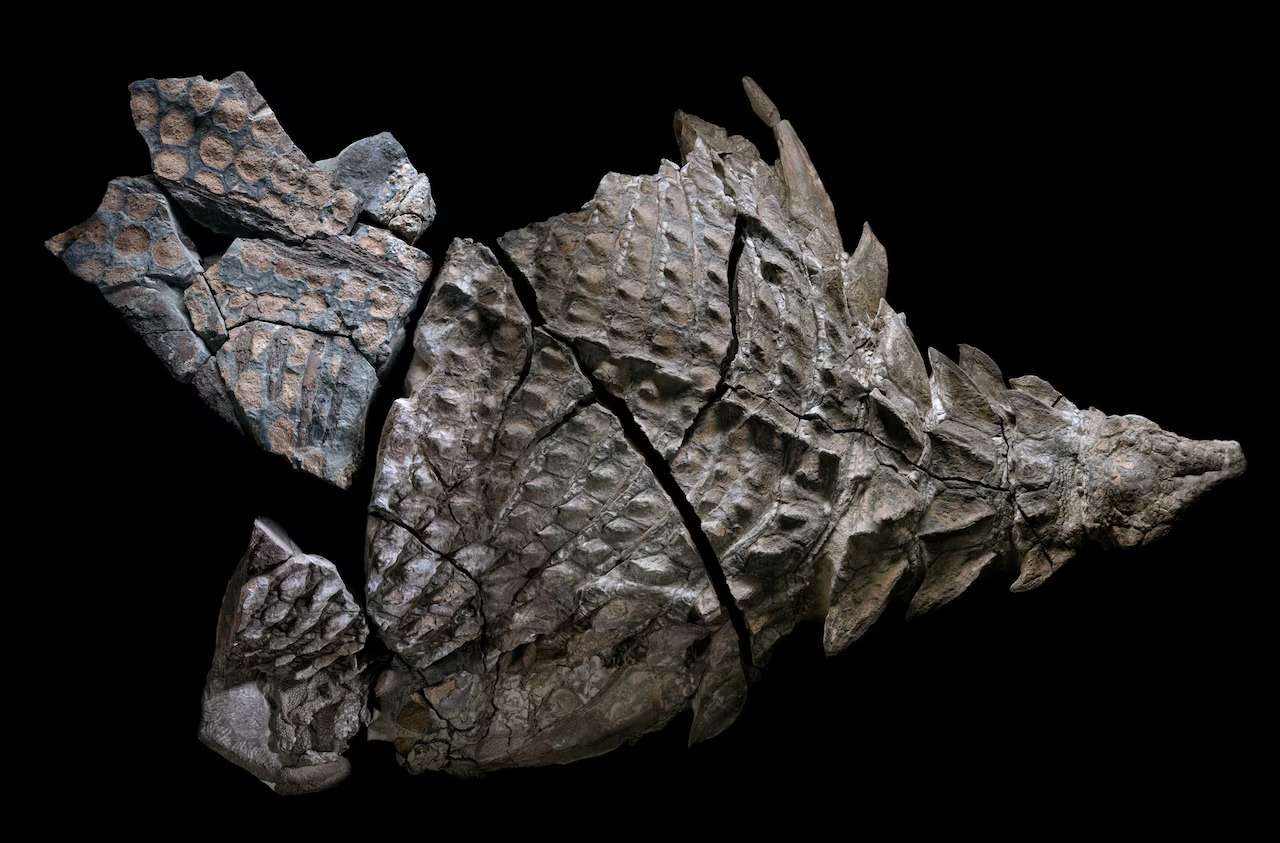
This specimen belongs to a previously unidentified genus and species of nodosaur, a member of the ankylosaur family notable for lacking the trademark tail club but compensating with robust armor plating. Measuring roughly 18 feet in length and weighing nearly 3,000 pounds, it featured two formidable 20-inch shoulder spikes.
During the mid-Cretaceous, this region of western Canada resembled the modern subtropics, akin to today’s South Florida, with dense conifer forests and fern-covered meadows. The nodosaur lived as a solitary herbivore, likely feeding on low-growing plants while evading predators such as Acrocanthosaurus.
Researchers are still piecing together the full anatomy of this new species, as portions of the skeleton remain embedded beneath its skin and armored plating. Attempts to examine internal structures with CT imaging have been largely unsuccessful due to the density of the host rock. Fossil preparator Mark Mitchell has already dedicated more than 7,000 hours to carefully exposing surface details, likening the process to “freeing compressed talcum powder from concrete.”
A Fossil Almost Lost to Time
When miner Shawn Funk struck an unusual formation in the mine wall, he and his team quickly realized it was more than just stone. Experts from the Royal Tyrrell Museum were flown in by a jet provided by Suncor, the mine's operating company, to manage the delicate excavation.
Removing the fossil posed immense challenges. The 15,000-pound rock housing the nodosaur fractured during extraction, splitting the specimen into multiple pieces. Darren Tanke from the museum devised an emergency strategy overnight, employing plaster-soaked burlap instead of timber supports to safely transport the fossil. Thanks to this inventive solution, the fossil was transported intact over 420 miles to the museum.
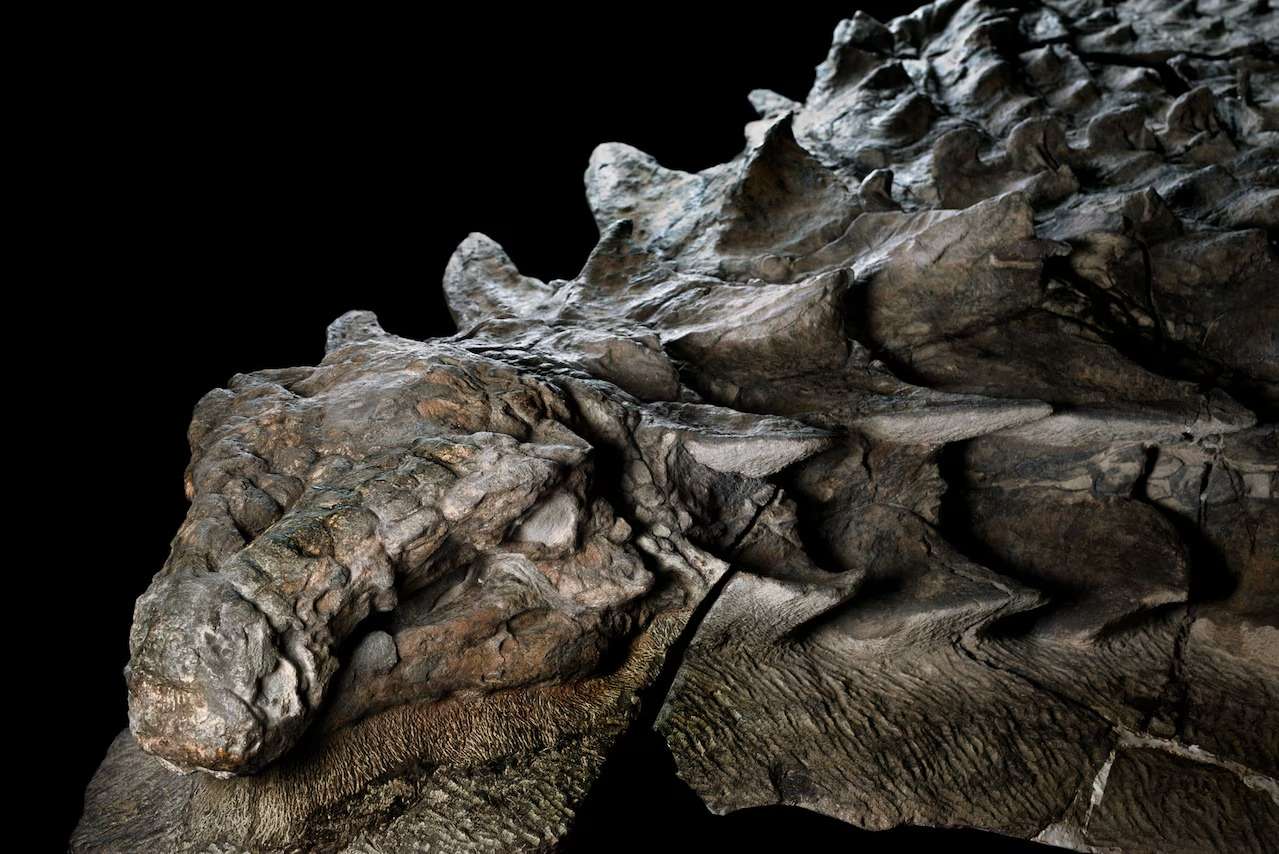
Now partially revealed, this extraordinary fossil is the highlight of a new exhibit showcasing discoveries from Alberta’s industrial sites. Visitors can admire the preserved skin scales, distinctive armor, and visible forelimb digits in remarkable detail.
Victoria Arbour of the Royal Ontario Museum emphasizes that this nodosaur is more than a display—it serves as a rare window into an ancient world of tropical ecosystems, dense vegetation, and prehistoric coastal seas that once covered the Canadian plains.
- Categories:
- News







0 comments
Sign in to Comment