
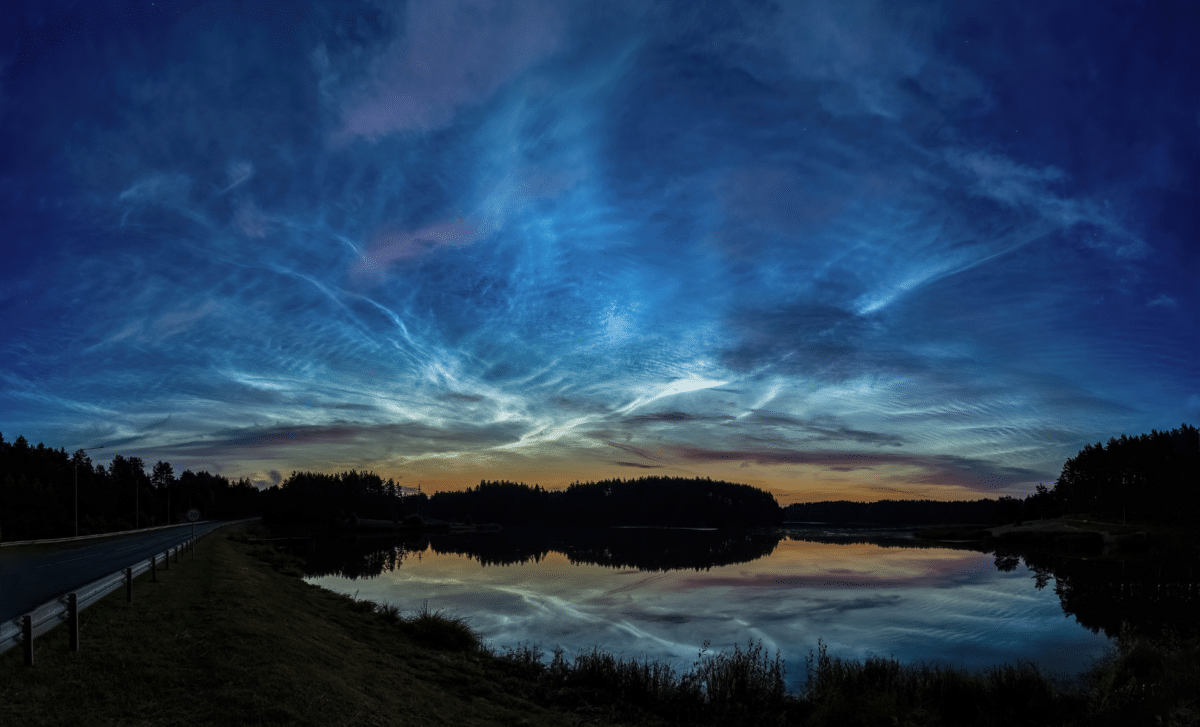
Delicate noctilucent clouds are once again gracing the twilight horizon, presenting a stunning display for both early morning and evening observers. These unique clouds, made of minuscule ice crystals near the edge of space, have started appearing across parts of the northern hemisphere, signaling the arrival of their 2026 viewing season.
Understanding Noctilucent Clouds: What Makes Them Glow
Noctilucent clouds develop approximately 50 miles (80 kilometers) above the Earth's surface in the mesosphere, which is nearly tenfold higher than typical clouds. Their lofty position means they intercept sunlight well after the sun dips below the horizon or just before dawn, producing shimmering shades of silver and blue against the twilight. Contrary to standard clouds, which appear dark at these times, noctilucent clouds reflect sunlight in a distinctive manner that gives them an ethereal, luminous quality.
Composed of extremely fine ice crystals formed in frigid conditions near the polar areas, these clouds are seasonally dependent on atmospheric variables and Earth’s tilt toward the sun. This explains why their visibility peaks during summer months at high northern latitudes. Their fragile nature, influenced by swift upper atmosphere winds, makes photographing them a rewarding challenge for astronomy fans.

Best Times and Places for Viewing
The ideal period to admire these clouds spans from mid-May through mid-August, with the greatest activity typically occurring in July. Latitude zones between 45° and 80° north, especially over North America and Northern Europe, offer the best chances for sightings. The UK Met Office notes that the mesosphere is coldest in these zones, creating suitable conditions for noctilucent cloud formation.
Look to the western sky during deepening twilight when stars begin to twinkle for your best view. Their faint, glowing patterns vividly contrast with the darker backdrop and the shadowed, lower clouds. Dedicated photographers, including John Clement from Kennewick, Washington, have snapped stunning long-exposure images revealing sweeping patterns of this rare celestial phenomenon. Such encounters highlight how even brief glimpses can capture one of the sky's most extraordinary occurrences.
The #NoctilucentCloud season 2026 which began a few nights ago at high Northern latitude has reached Germany: a #webcam view – https://t.co/E4YbOrJ8Hl – from #Flensburg at 54.8°N from 15 minutes ago! pic.twitter.com/Ycy4EB55Ee
— Daniel Fischer @[email protected] (@cosmos4u) May 31, 2026
Growing Public Interest Fueled by Social Media
The fascination with noctilucent clouds is expanding rapidly through social networks. Amateur astronomers like Daniel Fischer have broadcast these sightings live from Germany, igniting enthusiasm and sharing through the hashtag #NoctilucentCloud. Online communities are bridging observers globally, helping to exchange updates and follow the season’s developments.
Coverage from Space.com emphasizes how accessible these phenomena have become, encouraging people to look up at twilight and witness this breathtaking high-altitude spectacle. These glowing clouds intrigue scientists and photographers alike, while also illustrating the complex, layered nature of Earth's atmosphere.
- Categories:
- News





0 comments
Sign in to Comment