
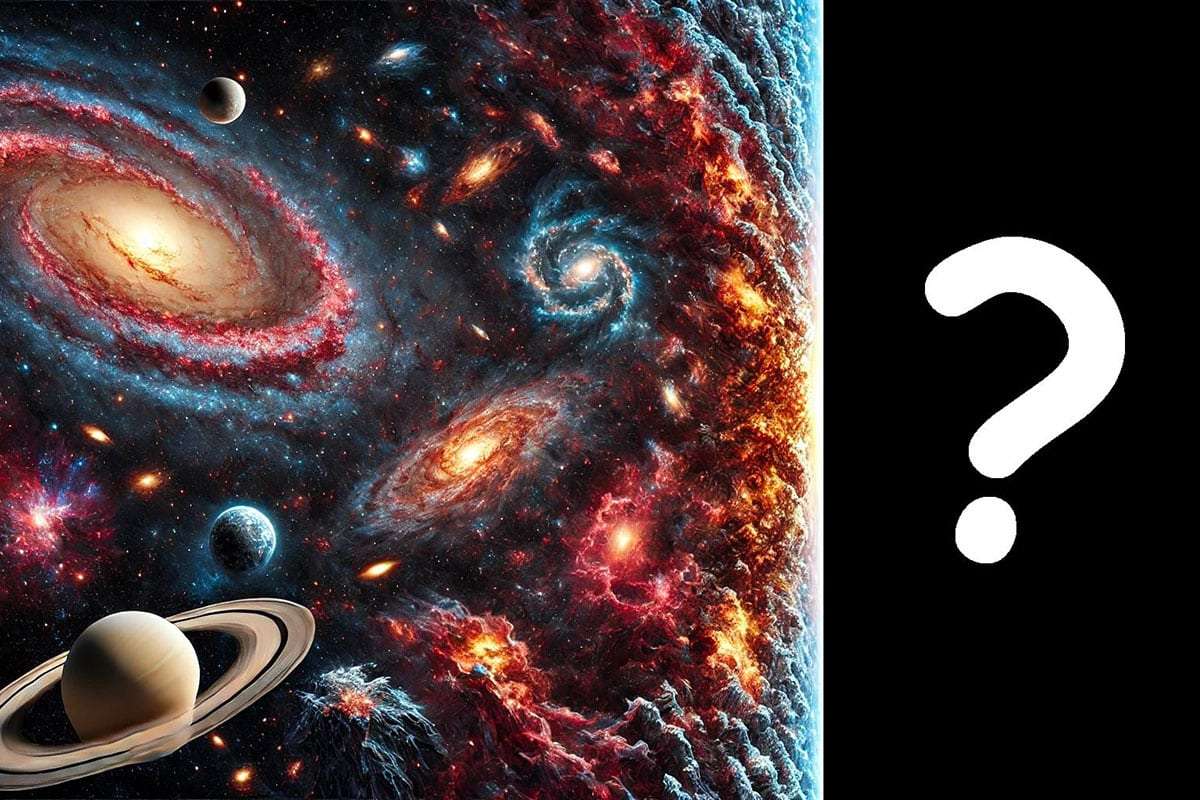
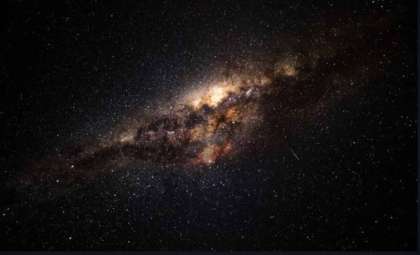
Understanding the Universe's boundary begins with the concept of the observable Universe, which represents the portion of space accessible to detection from Earth. This observable realm extends roughly 93 billion light-years across.
Our observational limits stem not from technology, but from the intrinsic properties of light and time. Since light travels at a finite speed—299,792,458 meters per second—the light emitted by distant celestial objects requires vast amounts of time to arrive, allowing us to essentially see into the past when we gaze far out into space.
This leads to an intriguing paradox: the farther away an object is, the older the light we witness. The most remote visible objects emit light that has just reached us since the Universe’s inception. Past this boundary lies the cosmic microwave background radiation, the oldest detectable light, originating around 380,000 years after the Big Bang.

Hypotheses and ideas about the universe's boundaries
Although the observable Universe has clear-cut edges, the true vastness of the cosmos remains uncertain and hotly debated. Several conceptual models attempt to describe what might exist beyond the limits we can observe:
- Infinite Universe: Some theorists believe the Universe extends endlessly in every direction, lacking any definitive edge or border.
- Multiverse: This concept proposes that our Universe is just one among many coexisting universes in an immense multiverse.
- Curved Space: According to this idea, space could be curved such that it bends back on itself, making the Universe edge-less like the surface of a globe.
- Black Hole Universe: An intriguing suggestion posits that our entire cosmos might reside within a black hole, challenging conventional Big Bang views.
These perspectives emphasize how complex defining cosmic boundaries is, reflecting the current limits of our knowledge. As observational technology advances, our concepts of the Universe’s extent may shift dramatically.
The impact of cosmic expansion on perceived limits
A key puzzle in cosmology is the Universe’s continual expansion. Pioneered by Edwin Hubble’s findings in the 1920s, it was shown that galaxies move apart at speeds proportional to their distance—more distant galaxies recede faster. This discovery fundamentally affected how we interpret the Universe’s structure and its potential edges.
The expansion of space leads to a curious effect: as the Universe enlarges, the boundary of our observable Universe also expands. This means the cosmic horizon is dynamic and ever-changing rather than static. Paradoxically, some regions now recede from us faster than light can travel, rendering them permanently beyond observation.
This ongoing expansion prompts questions about the ultimate nature of space and time. Will the expansion persist endlessly, or slow and perhaps reverse? The resolution of these mysteries will shape our understanding of cosmic boundaries and the Universe’s destiny.
Advancing our grasp of the cosmos
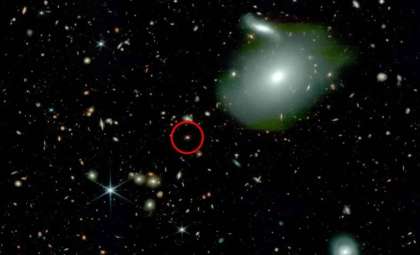
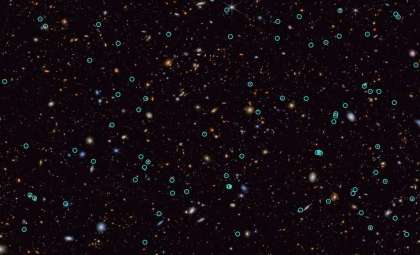
Ongoing exploration deepens our insight into the Universe’s form and boundaries. Advanced instruments like the James Webb Space Telescope allow us to peer further back and view galaxies and phenomena previously unseen, pushing the limits of what’s observable.
These insights expand knowledge while generating new puzzles. For example, the Butterfly Effect theory examines how tiny variations in initial conditions might produce vastly different cosmic outcomes, possibly even spawning entire universes within black holes.
Though directly witnessing the Universe’s edge—if one exists—may remain beyond reach, the quest to understand it fuels scientific progress and philosophical wonder. As new discoveries dawn, the enigma of cosmic boundaries continues to inspire and challenge our grasp of reality.
- Categories:
- Astronomy





0 comments
Sign in to Comment