
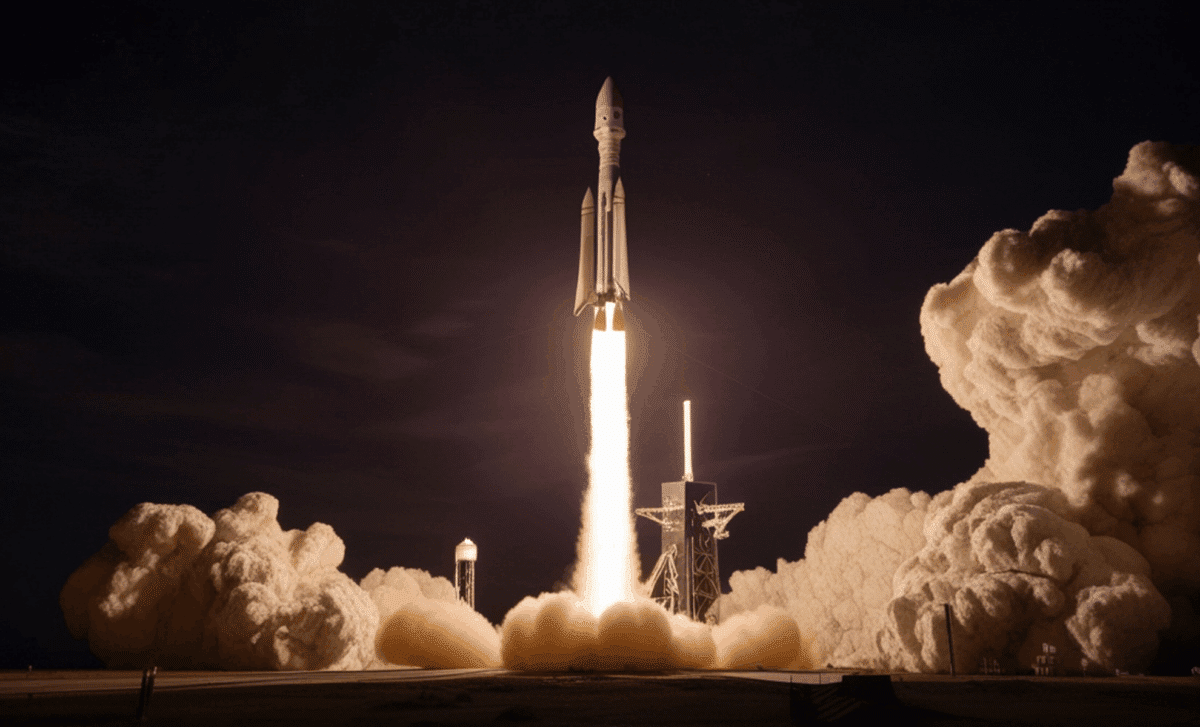
The aerospace sector is experiencing unforeseen challenges due to the prolonged U.S. federal government shutdown. To maintain air traffic safety, the Federal Aviation Administration (FAA) has enacted stringent restrictions on commercial rocket launches, particularly targeting daytime operations. These measures have significant implications for SpaceX and other leading space companies, underscoring how government closures can cascade into pivotal industries and complicate launch timelines.
FAA Issues Launch Restrictions to Protect Airspace During Shutdown
As the government shutdown stretched into its second month, the FAA introduced emergency protocols to address staffing shortfalls, notably among air traffic controllers who are either furloughed or working unpaid. The agency’s goal is to minimize risks to navigable airspace during rocket launches. As detailed in the FAA release, diminished controller availability has destabilized air traffic safety, prompting the FAA to implement prohibitions on daytime commercial rocket launches to avoid conflicts with aircraft operations.
These rules will remain effective indefinitely until normal government functioning resumes with full staffing capacity. SpaceX, the dominant entity in commercial launches, faces the greatest disruption due to its frequent missions, including a series of Starlink deployments aimed at expanding constellations for global broadband. Other providers like United Launch Alliance, scheduled for critical satellite deployments, may also encounter delays, adding bottlenecks to an already busy flight schedule.

SpaceX and Industry Leaders Respond to Launch Interruptions
SpaceX, a pioneer in commercial space ventures, is deeply impacted by the FAA’s emergency mandate. Their ambitious Starlink initiative, designed to create a satellite network providing worldwide internet, has already launched over 140 missions this year. The FAA’s restrictions threaten to cause significant schedule setbacks amid what was forecasted as an unprecedented year for satellite launches.
For the company, adapting to these limitations poses complex logistical obstacles. Although SpaceX meticulously plans each launch, the FAA’s directives could generate cascading delays, affecting the tight operational timetables for deploying satellites. Furthermore, this disruption extends beyond SpaceX; NASA’s extensive projects like the ESCAPADE Mars mission may also be postponed due to constrained airspace access and limited staffing.
Extended Effects on U.S. Space Exploration
The government shutdown’s impact extends well beyond immediate launch delays, posing serious challenges to the broader U.S. space agenda. Reports from Space.com indicate that approximately 95% of NASA’s workforce has been furloughed, severely undermining mission scheduling and execution. NASA’s flagship programs, including Artemis lunar exploration and Mars expeditions, rely heavily on a fully staffed and operational team for mission oversight and astronaut support.
Continued workforce shortages add complexity to both government and commercial missions, with projects such as satellite launches and spacecraft development progressing without the usual federal support. This situation raises concerns about the sustainability of U.S. space endeavors while operating under reduced government capacity, especially with critical missions on the horizon.
This shutdown highlights the delicate balance and interdependence within the aerospace sector, emphasizing the essential nature of government-private sector coordination. As the standoff lingers, spaceflight organizations may need to revise their strategies to navigate these unprecedented constraints and pursue alternative solutions to avoid further interruptions.
- Categories:
- News












0 comments
Sign in to Comment