
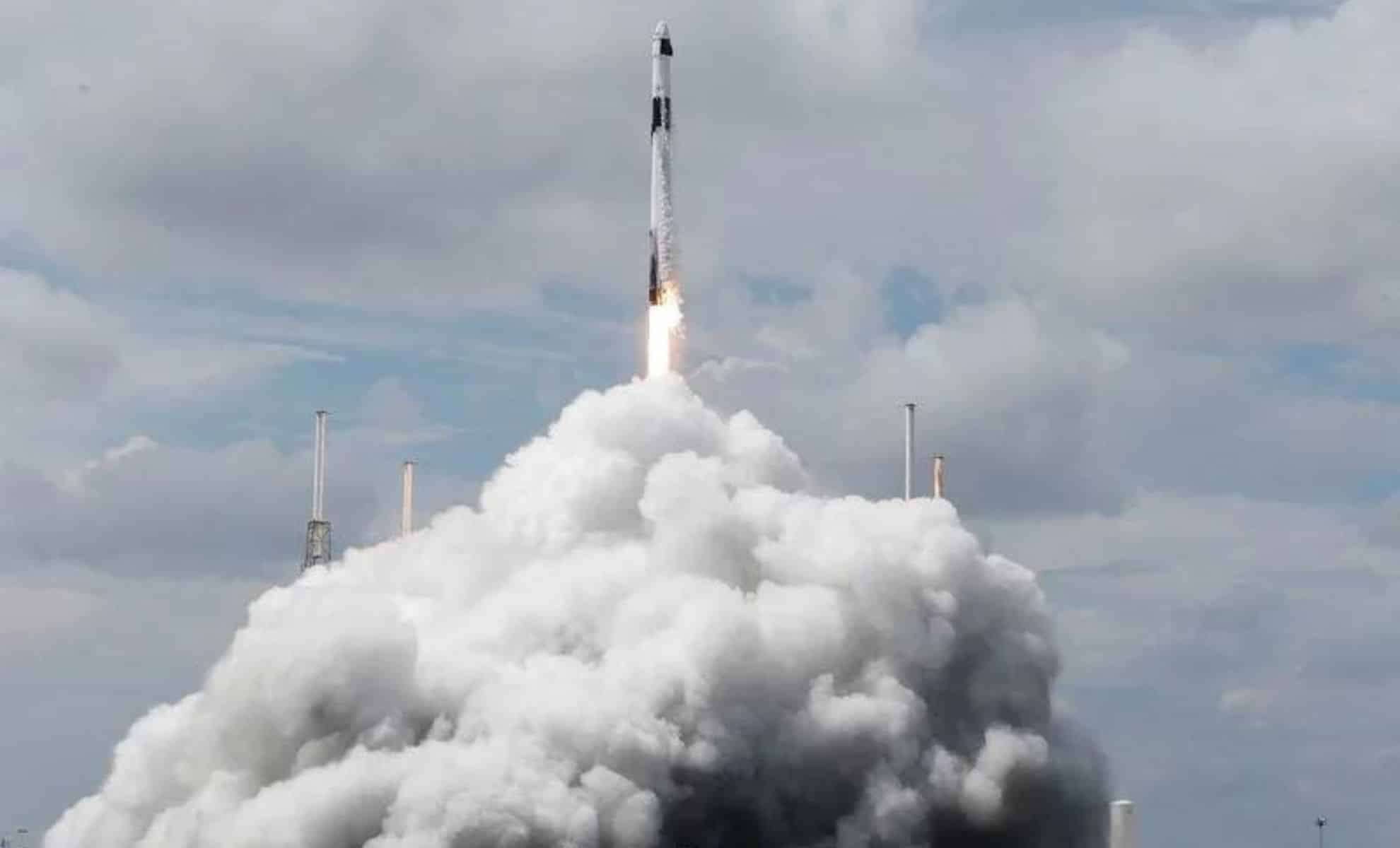
The U.S. Federal Aviation Administration (FAA) has suspended all launches of SpaceX’s Falcon 9 rocket following its third malfunction within a three-month span. Though the vehicle recently delivered NASA's Crew-9 crew safely to the International Space Station (ISS), a problem arose during the Falcon 9’s second stage deorbit burn operation, prompting the FAA to impose a ground hold and demand an in-depth probe. This suspension jeopardizes several prominent missions including NASA’s Europa Clipper and the European Space Agency’s Hera project.
Issue During Falcon 9's Deorbit Maneuver
The mishap happened following the successful launch of two astronauts, NASA’s Nick Hague and Russian cosmonaut Aleksandr Gorbunov, aboard the Dragon spacecraft headed to the ISS on September 30, 2024. While docking proceeded without incident, the Falcon 9’s second stage, responsible for performing a controlled deorbit burn to safely remove the upper stage, did not complete the maneuver as planned.
The deorbit burn is vital for steering the rocket’s upper stage into a designated ocean zone to minimize risks. In this case, the Falcon 9 second stage failed, resulting in its descent into the Pacific Ocean beyond the approved safety perimeter.

SpaceX addressed the incident, explaining, “The second stage experienced an off-nominal deorbit burn. As a result, the second stage safely landed in the ocean, but outside of the targeted area.”
In light of this, the FAA, which governs launch and re-entry safety, has paused all Falcon 9 launches pending a comprehensive review. SpaceX accepted this decision, tweeting on X (formerly Twitter), “We will resume launching after we better understand root cause.”
After today’s successful launch of Crew-9, Falcon 9’s second stage was disposed in the ocean as planned, but experienced an off-nominal deorbit burn. As a result, the second stage safely landed in the ocean, but outside of the targeted area.
We will resume launching after we…
— SpaceX (@SpaceX) September 29, 2024
Falcon 9's Recent Technical Setbacks
This recent malfunction adds to a troubling sequence for SpaceX, marking the third complication with Falcon 9 in just three months. Back in July 2024, a liquid oxygen leak disrupted a routine Starlink satellite launch, causing the loss of 20 satellites. Following an internal investigation that identified a cracked pressure sensor line as the culprit, launches resumed within 15 days after FAA clearance. In August 2024, a Falcon 9 first stage failed to land as intended, resulting in its destruction. Although the mission succeeded overall, this event did not lead to a launch suspension.
Despite these setbacks, the Falcon 9 remains a vital platform for SpaceX and the aerospace sector, deploying between two to three rockets weekly in 2024 alone. While its reusable first stage has been reliable, recent issues have concentrated on the non-reusable second stage, prompting increased regulatory attention.
Consequences for Upcoming Space Launches
The Falcon 9 grounding arrives at a pivotal time for several landmark projects. NASA’s Europa Clipper mission set for October 2024 to explore Jupiter’s icy moon, and ESA’s Hera asteroid study mission are both at risk of postponement due to strict launch timeframes that must be met this month.
Furthermore, a mission to deploy 20 internet satellites from Eutelsat OneWeb has already been pushed back due to the FAA’s halt. These missions carry significant scientific and commercial value, and delays could ripple across the global space industry.
SpaceX's Reaction and Ongoing FAA Relations
While addressing the current problem, SpaceX finds itself amid mounting friction with the FAA. The agency, responsible for ensuring safe launches and re-entries, has grown increasingly cautious following Falcon 9’s recurring anomalies. In 2023, the FAA even levied fines against SpaceX over alleged launch license violations, complicating the regulatory relationship.
Nevertheless, SpaceX continues to advance rapidly, dominating launch cadence and pioneering technology. The Falcon 9 serves as a cornerstone for worldwide space endeavors, though recent setbacks highlight the challenges inherent to pioneering aerospace innovations. The company's ongoing internal review will proceed under FAA oversight to prioritize safety and mission reliability.






0 comments
Sign in to Comment