
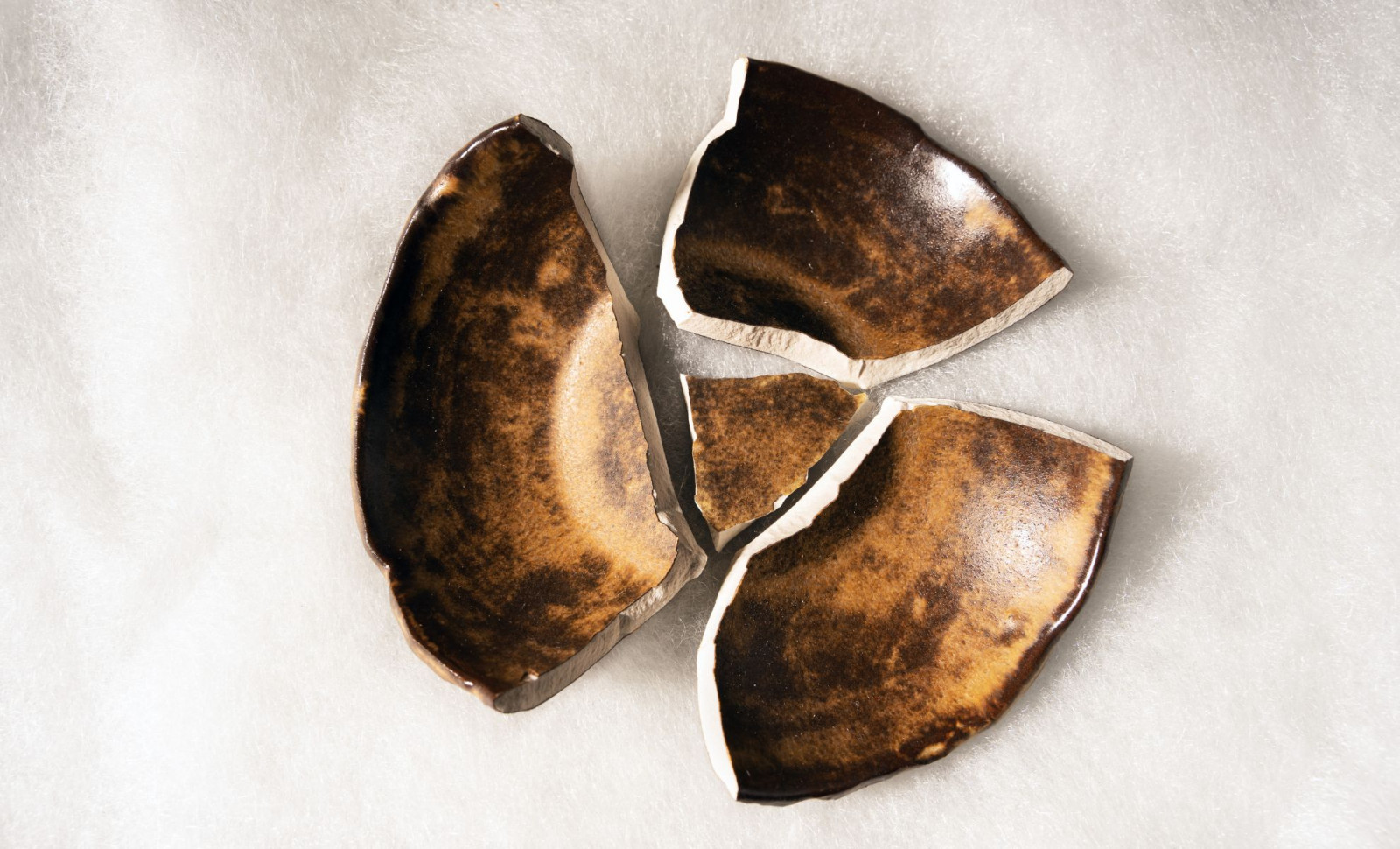
A team of French scientists has created a ceramic with toughness surpassing traditional ceramics by a factor of ten, employing a method centered on water, alumina powder, and precision-controlled freezing. This innovation mimics the intricate design of nacre, also known as mother-of-pearl, found in abalone shells, replicating its natural crack-resistant structure.
Ceramics are prized in manufacturing for their hardness, heat endurance, and rigidity but are often limited by their brittle nature. Cracks that develop tend to spread quickly, leading to sudden failure under mechanical stresses or impacts.
Addressing this vulnerability, French scientists devised a bio-inspired ceramic exhibiting fracture resistance up to ten times greater than usual materials of the same kind.

Drawing Inspiration from Nacre’s Architecture
The research team based their approach on nacre, the tough inner layer of abalones and some other mollusk shells. Although nacre primarily consists of aragonite, a form of brittle calcium carbonate, it remarkably exhibits significant resistance to fracturing.
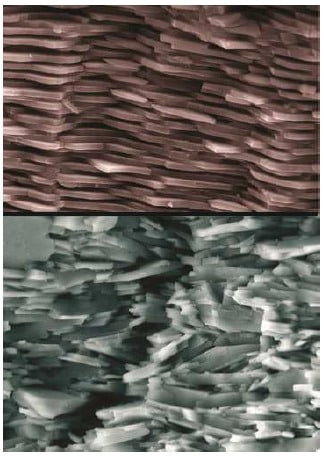
As detailed in a translated media release from ENS Lyon, this toughness stems from the hierarchical arrangement within the material. Nacre’s structure consists of microscopic mineral layers stacked like bricks, bonded by organic compounds acting as mortar. This configuration forces cracks to meander around layers, dissipating energy as they propagate.
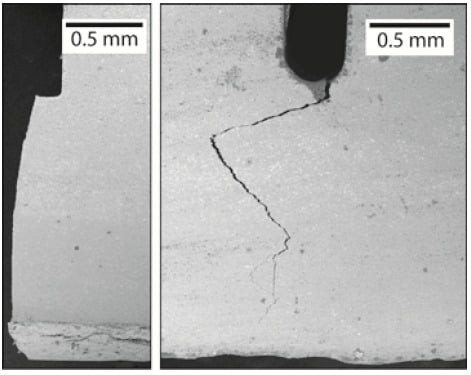
Rather than altering the chemical makeup, the researchers concentrated on replicating this layered architecture using ceramic particles, which dictated the development of their process.
Ice Crystals Direct Particle Arrangement
The fabrication starts with a suspension of microscopic alumina platelets in water. This mixture is then subjected to carefully moderated freezing, guiding the formation of ice crystals.
According to the study published in Nature Materials, the growth of ice crystals pushes the alumina particles aside, causing them to align into layered stacks. After the ice is removed, the porous structure remaining is sintered at high temperatures to yield a dense, solid ceramic.
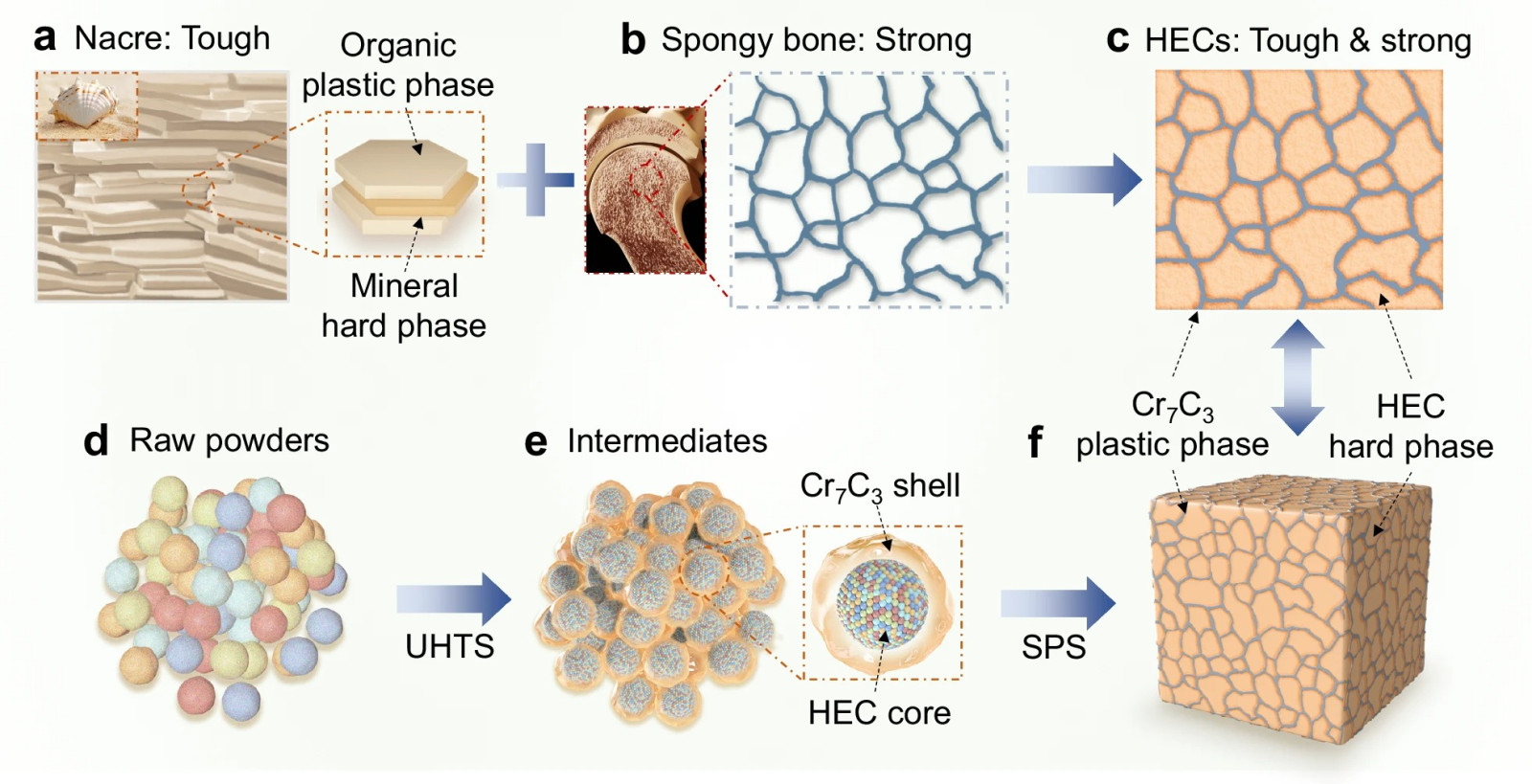
The layered arrangement closely mirrors natural nacre, making cracks navigate through the mineral platelets rather than penetrating straightforwardly, thereby raising fracture resistance.
This architecture boosts the toughness by approximately tenfold compared to traditional ceramics. While cracks may still occur, their progression requires much more energy to continue.
Engineered for Harsh Environments
Tests show the ceramic’s enhanced properties endure temperatures exceeding 600 °C, outperforming many polymer-based toughening alternatives still limited to lower heat ranges.
The technique can be applied to other platelet-shaped ceramic powders beyond alumina. The National Institute of Applied Sciences of Lyon emphasizes that this method centers on structural design rather than any specific chemical component.
Potential applications include sectors exposed to extreme mechanical and thermal stresses, such as aerospace, energy technologies, and industrial furnace components. The study also suggests use in ballistic armor, where tougher alumina ceramics could enhance impact resistance without added weight, as alumina ceramics are already integral to some protective gear.
This innovation is notable for the straightforwardness of its materials. Alumina is a widely available oxide, and the process simply manipulates physical behaviors of freezing and particle alignment, avoiding more complex chemical modifications.
- Categories:
- Science




0 comments
Sign in to Comment