
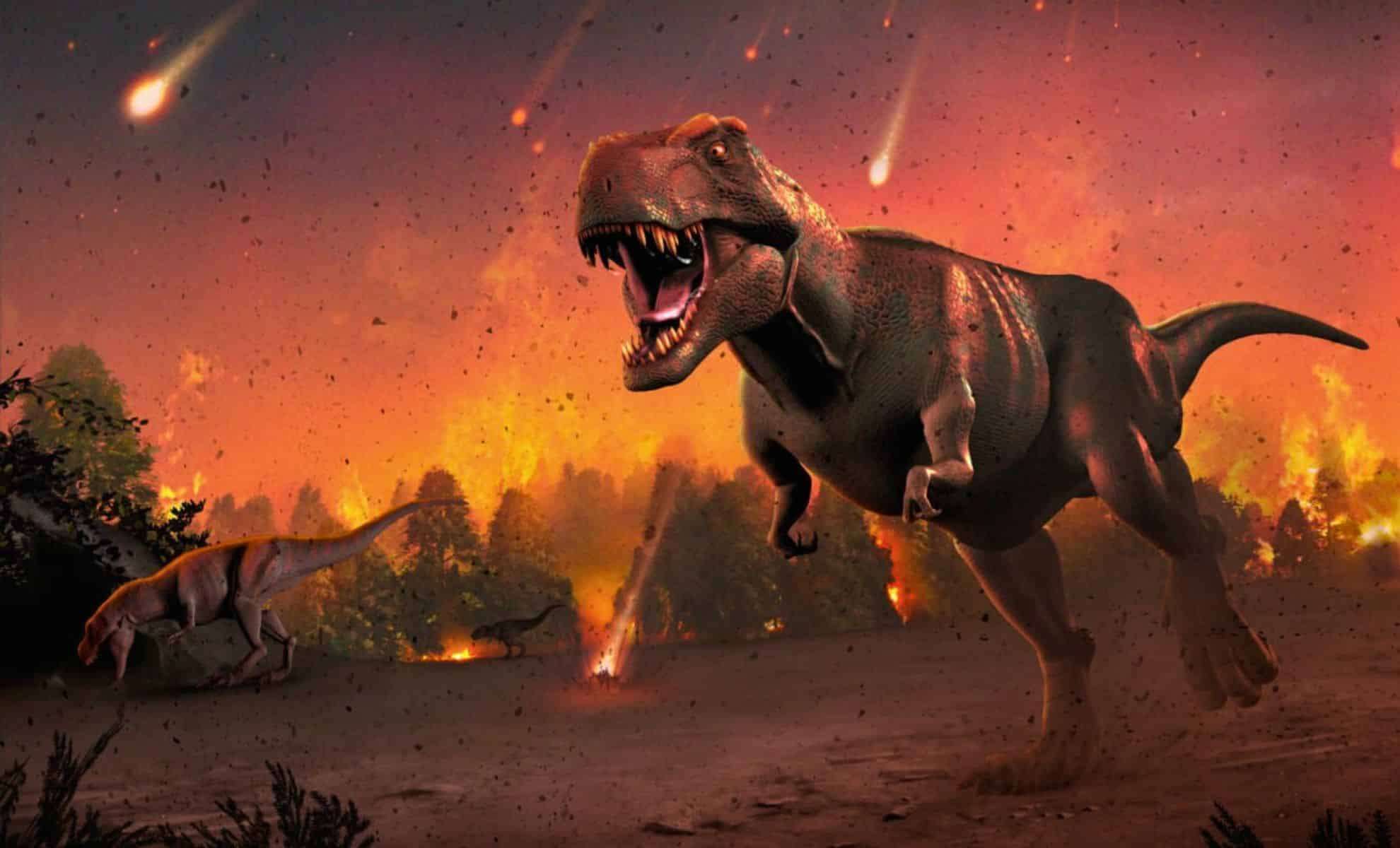
The cataclysmic asteroid responsible for ending the age of dinosaurs did not originate nearby—it was launched from regions beyond Jupiter, spanning an unimaginable distance through our solar system.
This colossal six-mile-wide space object, classified as a C-type asteroid, struck Earth with devastating force, igniting one of the most severe extinction events in Earth’s history.
Far from a typical meteorite tale, this space rock emerged from the enigmatic, distant edges of the asteroid belt. A research team led by Mario Fischer-Gödde at the University of Cologne has resolved this ancient mystery in a groundbreaking study published in Science.

Their startling discovery reveals that this asteroid originated in the turbulent outer asteroid belt, a region dominated by constant collisions and orbital chaos.
The Catastrophe That Ended the Dinosaurs’ Reign
Approximately 66 million years ago, this immense asteroid carved out the Chicxulub Crater, a vast impact site concealed beneath Mexico’s Yucatan Peninsula. The collision unleashed powerful shockwaves and lofted enormous quantities of debris into the atmosphere.
What ensued was global upheaval—a chilling nuclear winter that devastated ecosystems, interrupted food chains, and plummeted temperatures worldwide. The fallout? About 70 percent of Earth's species, including the iconic dinosaurs, vanished.
Yet, this wasn’t just an ordinary asteroid. It was a distinctive C-type asteroid rich in carbon and other dark materials, characteristic of bodies from the far solar system. Using advanced analyses of ruthenium isotopes, Fischer-Gödde and colleagues matched its composition precisely with meteorites known to have arrived from these remote areas. This impact was the result of a space rock born in the cold, distant solar frontier.
Tracing Its Cosmic Journey
Where exactly did this devastating asteroid come from? Evidence points to the outer reaches of the asteroid belt—a chaotic zone located between Mars and Jupiter. Forces like collisions or the subtle, mysterious Yarkovsky effect likely propelled it onto a collision course with Earth. Though the odds were staggering, once launched, nothing prevented its catastrophic arrival.
The key clue lay in traces of ruthenium, a rare metal scattered worldwide from the impact event. Detailed isotopic studies revealed that almost all ruthenium observed at the K-Pg boundary, the geological signature of the extinction, originated from this killer space object.
These ruthenium signatures correspond closely to those found in carbonaceous meteorites that come from beyond the orbit of Jupiter. This was not random; it was a precise cosmic strike aimed at Earth.
Implications for Future Threats
This revelation reshapes our understanding of mass extinction origins, highlighting that the deadliest dangers might arrive from remote, less-explored corners of space. Given that such an event happened once, it raises the question: could another similar impact threaten Earth in the future?
- Categories:
- News







0 comments
Sign in to Comment