
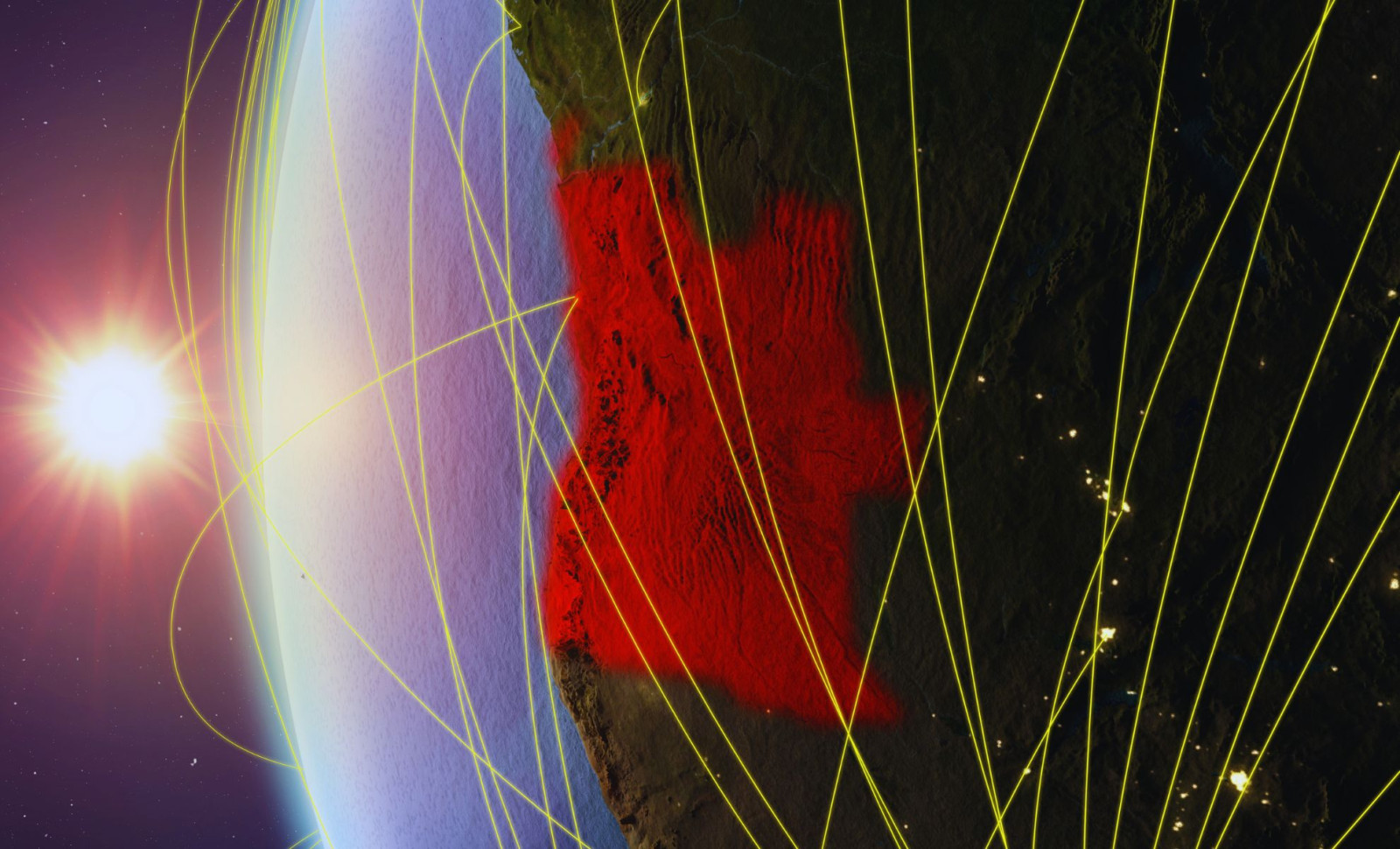
Almost 3,000 kilometers beneath the continents of Africa and the Pacific lies a pair of colossal rock formations that have been subtly shaping Earth's magnetic shield for millions of years. A recent investigation published in Nature Geoscience, conducted by scholars from the University of Liverpool, unveils that these sweltering, solid masses could be key players in the processes that safeguard Earth from harmful cosmic particles.
Though humanity has sent probes billions of kilometers into space, the exploration beneath our feet remains extremely limited. The deepest boreholes extend only slightly beyond 12 kilometers, leaving the planet’s core and even the lower mantle beyond reach. Nevertheless, it is at the junction of the mantle and the molten outer core where some of Earth's most intricate and enduring phenomena occur.
Thermal Variations Drive Magnetic Dynamics
These two enormous features stretch across areas comparable to entire continents and reside at the very bottom of the mantle, approximately 2,900 kilometers beneath Earth’s surface. Research led by the University of Liverpool demonstrates that these formations are extraordinarily hot and are surrounded by relatively cooler mantle materials. This temperature disparity appears to influence how liquid iron circulates in the core directly below.

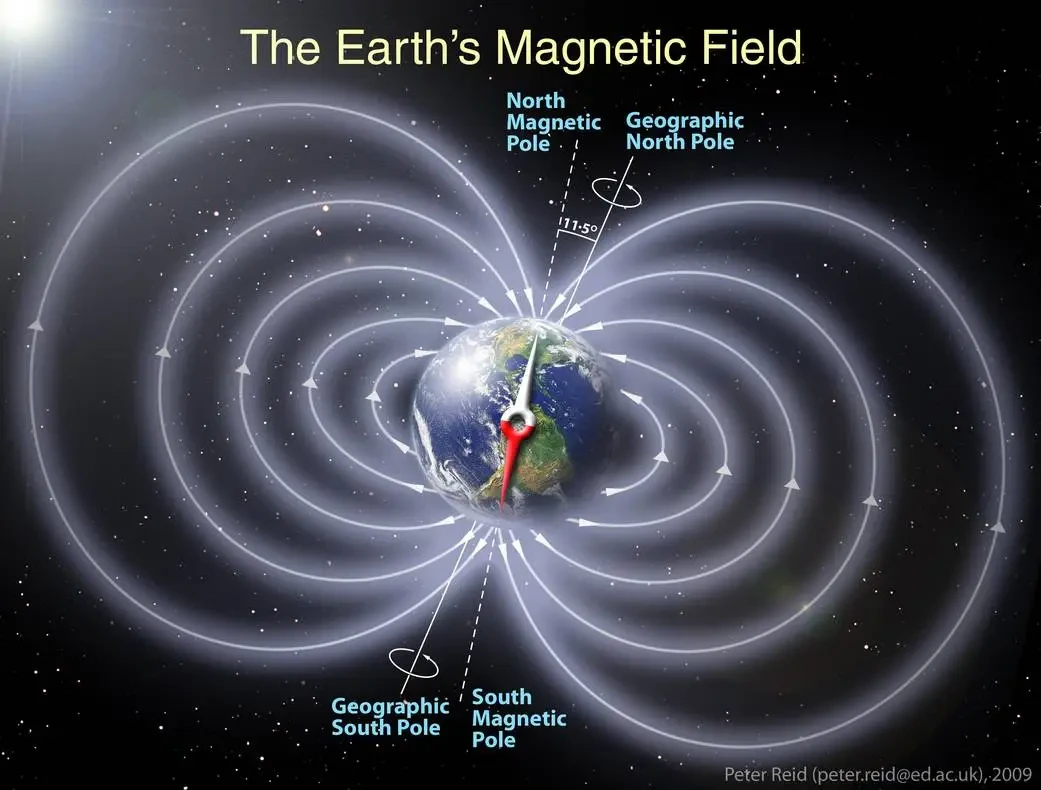
Professor Andy Biggin, the principal investigator, explained how these temperature gradients may interfere with the normal convection patterns of molten iron.
“Beneath the hotter regions, the liquid iron in the core may stagnate rather than participate in the vigorous flow seen beneath the cooler regions,” Biggin explained.
Such irregular liquid iron movement suggests Earth’s interior temperature profile is more complex than previously understood. This complexity likely causes long-term variations in the planet’s magnetic field, generating areas where the field is stronger, weaker, or behaves differently over geologic time.
Tracing Ancient Magnetic Field Changes
Because direct sampling of the outer core is impossible, researchers relied on a combination of magnetic signals preserved in ancient rocks and advanced computational models to examine how the magnetic field evolved over hundreds of millions of years. Their approach reconstructed magnetic characteristics dating back 265 million years, utilizing supercomputer simulations of the geodynamo—the mechanism driving Earth’s magnetic field generation.
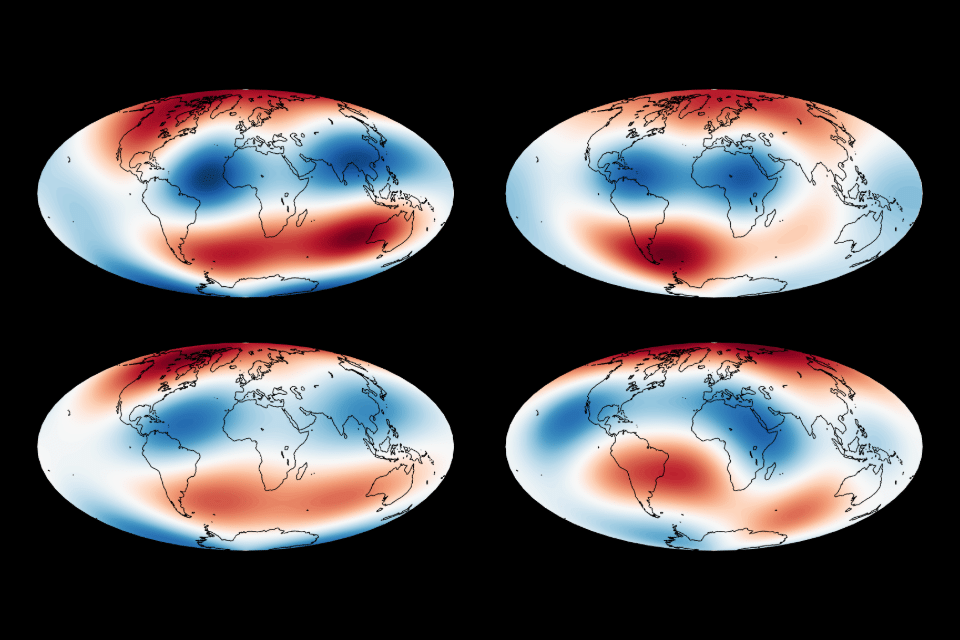
The research uncovered that the heat distribution at the boundary of the outer core is uneven, closely matching the locations of the enormous subterranean rock structures. These thermal contrasts correspond with stable magnetic field regions alongside zones where the magnetic polarity has shifted or reversed.
Even with cutting-edge computing power, simulating such prolonged and extensive magnetic phenomena demanded enormous effort. Nevertheless, the findings reinforce the concept that structures deep inside the mantle imprint themselves noticeably on Earth’s magnetic history.
Reevaluating Longstanding Magnetic Assumptions
A significant conclusion from this work is that Earth’s magnetic field does not always function like a perfectly aligned bar magnet following the planet’s axis of rotation. According to Professor Biggin, this challenges a fundamental precept often employed in reconstructing ancient continental positions and paleoenvironmental conditions.
Historically, the magnetic field has been regarded as largely symmetrical and stable when assessed over extensive timescales. This research, however, reveals it as more dynamic and asymmetric, shaped by enduring temperature variations within Earth’s interior.
“These findings also have important implications for questions surrounding ancient continental configurations, such as the formation and breakup of Pangaea, and may help resolve long-standing uncertainties in ancient climate, palaeobiology, and the formation of natural resources,” he said.
- Categories:
- Science










0 comments
Sign in to Comment