

Deep within Earth's interior, two massive formations exist at the boundary between the mantle and core, each spanning thousands of kilometers. These features are more than unusual geological phenomena—they could be vestiges left from a primordial planet that collided with Earth billions of years ago.
Known as large low-shear-velocity provinces (LLSVPs), these formations were initially detected through anomalies in seismic wave behavior. Seismic waves generated by earthquakes decelerate markedly when traversing these structures, signaling a unique composition relative to the surrounding mantle material.
One prominent hypothesis proposes these immense bodies are remnants of Theia, a theoretical planetary body thought to have impacted the early Earth during the giant impact event that led to the Moon's origin. Should this theory hold true, these deep mantle giants would be fragments of an ancient planet embedded within Earth for over 4.5 billion years.

Insights from Seismic Wave Analysis on Earth's Deep Layers
The identification of LLSVPs was made possible by seismic tomography, a technique that maps subterranean structures by interpreting how seismic waves propagate through different Earth layers. Researchers found that waves dramatically slow down as they pass through two immense zones—one located beneath Africa and another beneath the Pacific Ocean. This suggests these blobs are not only hotter but also denser and chemically distinct compared to adjacent mantle rock.
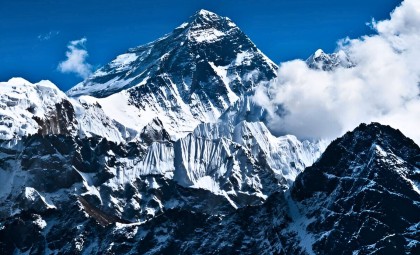
The size of these formations is staggering. The African LLSVP, often called Tuzo, extends approximately 800 to 1,000 kilometers above the core-mantle interface—comparable to stacking nearly 90 Mount Everests. Collectively, the two LLSVPs could constitute between 3% and 9% of Earth's total volume, an enormous amount for materials buried so deep and inaccessible.
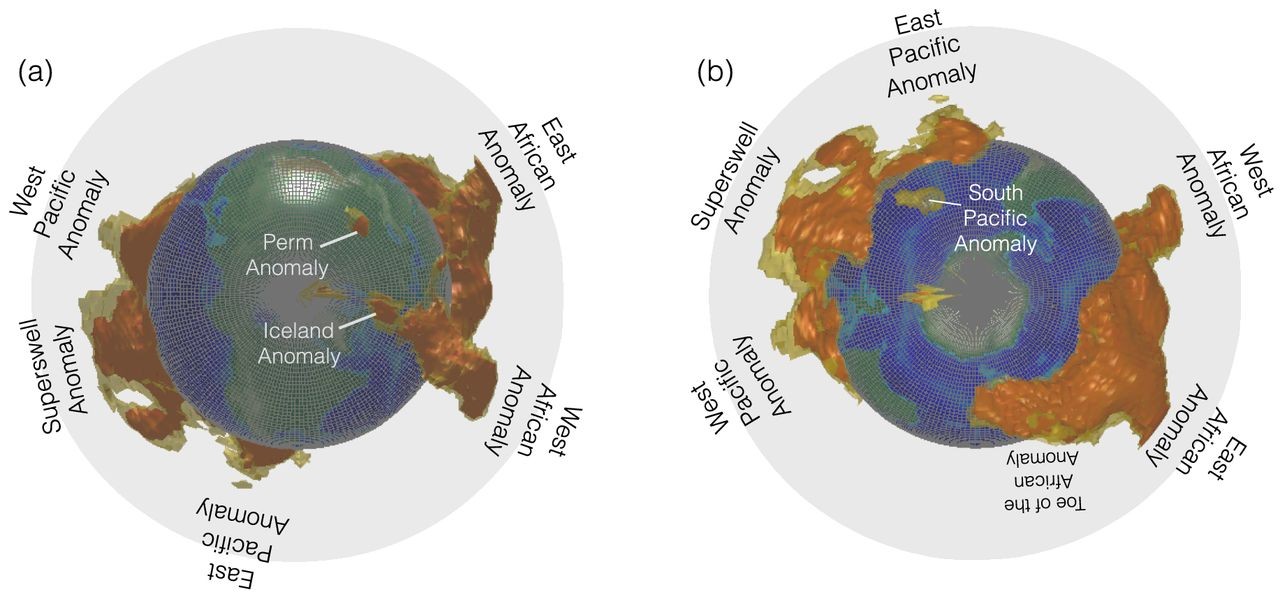
Research published in the Geophysical Journal International examined seismic waves reflected from the core and confirmed that these LLSVPs have sharp, well-defined boundaries, reinforcing the idea that they are chemically distinct reservoirs rather than mere thermal anomalies.
Unpacking the Theia Hypothesis
The suggestion that these deep mantle features represent parts of Theia’s interior stems from geophysical modeling and isotope analyses. A 2021 study in Nature Communications simulated conditions where Theia's mantle, assumed to be about 2% denser than Earth’s mantle, could endure the impact and settle deep within Earth. The resulting distribution of this material closely aligns with the current size, shape, and position of the LLSVPs.
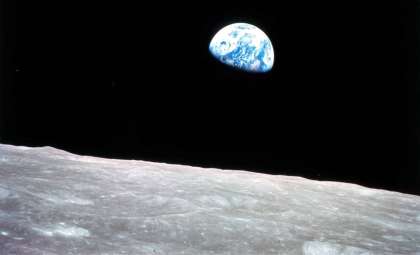
The widely accepted giant impact theory posits that a Mars-sized object collided with early Earth roughly 4.5 billion years ago. Debris from this collision coalesced into the Moon, but some fragments of Theia’s mantle may have survived and sunk into Earth's lower mantle.
This scenario coheres with density measurements, seismic observations, and the Moon's oxygen isotope signatures, which closely resemble Earth’s. This isotopic similarity implies material exchange during the giant impact, supporting the notion that parts of Theia remain both on the Moon and deep inside Earth.
Beyond Ancient Relics—How These Blobs Influence Earth’s Surface Activity
Far from being inert geological remnants, these structures appear to actively affect Earth’s internal processes. The LLSVPs are located close to the core-mantle boundary, a zone critical for generating mantle plumes—rising columns of hot, buoyant rock that drive volcanic activity on the surface, including renowned hotspots like Hawaii and Iceland.
A 2020 study published in Progress in Earth and Planetary Science showed how thermochemical anomalies like LLSVPs could remain stable over billions of years due to differences in density and the flow patterns of mantle convection. These persistent pockets may focus heat near their margins, triggering powerful upwellings and extended volcanic chains visible at Earth's surface.
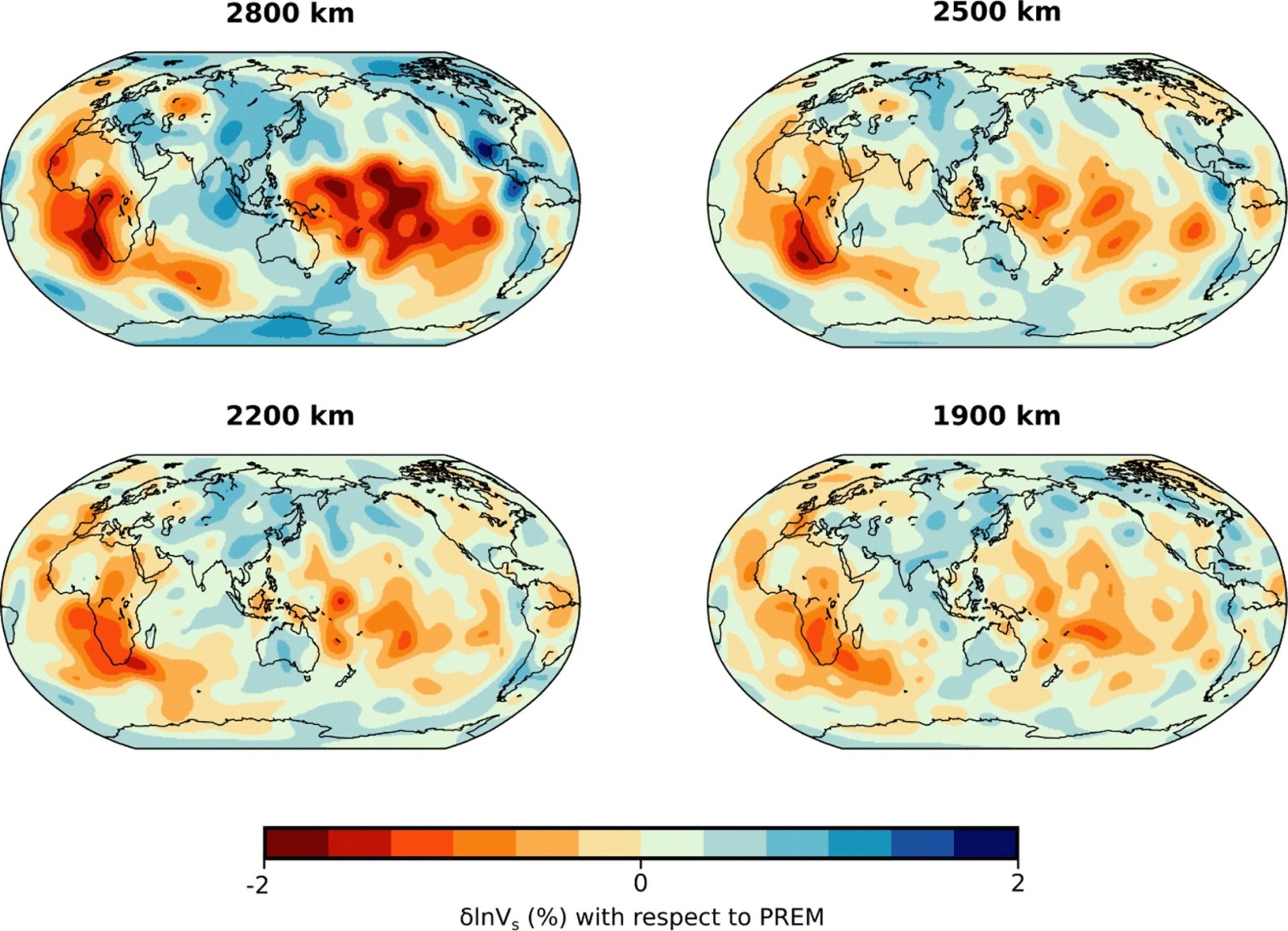
This concept elucidates why many hotspot volcanoes cluster around LLSVP edges. The African LLSVP, in particular, is linked to significant tectonic activity and massive continental rifting events, underscoring its role in shaping geological features throughout Earth’s history.
The Enigma Deep Below Remains Unresolved
Despite intense study, these vast mantle provinces remain beyond direct examination. The deepest human-made drill hole, the Kola Superdeep Borehole, penetrated only 12 kilometers—merely a fraction of the distance to the core-mantle boundary. Our understanding of LLSVPs relies entirely on indirect imaging techniques, gravity analyses, and computational simulations.
Alternative explanations exist. Some propose these features are accumulations of subducted oceanic crust trapped in the mantle over geological timescales, while others suggest they may be primordial chemical reservoirs dating back to Earth's earliest magma ocean phase.
Nevertheless, the hypothesis connecting these blobs to Theia offers the most cohesive account, integrating seismic findings, density contrasts, and isotopic evidence. Even popular science outlets highlight a growing consensus that Earth’s deep interior houses more than just mineral rock—it may enshrine relics of a long-lost planetary companion.
- Categories:
- Science




0 comments
Sign in to Comment