
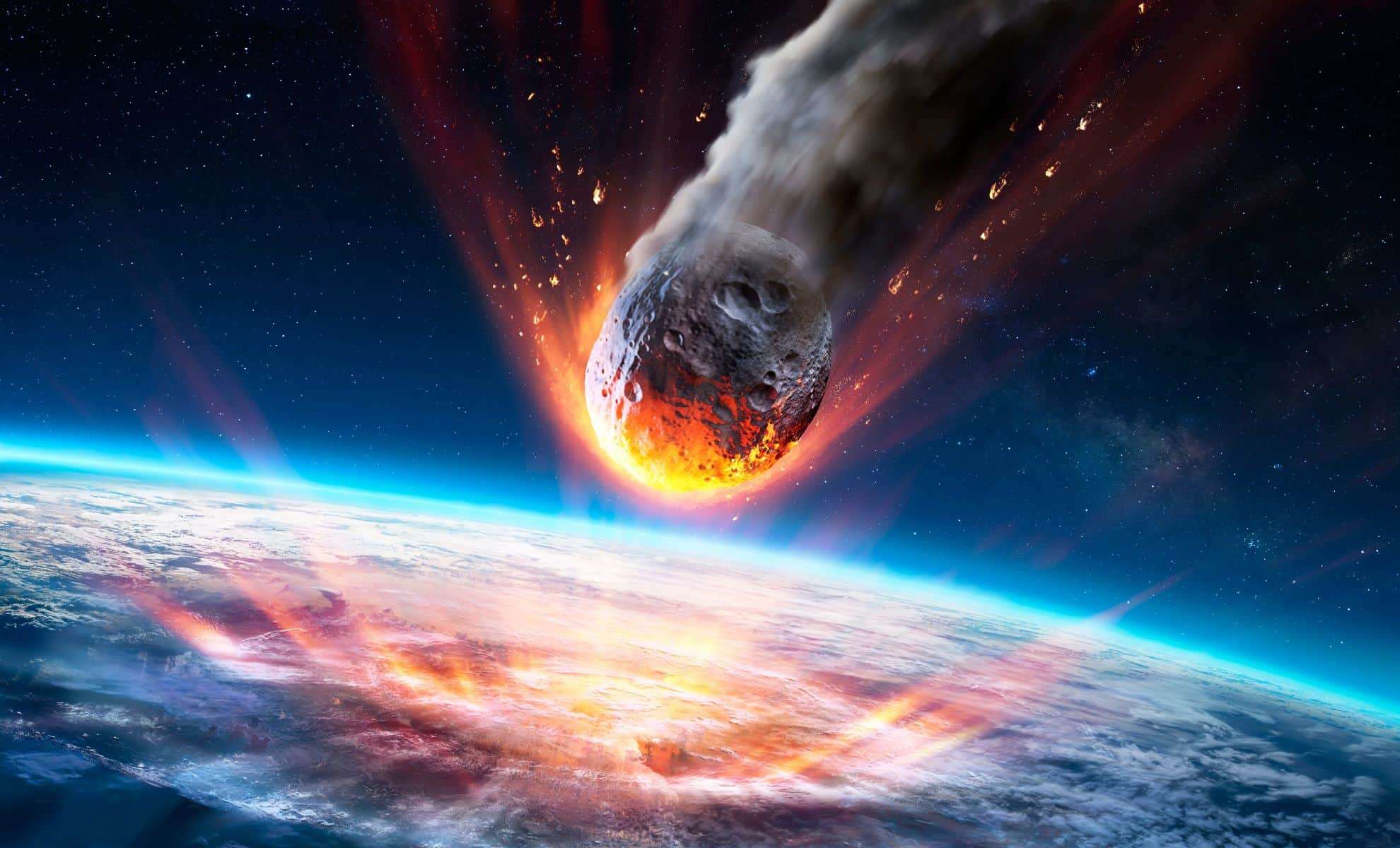
Scientists suspect a concealed group of asteroids orbiting close to Venus’s path around the Sun, largely undetectable from Earth and potentially capable of impacting our planet with minimal advance notice.
Led by Valerio Carruba from São Paulo State University in Brazil, a recent investigation published in Astronomy & Astrophysics delves into these so-called Venusian co-orbital asteroids, a little-known class of space objects significant to planetary science.
Challenges of Tracking Objects Near Venus
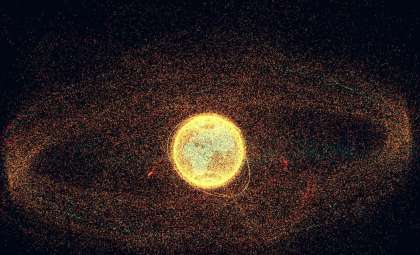
These asteroids do not orbit Venus directly but share its orbital period around the Sun, a phenomenon called 1:1 orbital resonance. Essentially, they complete a revolution around the Sun in the same time as Venus, though not necessarily in the planet’s immediate vicinity.

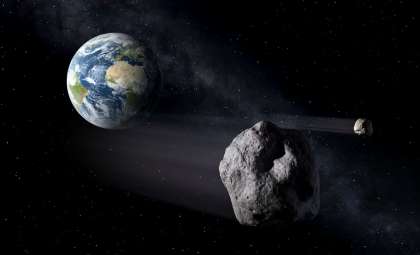
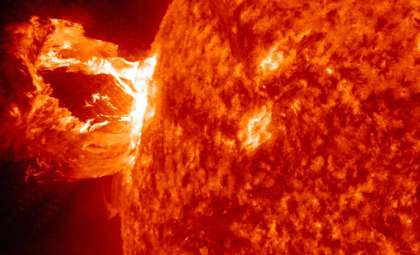
While this presents minimal threat to Venus itself, the same cannot be said for Earth. These asteroids have the potential to approach Earth’s orbit closely, raising concerns. Spotting them from Earth is difficult because their proximity to the Sun’s glare obscures observations, creating a blind zone right in our celestial neighborhood.
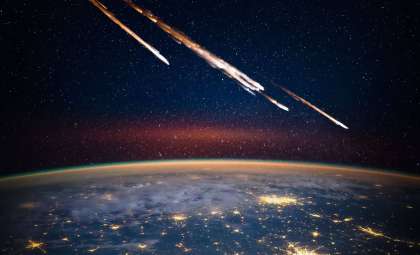
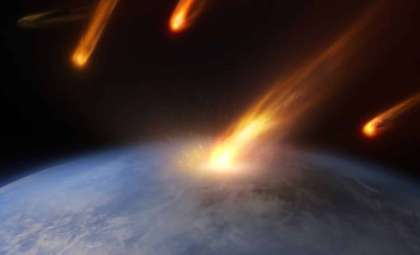
“Current telescopes cannot detect them,” Carruba noted in an interview with Brazil’s Agência FAPESP. He highlighted that some asteroids in this group might be up to 300 meters in diameter—large enough to generate an impact crater spanning several kilometers and unleash an explosion equivalent to “hundreds of megatons.”
Orbit Shifts May Bring Hidden Asteroids Close to Earth
Among the approximately 20 known Venusian co-orbitals, many have highly elliptical orbits allowing occasional observations as they drift farther from the Sun. These are relatively easier to track.
However, extensive computer models by Carruba’s team suggest a larger, less detectable population with near-circular orbits. Over time, some of these could gradually evolve into paths intersecting Earth’s orbit, especially during shifts happening roughly every 12,000 years.
Even Advanced Observatories Face Limitations
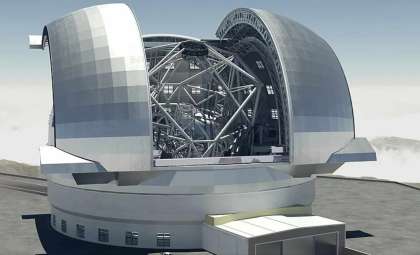
One might expect that new facilities like the Vera C. Rubin Observatory would improve detection chances. Yet, even this state-of-the-art telescope in Chile struggles to monitor these objects, which may be visible for only one or two weeks at a time and requires favorable viewing angles.
These asteroids can remain hidden in the solar glare for months or years, making their discovery unpredictable. Still, future missions such as NASA’s NEO Surveyor and China’s Crown mission aim to observe closer to the Sun from space, potentially unveiling these elusive objects.
An Ancient Origin with Uncertain Trajectories
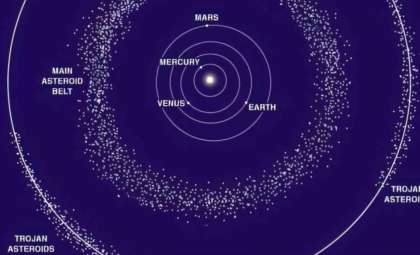
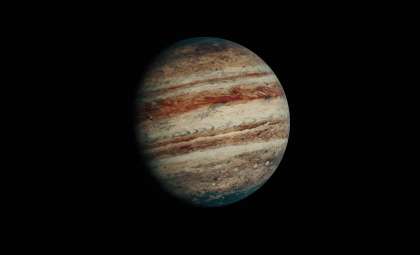
Experts believe these asteroids originated from the asteroid belt between Mars and Jupiter. Influences from Jupiter’s gravitational forces pushed some fragments inward toward the Sun, where they became temporarily trapped in Venus’s orbital region.
This co-orbital capture typically lasts around 12,000 years, after which the asteroids might drift toward Earth’s orbit, be ejected from the solar system, or settle into other trajectories. Though this timeline may seem lengthy, it is brief on a cosmic scale.
The researchers do not indicate any immediate danger, but as Carruba emphasizes, “planetary defense needs to consider not only what we can see, but also what we can’t yet see.” Until there are enhanced instruments to explore the Sun’s surroundings, these hidden asteroids remain an unresolved puzzle.
- Categories:
- News


0 comments
Sign in to Comment