

Set to transform our exploration of nearby stars, the Extremely Large Telescope (ELT) aims to achieve an unprecedented milestone: detecting hints of life on a planet orbiting Proxima Centauri, the closest star to the Sun, in less than a day. Recent simulation work reveals that, with its colossal light-capturing capacity and extraordinary detail, the ELT could distinguish between habitable and barren worlds just by analyzing the light reflected from their atmospheres.
This promising concept is explored in a recent 2025 study by Miles H. Currie and Victoria S. Meadows, which investigates how the telescope can identify molecular signatures from exoplanets even without relying on planetary transits. Their preprint, available on arXiv, offers hope that the enduring question of humanity’s uniqueness in the universe—are we alone?—could soon be answered.
The future of terrestrial astronomy
Located atop the Chilean Atacama Desert, the ELT is planned to commence observations in 2028. Its 39-meter primary mirror will make it the largest optical and infrared telescope on the planet, boasting a collecting surface far exceeding prior ground-based telescopes. This will enable image clarity up to 16 times superior to the Hubble Space Telescope.

While telescopes like the JWST have advanced atmospheric studies of exoplanets during transits, they are limited because many promising Earth-like planets don’t cross their stars from our viewpoint. The ELT overcomes this hurdle.
Rather than waiting for transit events, the ELT can capture starlight reflected by an exoplanet’s atmosphere. Utilizing cutting-edge high-contrast imaging and spectroscopic techniques, it can detect gases such as oxygen, carbon dioxide, and water vapor—key indicators that might suggest biological processes.
Modeling the hunt for extraterrestrial life
To assess the ELT’s effectiveness, Currie and Meadows simulated environments of four Earth-like planets orbiting nearby red dwarf stars:
- A verdant world abundant in water and vegetation, without industrial impact
- An ancient Archean Earth analog with primitive life and low oxygen levels
- A dry, ocean-free planet resembling Mars or Venus
- A barren prebiotic Earth with the right chemistry but devoid of living organisms
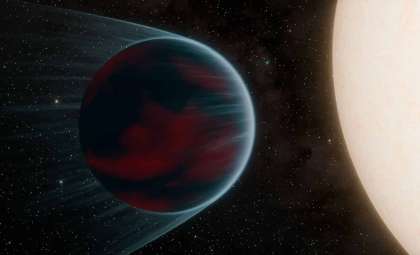
Additionally, they simulated Neptune-sized exoplanets to provide contrast, as their dense atmospheres would produce distinct spectral signatures.
The objective was to determine if the ELT could accurately differentiate inhabited worlds from lifeless ones, while minimizing false alarms or missed detections. Could an uninhabited planet mimic signs of life? Or might a habitable planet be overlooked?
The study’s findings indicate that with roughly ten hours of observing time, the ELT should be capable of detecting biosignatures on a planet like Earth orbiting Proxima Centauri. For bigger gas giants, quality spectral data could be acquired in just one hour.
Proxima Centauri—the prime observational target
At only 4.24 light-years from Earth, Proxima Centauri hosts at least two confirmed planets: Proxima b and Proxima d. Although Proxima b’s potential habitability remains uncertain, its position within the star’s habitable zone and its proximity make it a compelling subject for upcoming studies.
If Proxima b possesses even a thin atmosphere, the ELT might detect it. Discovering biological molecules within would be a milestone with profound implications.
The ELT’s technology frees astronomers from relying solely on infrequent planetary transits or indirect signs, enabling direct, persistent observation of nearby planetary systems.
Clarifying biosignatures: avoiding false alarms
The study emphasizes caution against misinterpreting spectral data. The mere presence of oxygen or methane does not guarantee life, as abiotic processes can produce similar signals.
Here, the ELT’s precision is crucial. By analyzing multiple spectral features and leveraging high-resolution observations, scientists aim to build robust criteria for biosignatures, lowering chances of errors.
This means the ELT’s mission extends beyond detection—it will help shape the scientific standards for recognizing extraterrestrial life evidence.
- Categories:
- News









0 comments
Sign in to Comment