
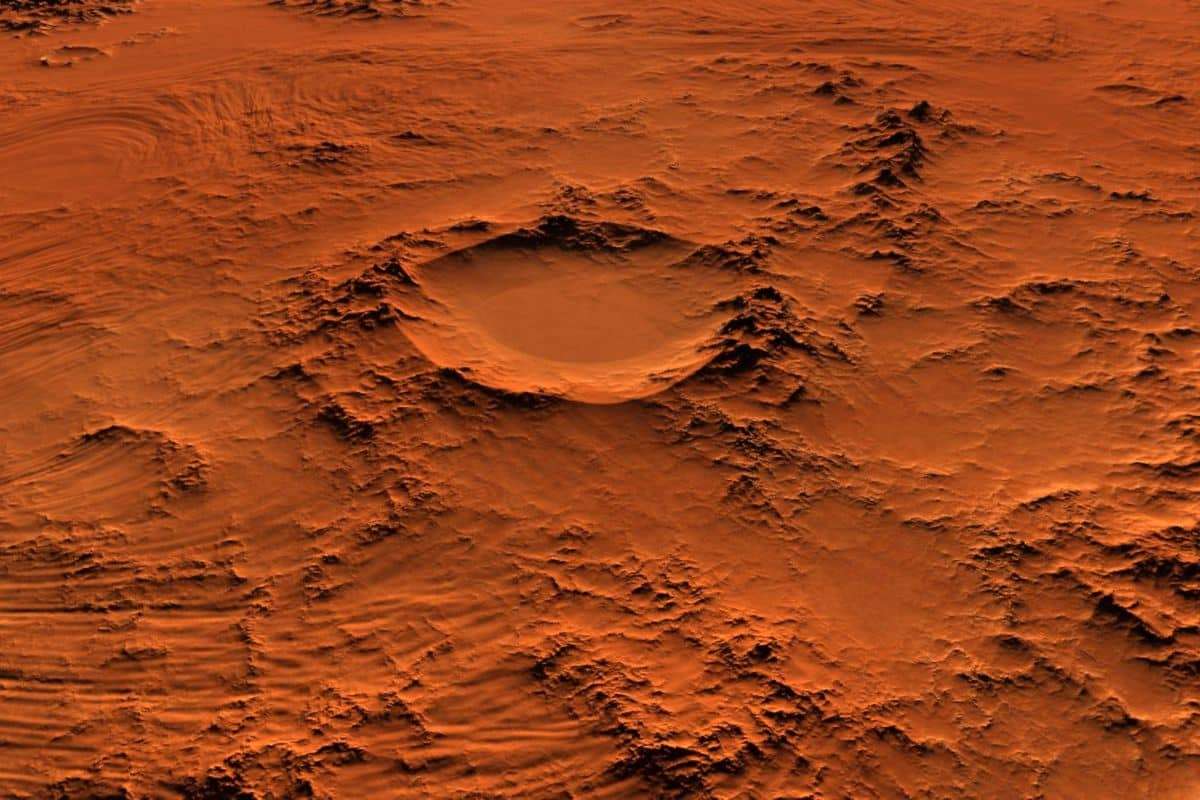
As space agencies accelerate efforts to send humans to Mars, scientists are raising concerns about a largely overlooked danger: the toxic dust covering the Martian surface.
A recent investigation led by researchers at the Keck School of Medicine, University of Southern California, highlights how Martian soil could pose severe respiratory threats to astronauts, potentially causing serious and lasting lung damage.
A Lethal Mix in the Soil
Beneath Mars’s seemingly tranquil terrain lies a hidden menace. Its ground is coated with extremely fine dust particles that are both chemically hazardous and biologically harmful. “There are numerous toxic components that astronauts might encounter on Mars,” stated Dr. Justin L. Wang, the study’s principal investigator.

“Of particular concern is the presence of abundant silica dust, along with iron-rich dust from basalt and nanophase iron, all of which can irritate the lungs and provoke respiratory illnesses.”
The danger is compounded by the microscopic size of these particles. Martian dust is finer than the minimum particle size the lung’s natural mucus traps can capture, enabling it to penetrate deep into lung tissue and remain embedded.
Dust Storms as Toxic Conveyors
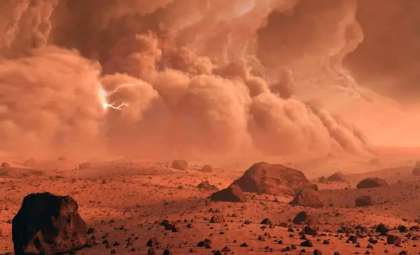
Mars’s volatile weather further amplifies the threat. Each Martian year witnesses intense regional dust storms, and on occasion, these escalate into global dust events, saturating the atmosphere with harmful particles.
A notable example occurred in 2018 when a massive storm disabled NASA’s Opportunity rover by covering its solar panels. For future crewed missions, these storms would not just obstruct sunlight but also act as widespread dispersal mechanisms for hazardous dust. “Exposure to silicosis-like silica and toxic iron dusts has parallels to coal miners’ lung diseases,” Wang explained.
Cautions from Lunar Experience
The dangers of extraterrestrial dust are not merely theoretical. Apollo astronauts faced similar issues on the Moon. Upon returning to their landers, many experienced prolonged coughing, eye irritation, and blurred vision due to lunar dust exposure. NASA confirmed that respiratory and vision impairment were key risks tied to moon dust.
Martian dust, however, presents additional toxicity. Besides silica and iron, the regolith includes perchlorates, gypsum, as well as trace metals such as arsenic, cadmium, and chromium. Several of these components are carcinogenic or highly poisonous, yet the combined effects under Martian conditions are still not well understood.
Medical Challenges in Deep Space
Unlike Earth where medical support is rapid, treating illnesses on Mars is far more challenging. “Providing healthcare to Mars-bound astronauts is complicated by the lengthy travel time, which far exceeds that of missions to the ISS or the Moon,” the team noted.
A complete mission could last around three years, with crew members enduring prolonged periods of low gravity, elevated radiation levels, and continuous exposure to harmful dust.
Treatment options come with their own difficulties. Some studies indicate that “vitamin C may help guard against chromium-related illnesses,” whereas iodine supplementation might inadvertently trigger thyroid conditions it is intended to prevent.
- Categories:
- Space




0 comments
Sign in to Comment