
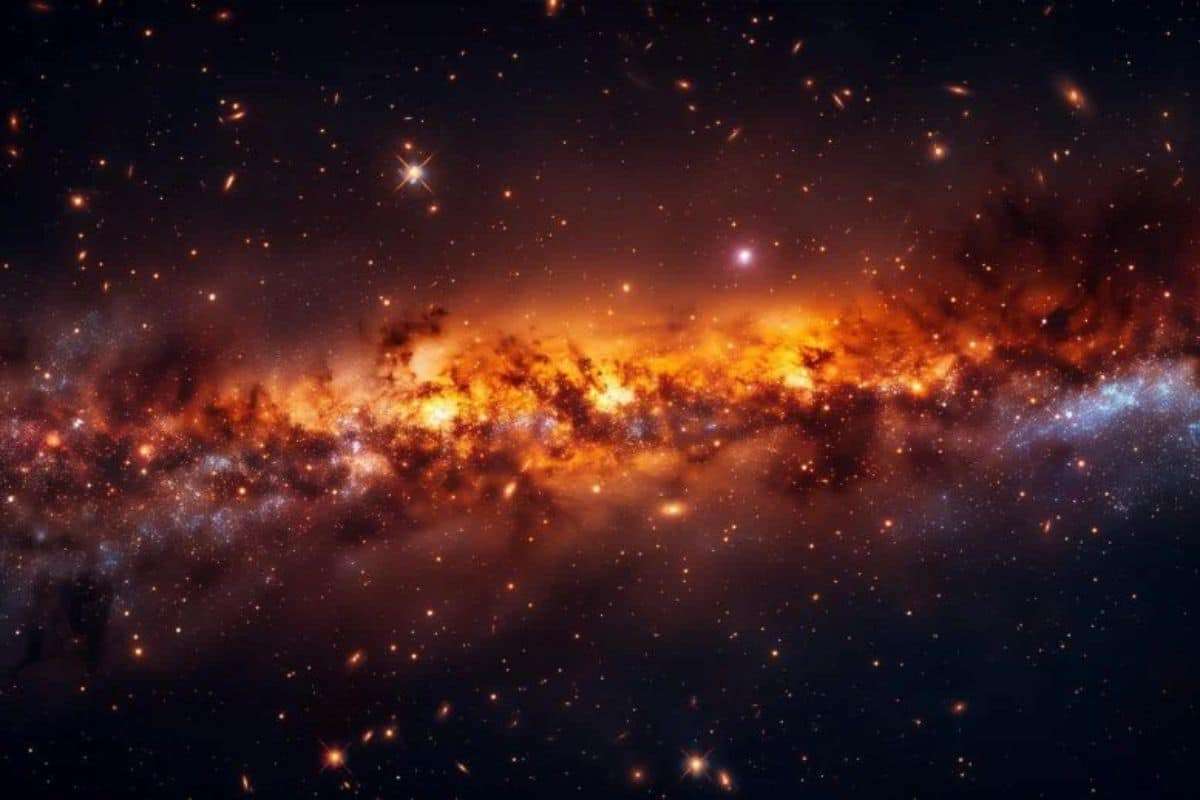
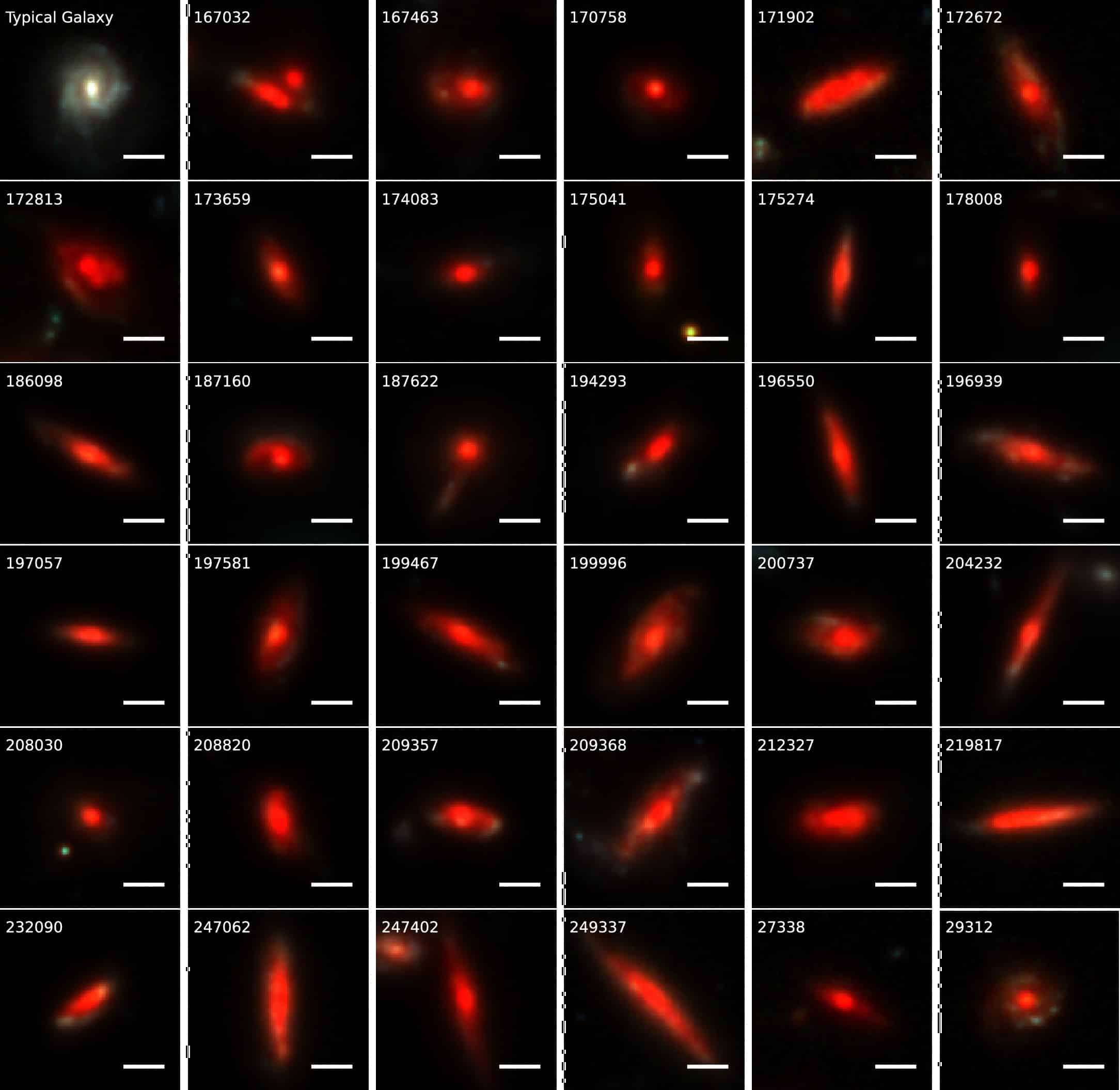
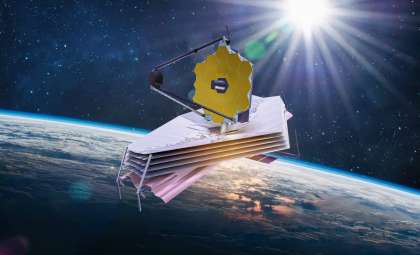
A team of astrophysicists at the University of Colorado Boulder has identified an unexpected class of galaxies, named Ultra-red Flattened Objects (UFOs), using data from the James Webb Space Telescope (JWST).
Published in The Astrophysical Journal, this research highlights the existence of enormous, disk-like galaxies that had evaded detection by former instruments, including the Hubble Space Telescope, due to their distinctive traits.
JWST Uncovers a Concealed Galaxy Population
The discovery emerged from the JWST Advanced Deep Extragalactic Survey (JADES), a project designed to chart the universe’s earliest and most distant galaxies. Unexpectedly, scientists found a group of large, deep red galaxies much closer than anticipated, previously invisible to optical telescopes.
These galaxies barely emit visible light, making them undetectable by Hubble’s optical instruments. Instead, their radiation peaks in the infrared range, enabling JWST’s sensitive instruments to observe them.

Justus Gibson, a doctoral researcher at the Department of Astrophysical and Planetary Sciences, CU Boulder, and lead author remarked, “JWST reveals galaxies we could never have seen before. It challenges our previous understanding of the cosmos.”
What Makes UFO Galaxies So Intriguing?
The most notable feature of UFO galaxies is their striking red coloration, caused by dense clouds of cosmic dust that absorb and scatter visible light. This significant presence of dust poses important questions about how these galaxies form and evolve.
“They’re enormous red discs that pop up in these images, and they were totally unexpected,” said Erica Nelson, co-author of the study and assistant professor of astrophysics at CU Boulder.”They make you say: ‘What? How?’”.
Cosmic dust is essential in star formation, serving as raw material for new stars and planetary systems. The extraordinary dust levels in UFO galaxies indicate these systems might be in a distinctive phase of growth or have experienced an unusual cosmic interaction increasing their dust content.
Massive Galaxies Hidden in Dusty Shadows
Previously, astronomers believed most galaxy varieties in the nearby universe had been cataloged. Before JWST, efforts concentrated on spotting galaxies from the distant past. The revelation of UFO galaxies, located closer than expected, challenges accepted theories of galactic development.
These galaxies went unnoticed due to Hubble’s optical limitations. The ability of JWST to detect such objects suggests numerous other dust-enshrouded galaxies might still be hidden.
Future Directions in Studying UFO Galaxies
While the discovery opens new avenues, it also introduces many unanswered mysteries. The origin of the extreme dust accumulation and the galaxies’ formation mechanisms remain unclear. Nelson’s team aims to continue investigating these puzzling galaxies.
One hypothesis proposes these systems are in the final stages of star formation, with dust remnants from supernovae. Another possibility is that these galaxies are merging, causing an influx of interstellar dust.
Upcoming research will use JWST’s advanced instruments to study the chemical makeup, structural properties, and star production rates of UFO galaxies, hoping to unlock the secrets behind these extraordinary cosmic structures.
- Categories:
- Space





0 comments
Sign in to Comment