
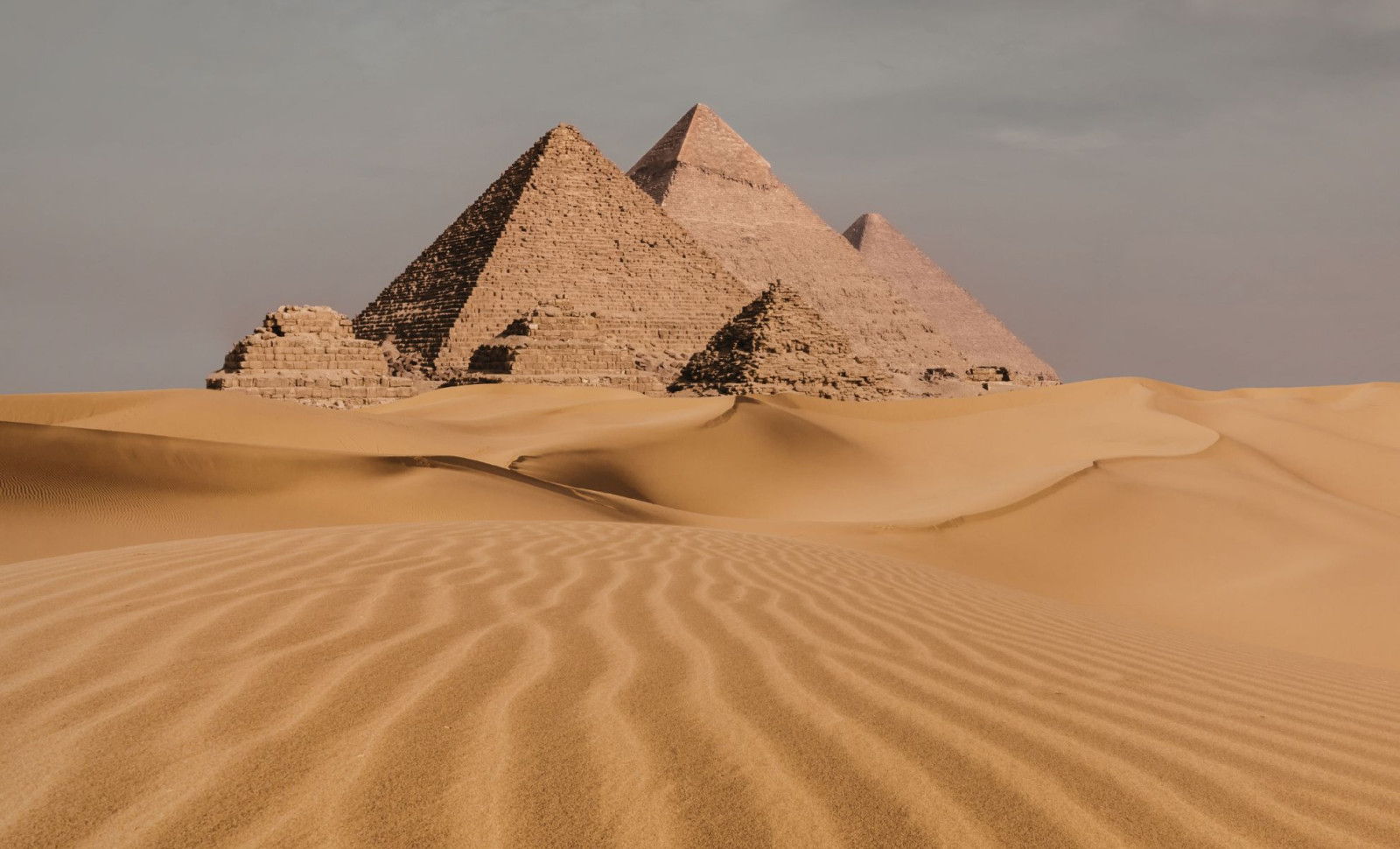
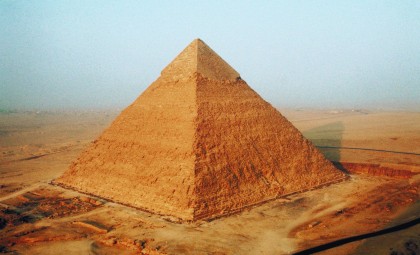
A geophysical exploration performed close to Egypt's Great Pyramid of Giza has revealed a surprising subterranean feature that experts have yet to decipher. The investigation uncovered an L-shaped underground formation beneath the Western Cemetery, along with a deeper, second irregularity.
This discovery stems from a 2024 research project led by Tohoku University scientists, focusing on a part of the Western Cemetery that previously showed no distinctive signs above ground. Despite Giza being one of the most researched archaeological locations globally, this new survey highlights that undiscovered elements still lie hidden under its desert sands.
The Western Cemetery, located west of the Great Pyramid, was used as a burial site for royal family members and senior officials. The area is notable for its mastabas, the flat-topped tombs characteristic of elite ancient Egyptian burials. The surveyed sector attracted little past archaeological attention due to the absence of visible surface structures.

State-of-the-Art Imaging Reveals an Unanticipated Formation
The research group employed ground-penetrating radar (GPR) combined with electrical resistivity tomography (ERT) to examine the site. Both techniques are standard for non-invasive investigation of buried archaeological remains.
GPR works by emitting radar waves into the ground and analyzing the echoes from subsurface features. ERT, on the other hand, assesses how electrically conductive or resistive underground materials are, allowing the identification of contrasting structures.
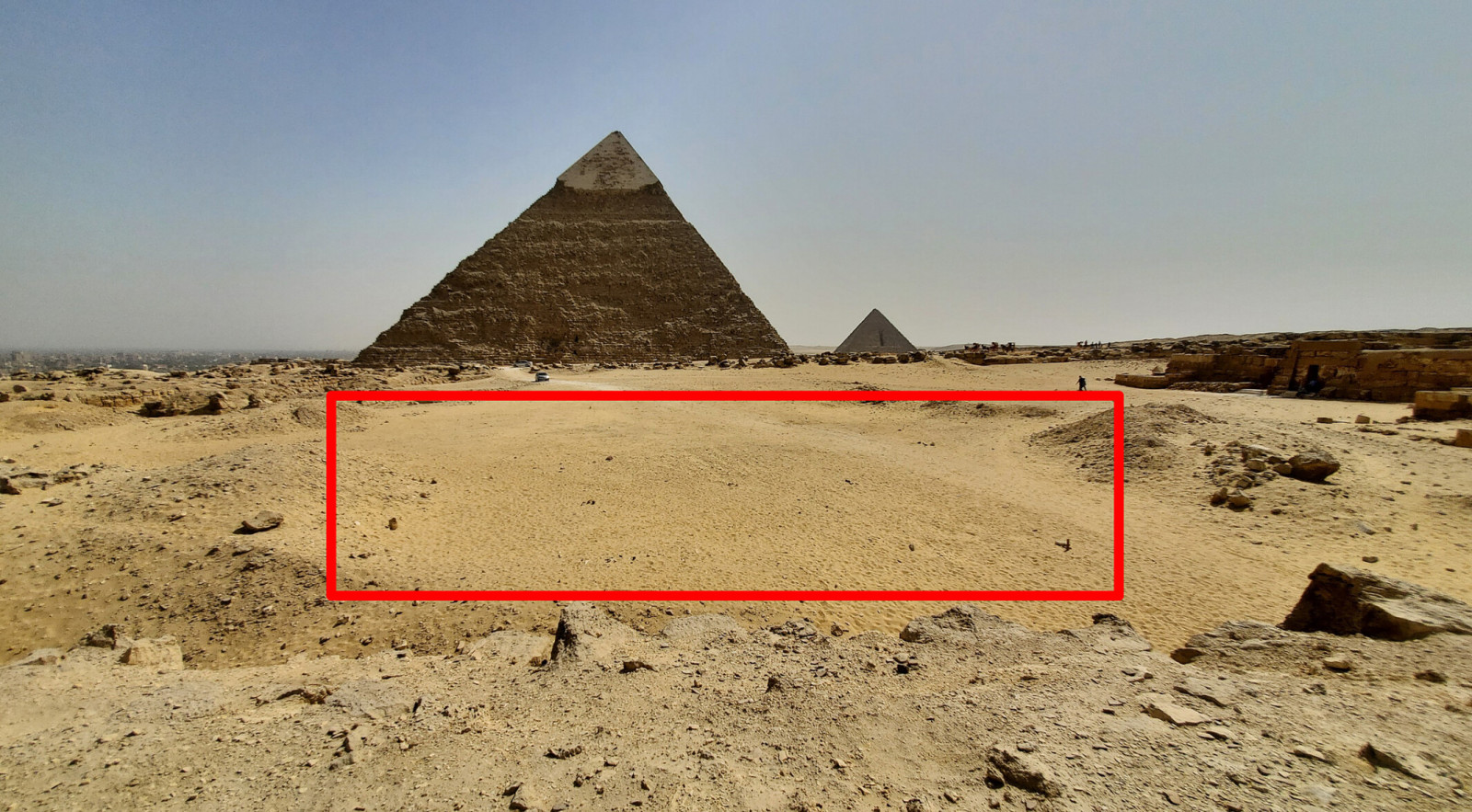
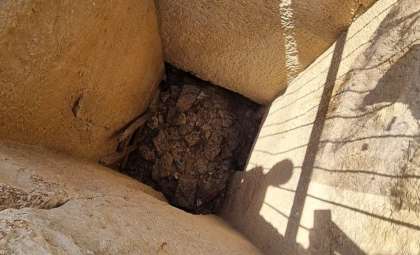
The findings, published in Archaeological Prospection, reveal an L-shaped structure situated about 6.5 feet below ground. The feature extends roughly 33 feet in length and seems to have been deliberately filled in after construction.
Earlier investigations had detected an unusual pattern in the northern part of the area, but its form was unclear until this combined approach provided a clearer understanding.
“The Western Cemetery at Giza is known as an important burial place of members of the royal family and high-class officers,” the researchers wrote in the paper.
Deeper Subsurface Feature Detected Below
Below the L-shaped formation, the team identified another anomaly located between approximately 16 and 33 feet underground. This deeper feature distinguished itself due to its notably high electrical resistance relative to the surrounding soil.
The study suggests two possible interpretations: it could represent a combination of sand and gravel or might correspond to voids containing air. Current data are insufficient to definitively clarify its composition.
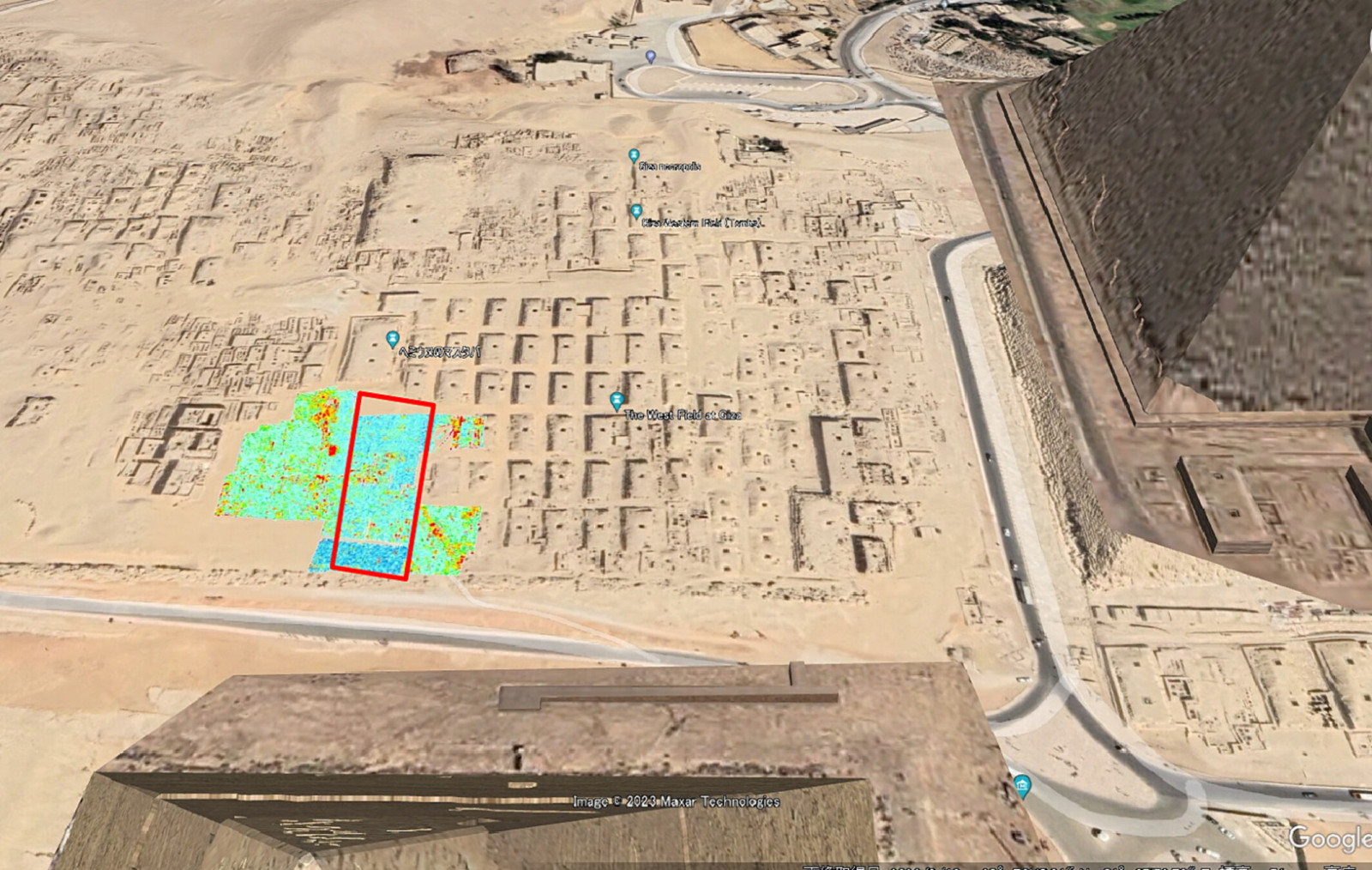
The authors stress that the survey alone cannot conclusively identify what causes this unusual signal.
“From the survey results, we cannot determine the material causing the anomaly,” they wrote, “but it may be a large subsurface archaeological structure.”
While the scans indicated a significant contrast in subsurface materials, they do not reveal precise details regarding the anomaly’s true nature.
Verification and Interpretation Remain Pending
The defined shape of the upper anomaly suggests to scientists that it is unlikely to be a natural occurrence. Motoyuki Sato noted that the structure's sharp geometry makes a natural origin improbable.
The team hypothesizes that the L-shaped formation might have functioned as an entryway to the deeper underground feature. Despite intriguing implications, the researchers do not claim a tomb discovery, as no excavations have been conducted. The paper emphasizes the limitations of current evidence.
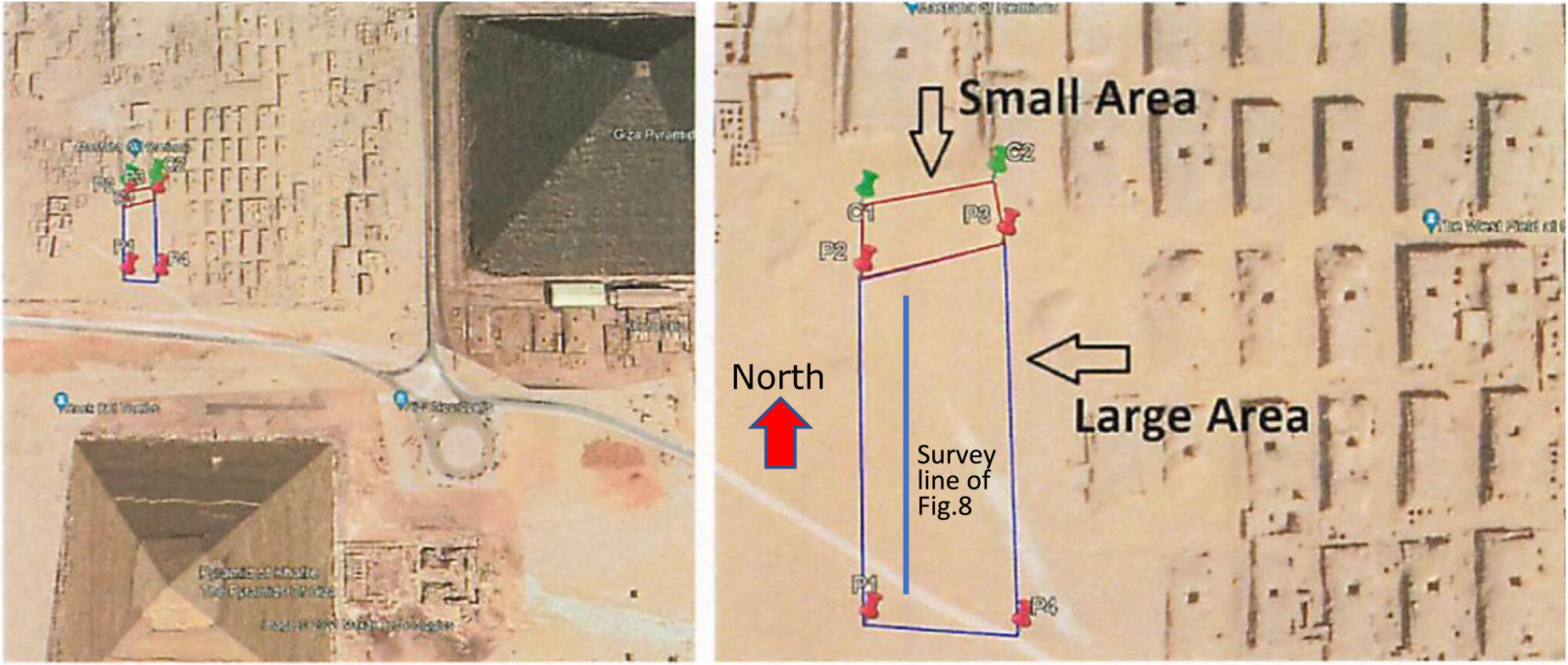
Subsequent heritage science publications cite this study as a prime example of how GPR and ERT can be synergistically used to explore Egyptian archaeological sites. Yet, the exact identity of the anomalies remains undetermined even after publication.
Researchers have confirmed that something extraordinary lies beneath this section of the Western Cemetery at Giza; however, the true nature of the L-shaped formation and the underlying anomaly will remain unknown until further analysis is undertaken.
- Categories:
- Science



0 comments
Sign in to Comment