
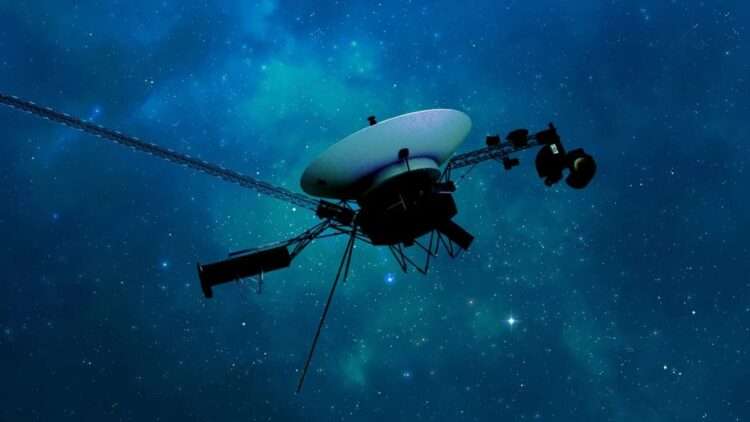
Voyager 1 remains a remarkable symbol of human curiosity, traversing the vastness of space over 15 billion miles from Earth since its launch in 1977. Initially sent to study Jupiter and Saturn, this pioneering spacecraft now journeys deep into interstellar space, where it has recently displayed unexpected behaviors that intrigue NASA scientists and challenge current astrophysical theories.
Voyager 1’s enduring mission and the obstacles of deep space
Outliving its original timeline by decades, Voyager 1 maintains communication with Earth despite enduring harsh interstellar conditions and relying on technology conceived in the 1970s. The relentless environment, including intense space radiation, has gradually weakened its systems, making the spacecraft’s maintenance increasingly complex.
One of the most pressing concerns is the gradual deterioration of Voyager 1’s thrusters, which are vital for orienting the spacecraft and keeping its antenna aligned with Earth for transmitting data.

To address these difficulties, the mission team has implemented creative strategies such as:
- Creating new software updates to offset hardware aging
- Reengineering existing components to serve alternate purposes
- Optimizing power usage to stretch operational capability
The thruster clogging challenge and engineering ingenuity
A significant technical roadblock has been the clogging of thruster nozzles due to silicon dioxide accumulation caused by the aging rubber diaphragm in the fuel tank. This buildup hampers the spacecraft's ability to adjust orientation precisely.
After retiring its first thruster set in 2002 and facing degradation in the second set by 2018, NASA’s engineers encountered narrowed openings in the trajectory correction thrusters, reduced to a tiny 0.0015 inches—half the thickness of human hair.
NASA Engineers Revive Voyager 1 to Maintain Communication with Earth, highlighting their problem-solving prowess under challenging circumstances. Their approach has included:
- Detailed assessment of the thrusters' remaining ability
- Designing innovative firing patterns to improve performance
- Deploying software enhancements to boost thruster efficiency
Scientific milestones and continuing revelations from Voyager 1
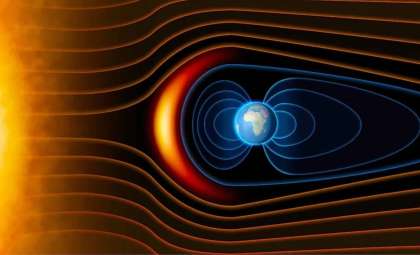
Despite technical hurdles, Voyager 1 continues to offer invaluable scientific data. Its historic crossing of the heliopause—the threshold where the solar wind meets interstellar space—has deepened insights into the protective heliosphere’s structure and impact against cosmic radiation.
Some of Voyager 1’s crucial findings cover:
DiscoverySignificanceProperties of interstellar plasmaAdvances understanding of external solar system environmentsFluctuations in cosmic ray intensityOffers clues on galactic radiation dynamicsMagnetic field dataReveals characteristics of the interstellar medium
Alongside its counterpart Voyager 2, which now lies over 12 billion miles away, Voyager 1 helps paint an unprecedented picture of our solar system’s frontier and the space beyond.
Legacy and future perspectives on Voyager 1’s mission
Aware that the final set of thrusters has limited longevity, the mission team values each day Voyager 1 remains operational as a testament to human creativity and resilience venturing into the unknown. Once thruster failures prevent active contact, the spacecraft’s lasting impact on science will continue.
The comprehensive data amassed by Voyager 1 will fuel research and the development of subsequent missions for years into the future. Its daring trek demonstrates human potential to explore beyond familiar territory, from the outer planets’ frozen realms to the boundary of interstellar space.
Newly discovered populations of objects beyond the Kuiper Belt, as highlighted by a recent study, underscore the necessity for ongoing exploration and the vast possibilities awaiting discovery within our cosmic neighborhood.
The current peculiarities in Voyager 1’s function within interstellar space underscore both the challenges and potential discoveries that lie ahead. As we deepen our cosmic exploration, the Voyager mission’s legacy of innovation and perseverance continues to inspire humanity’s journey into the great unknown.
- Categories:
- Nasa






0 comments
Sign in to Comment