
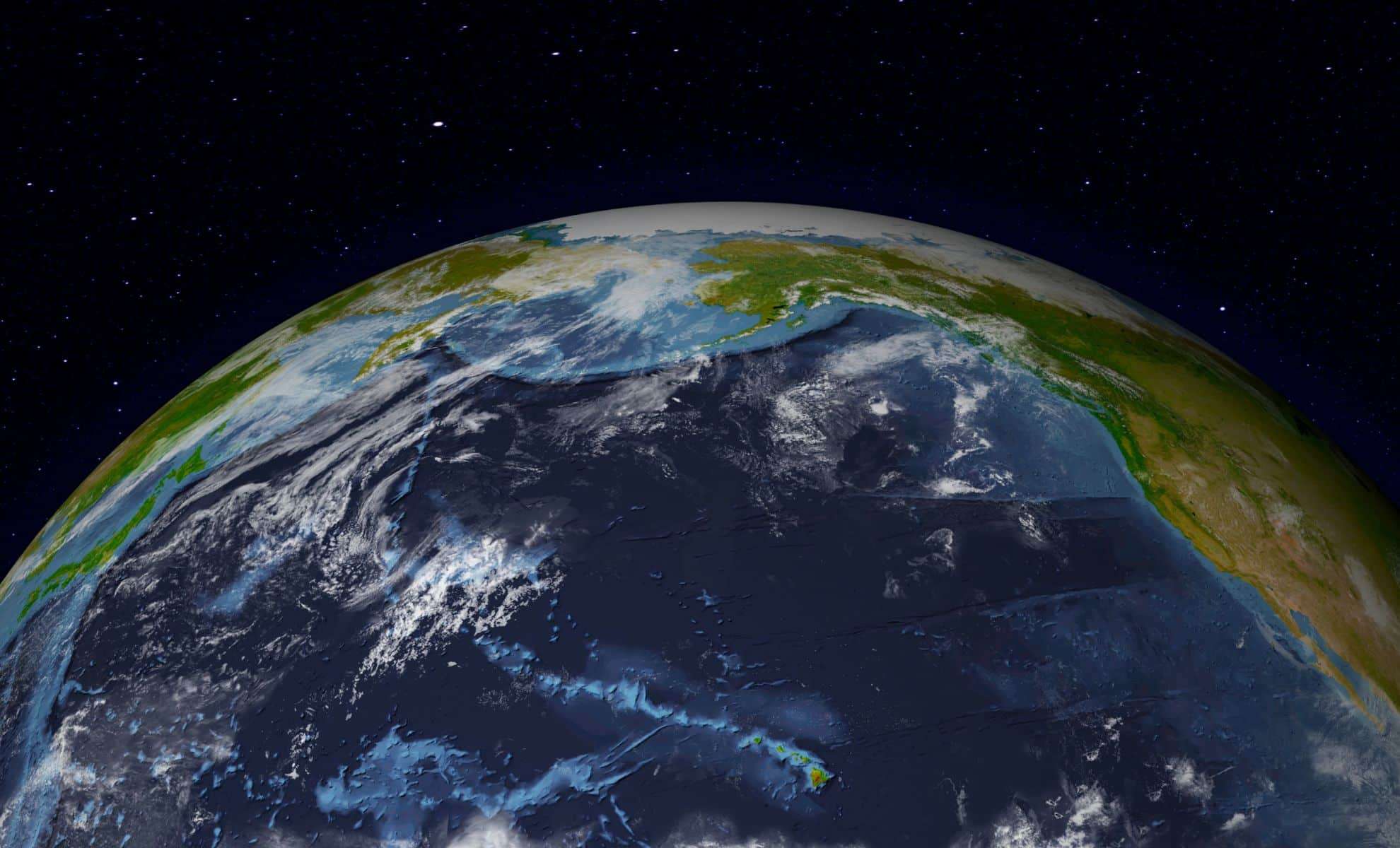
Is there a massive reservoir of water concealed nearly 700 kilometers beneath our planet’s surface? Recent findings from scientists in Brazil and Botswana suggest that enormous quantities of water might be stored in minerals within Earth's mantle, challenging previous perceptions of the planet’s internal composition.
A Remarkable Discovery Far Below Ground
The idea of an ocean beneath the ground might recall the adventurous tales of Journey to the Centre of the Earth by Jules Verne. But modern science appears to be uncovering truths that rival fiction. Over the past decade, two separate research groups across the globe have uncovered compelling evidence that points to substantial volumes of water held deep inside Earth.
In 2009, Dr. Graham Pearson and colleagues at the University of Alberta uncovered a mineral called ringwoodite embedded in a rock originating from depths between 410 and 660 kilometers beneath Brazil’s surface. This mineral, unseen in natural mantle samples until then, can house water as hydroxide ions (OH-) when subjected to extreme pressures. Previously identified only in meteorites, this marked the first confirmation of ringwoodite in Earth's mantle, suggesting water could be trapped far beneath the oceans and surface environments.

More recently, in 2022, researchers in Botswana discovered a similar sample containing traces of ringwoodite, bolstering the initial findings. Mineral physicist Tingting Gu at the Gemological Institute of America in New York analyzed this new specimen, adding weight to the evidence for deep mantle water.
Implications of the Deep Mantle Water Cycle
Scientists propose that the Earth’s transition zone, located between 410 and 660 kilometers depth, might hold as much or even more water than all the oceans combined. Unlike familiar liquid water, this water exists as hydroxide ions embedded within minerals like ringwoodite, stabilized by intense pressure.
This discovery has stirred significant discussion among geologists, challenging established concepts about Earth's water reservoirs. While it has been known water resides in the mantle, the abundance and significance of this water prompt new questions about its origins and its participation in Earth's wide-reaching hydrological system.
Dr. Tingting Gu suggests this concealed reservoir may be key to a deep water cycle essential to the planet’s equilibrium, potentially explaining how water circulates between Earth's surface and interior layers and influencing tectonic and geological mechanisms.
Water’s Influence on Tectonic Activity
Aside from contributing to the water cycle, this deep-seated water might profoundly impact plate tectonics. Dr. Graham Pearson, who identified ringwoodite in Brazil, theorizes that the water stored in the mantle could affect tectonic plates' behavior, influencing phenomena such as earthquakes and volcanic eruptions.
Ongoing studies into ringwoodite and its connections to Earth's inner dynamics promise to enhance understanding of how water interacts with geological forces and reshape perspectives on the planet’s interior workings.
- Categories:
- News


0 comments
Sign in to Comment