

Recent research has highlighted the alarming threat of a disruption in the Atlantic Meridional Overturning Circulation (AMOC), a vital ocean current system essential for maintaining Earth's climate balance. Detailed in JGR Oceans, the study uncovers significant shifts in the Arctic’s Beaufort Gyre that may have far-reaching effects on global climate stability. The AMOC plays a pivotal role in temperature regulation, particularly throughout the Northern Hemisphere, and alterations in its flow could trigger widespread and irreversible environmental changes. Should the Beaufort Gyre surpass a critical threshold, it could release vast amounts of freshwater into the North Atlantic, disrupting the AMOC and sparking extensive climate fallout.
Scientists from Norway, Sweden, Germany, and the UK have been monitoring these changes, noting that the Beaufort Gyre’s dynamics are already being altered by rising temperatures and melting Arctic ice. Their findings suggest that the gyre may soon cross a tipping point, beyond which the AMOC’s stability could be compromised irreversibly. This urgent concern may be closer than previously expected.
Understanding the AMOC and Consequences of Its Breakdown
The Atlantic Meridional Overturning Circulation (AMOC) serves as a fundamental mechanism driving heat distribution across the globe. Acting like an oceanic conveyor belt, it moves warm waters northward and cold waters southward, maintaining climate consistency in the North Atlantic region. The failure of the AMOC would likely provoke serious climate disruptions, including accelerated sea-level rise on the eastern coast of the United States, intensified storm activity, and altered precipitation patterns worldwide. One severe ecological risk involves the Amazon rainforest, where seasonal rainfall could be drastically modified, affecting both biodiversity and farming.

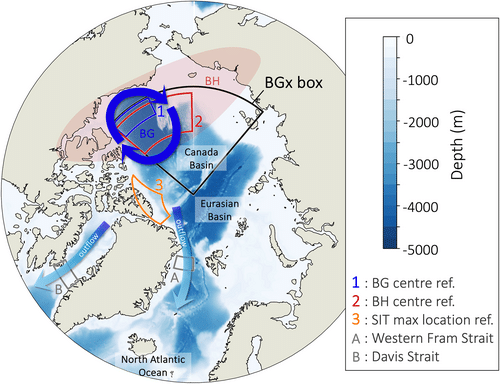
The study reveals that the Beaufort Gyre, a key Arctic feature, influences the AMOC’s balance. Ongoing loss of sea ice may instigate the release of large amounts of freshwater into the North Atlantic, weakening the circulation. As Céline Heuzé, climatology expert at the University of Gothenburg, states:
“The results of this study make us concerned that the reduction of sea ice in the area could lead to a tipping point where the AMOC collapses.”
Such a breakdown would be catastrophic, potentially triggering feedback loops that accelerate climate change even further. The alterations in ocean and atmospheric conditions would disrupt ecosystems and communities worldwide.
The Critical Importance of the Beaufort Gyre
Situated in the Arctic Ocean, the Beaufort Gyre is a major current that governs freshwater distribution throughout the region. Melting ice directly impacts the gyre’s capacity to store freshwater. The research reveals that as the gyre shrinks due to warming, a sudden release of freshwater into the North Atlantic becomes more likely, posing a serious threat to AMOC integrity.
Interestingly, the decline in the Beaufort Gyre is expected even under moderate greenhouse gas emission scenarios. This means that even if global warming remains below the worst-case estimates, the gyre's slowdown and resulting AMOC disturbances may still happen. The study’s authors emphasize that without substantial climate mitigation efforts, this downtrend in the gyre’s function appears unavoidable, stating it is predicted under both high and intermediate emissions pathways.
The researchers warn that crossing this critical threshold would probably cause permanent, irreversible effects. The consequences for worldwide weather and climate patterns would be dire, underscoring the urgent need for proactive intervention.
Global Ramifications: Approaching a Climate ‘Tipping Point’
The potential collapse of the AMOC represents one of the most alarming threats from climate change due to its unpredictable and difficult-to-reverse impacts. Oceanography professor Raffaele Ferrari from MIT characterizes such an event as a “climate tipping point”, signaling a abrupt shift with serious global repercussions. Possible effects include swiftly rising sea levels on the U.S. East Coast and Europe, intensified storms, and major disturbances to ocean currents critical for climate regulation.
These findings highlight the imperative to act swiftly. As climate models anticipate continued warming, reversing these changes after a tipping point would be increasingly challenging. The report outlines multiple consequences linked to a potential AMOC failure:
“Such a collapse would be what scientists call a ‘climate tipping point’ — an event that would lead to sudden, wide-reaching impacts that are difficult if not impossible to reverse.”
Strategies to Avert AMOC Disruption: Cutting Carbon Emissions
Despite these dire warnings, hope remains that the AMOC's collapse can be prevented. Earlier research released in February suggested stability in the AMOC over the past 60 years, but future projections are uncertain. Without substantial reductions in greenhouse gases, the weakening trends may intensify.
The authors stress that decisive measures to reduce carbon emissions are critical. Transitioning away from fossil fuels and curbing atmospheric heat-trapping gases will be essential to preserving the AMOC. Experts advocate for accelerating the adoption of renewable energy and enhancing individual sustainability efforts, such as upgrading heating systems, investing in solar power, and improving home energy efficiency—all vital steps toward mitigating climate risks.
- Categories:
- News












0 comments
Sign in to Comment