
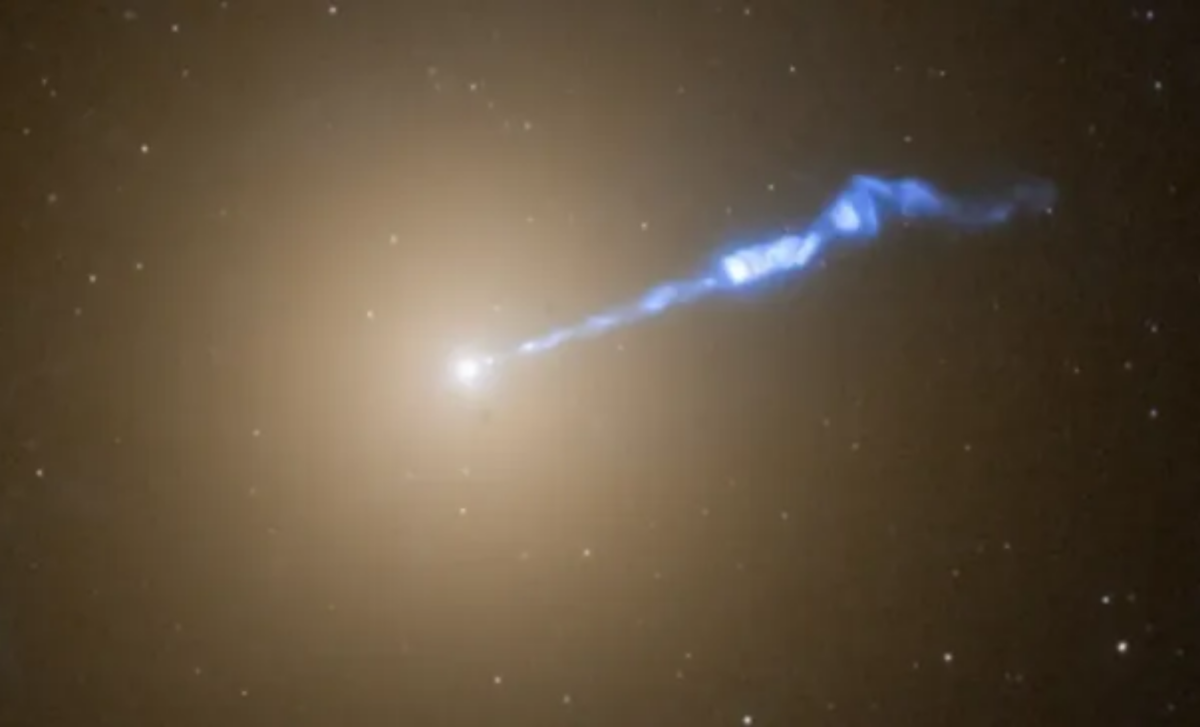
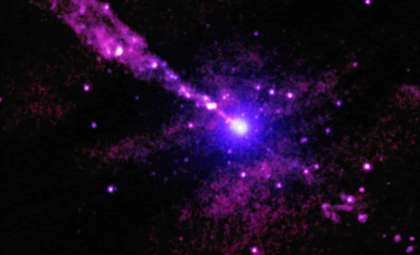
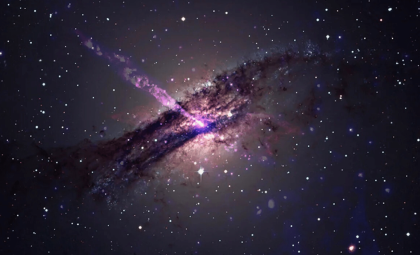
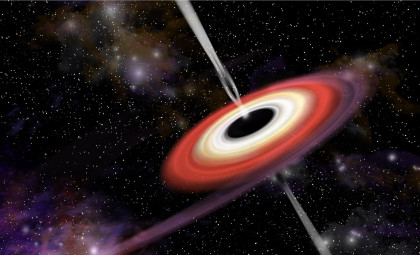
Using the Event Horizon Telescope (EHT), astronomers have revealed a significant breakthrough in understanding how black holes generate vast cosmic jets. Published in Astronomy & Astrophysics on January 28, the study connects the famed shadow of the supermassive black hole M87* with the root of a jet extending 3,000 light-years, marking a pioneering achievement in astrophysical research. These insights illuminate the interplay between intense gravitational forces, matter, and energetic phenomena at the centers of active galaxies.
A Decade of Research Unites Black Hole Shadow with Jet Origin
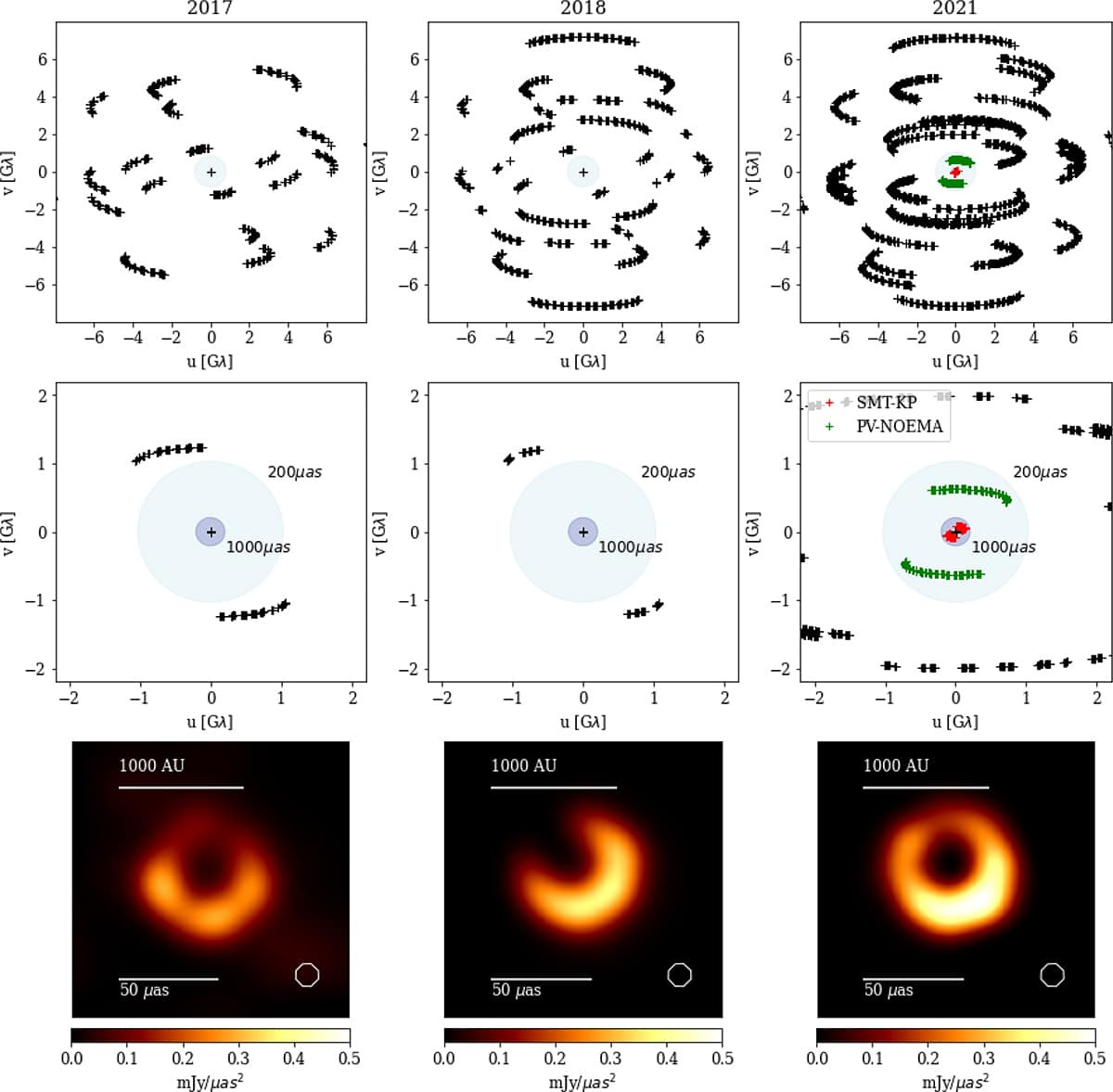
The supermassive black hole M87*, situated in galaxy Messier 87 approximately 55 million light-years away, has been an astronomical landmark since the first image captured in 2017 and publicly released in 2019. Its luminous ring, created by searing plasma orbiting near the event horizon, was the first visual proof of a black hole’s existence. Observations from 2021 have now made it possible to link this glowing structure directly to the origin of a massive jet of matter and energy stretching thousands of light-years into space.
The findings, featured in Astronomy & Astrophysics on January 28, arise from advanced radio imaging techniques using Very Long Baseline Interferometry (VLBI), which can achieve extraordinary resolution over cosmological distances. The Event Horizon Telescope collaboration detected a compact source of emission less than a tenth of a light-year from M87*, pinpointing the jet’s likely launch site. This corresponds with features shown in earlier radio maps, linking theoretical predictions with tangible observation.

“This study represents an early step toward connecting theoretical ideas about jet launching with direct observations,” team leader Saurabh of the Max Planck Institute for Radio Astronomy (MPIfR) said in a statement. “Identifying where the jet may originate and how it connects to the black hole’s shadow adds a key piece to the puzzle and points toward a better understanding of how the central engine operates.”
The term “central engine” refers to the process by which rotating black holes and magnetic fields accelerate particles to near light speed, forming jets—an area of active research that this discovery helps clarify.
Multi-Frequency Breakthroughs Illuminate Jet Formation
After more than ten years of collaborative research, the EHT team has combined data from a global array of radio telescopes to achieve exceptional clarity. One major challenge has been pinpointing where relativistic jets emerge and exactly how they gather energy. The 2021 data exposed previously unseen radio emissions absent in earlier campaigns (2017–2019), bridging a crucial gap in understanding.
“We have observed the inner part of the jet of M87 with global VLBI experiments for many years, with ever-increasing resolution, and finally managed to resolve the black hole shadow in 2019,” said Hendrik Müller of the National Radio Astronomy Observatory (NRAO). “It is amazing to see that we are gradually moving towards combining these breakthrough observations across multiple frequencies and completing the picture of the jet launching region.”
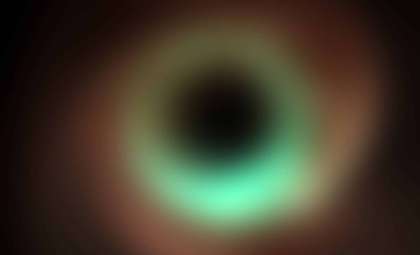
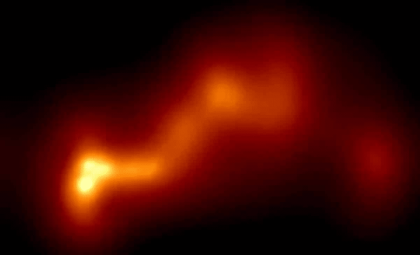
Comparing the new radio signatures to the bright plasma ring, scientists determined that the southern extension of the jet corresponds to the jet’s origin point. This connection not only supports theoretical models but also paves the way for future, more precise studies of jet structure and dynamics.
Implications for Black Hole Science and Cosmology
This discovery holds broad consequences. It helps resolve enduring puzzles about jet formation, refines models of how black holes accrete matter and expel energy, and informs our comprehension of galaxy evolution, cosmic energy transfer, and conditions in the early universe.
Moreover, these results strengthen the link between observational astronomy and general relativistic magnetohydrodynamic (GRMHD) simulations—advanced computational tools that predict black hole dynamics. Aligning real data with theoretical models allows researchers to investigate how spinning black holes impact their surroundings, launching energy deep into intergalactic space.
Looking ahead, the team plans continued monitoring of M87* with upgraded EHT arrays and multifrequency observatories. Their goal is to reveal intricate details of the jet’s structure and magnetic environment, potentially shedding light on similar phenomena in other powerful active galaxies and our own Milky Way’s black hole, Sagittarius A*.
- Categories:
- Astronomy





0 comments
Sign in to Comment