
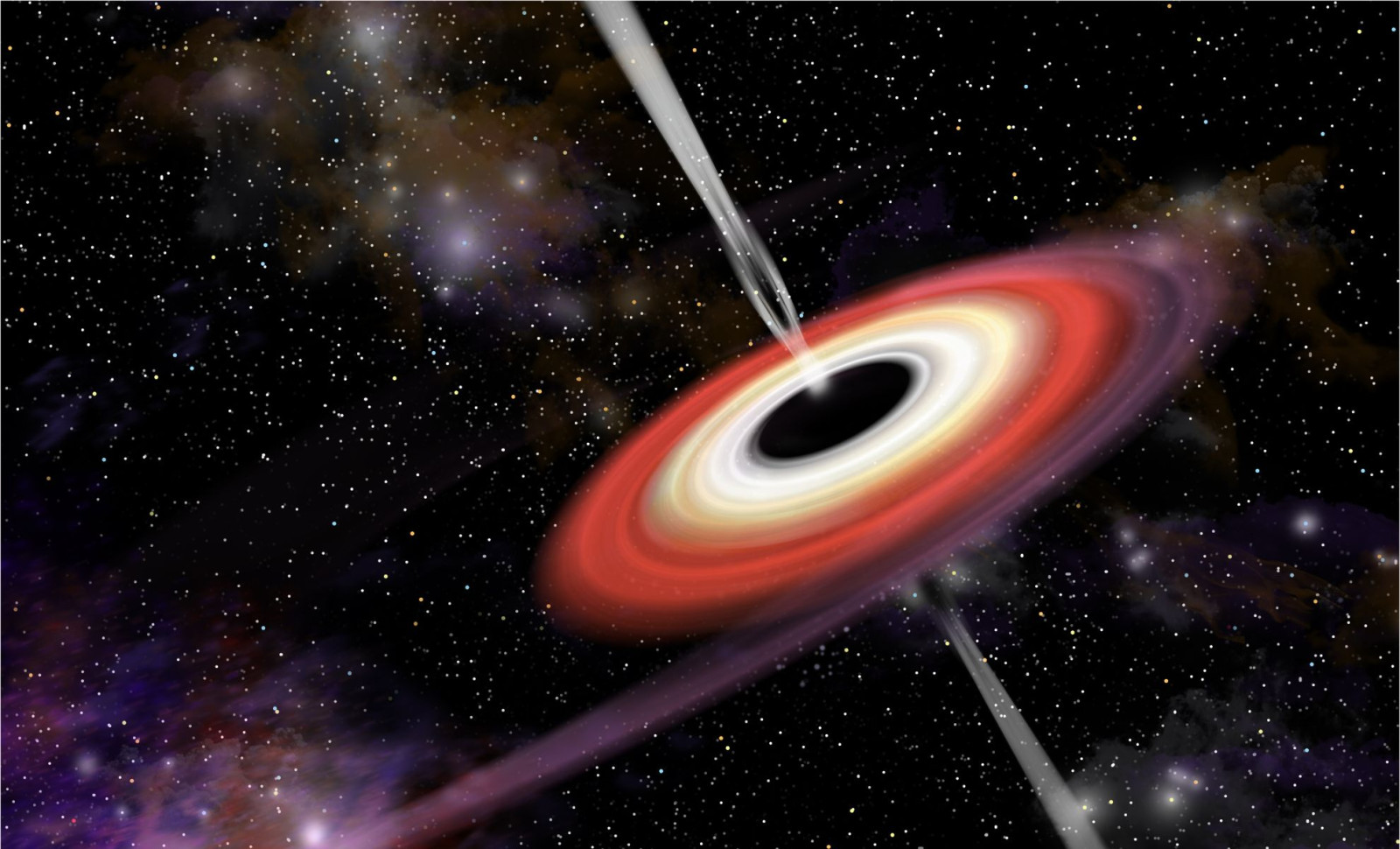
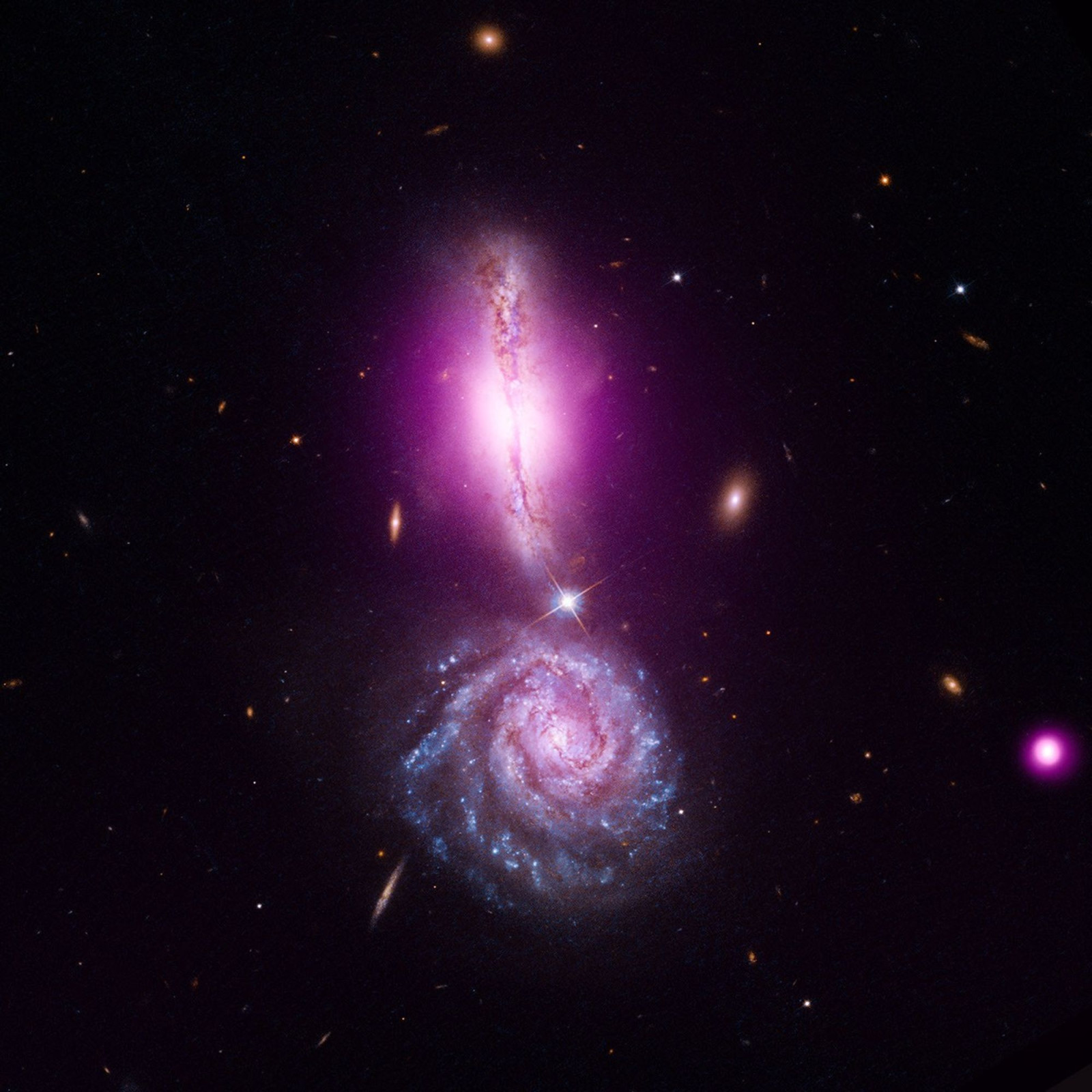
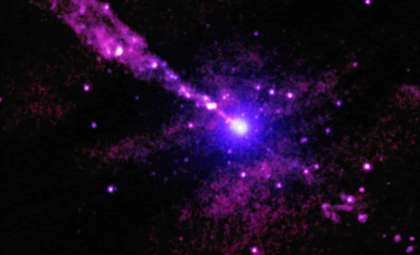
A supermassive black hole situated in the galaxy VV 340a is ejecting a powerful jet of gas that disrupts star-forming material. Unlike typical jets, this one exhibits a spiraling, wobbling motion as it streams outward, heating and ionizing vast regions of the galaxy.
This jet interferes with the cold molecular clouds, essential for birthing new stars, by dispersing and heating them. Such activity gradually hinders star formation, demonstrating the profound effects that energetic black hole phenomena can have over an entire galaxy's evolution.
An international team, led by Justin Kader, captured these detailed observations, which shed light on how black holes regulate their galactic environments. VV 340a’s active galactic nucleus, powered by a voracious supermassive black hole, emits this dynamic jet.

Spiraling Jet Alters Galaxy’s Gas Distribution
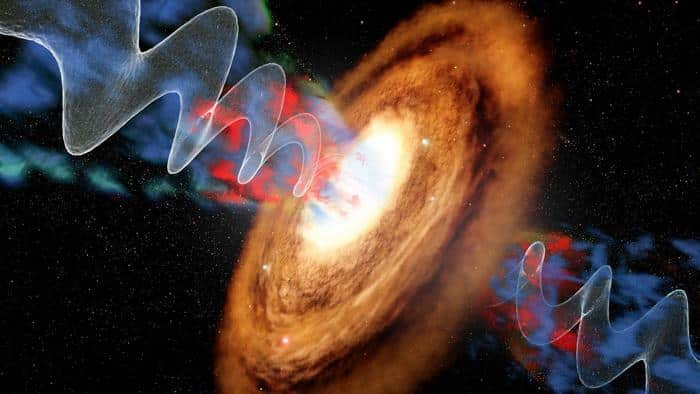
In VV 340a, the jet released by the black hole does not move in a direct line but rather precesses with a wobble. A study published on Science on 8 January 2026 describes how this precession causes the jet to sweep out a conical, corkscrew-shaped path as it leaves the galactic core. This movement affects a broader area of surrounding gas compared to a stationary jet.
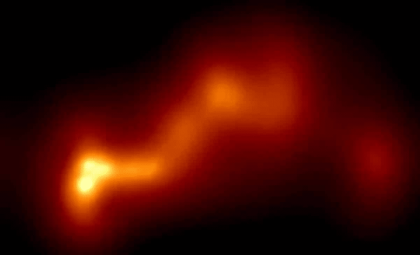
This represents the first recorded instance of such a precessing radio jet in a disk galaxy. By analyzing radio wavelength data, scientists were able to track the jet’s extensive spiraling trajectory, noting its capacity to heat and displace gas over long distances, much like a spinning top’s tilt and rotation on a grand cosmic scale.
Significant Ejection of Star-Forming Gas
The jet's influence is profound, with an observed outflow rate of 19.4 ± 7.9 solar masses annually. This indicates that material equivalent to around 19 Suns is being expelled each year, removing vital gas that would otherwise fuel star creation.
The expelled gas is notably hotter and highly ionized, known as coronal line gas, which usually remains close to black holes. However, in VV 340a, it extends far into the galaxy. This discovery was facilitated by infrared data from the Webb Space Telescope, which can penetrate dense dust clouds opaque to visible light.
Multi-Instrument Study Unveils the Black Hole’s Reach
To unravel the complexities in VV 340a, the research team utilized various instruments. The James Webb Space Telescope revealed the obscured hot and dusty gas structures, while Keck-II and the Very Large Array mapped the jet's optical and radio emissions. Additionally, ALMA contributed sub-millimeter observations.
According to Science Daily, this comprehensive, multi-wavelength approach enabled an unprecedented view into the black hole’s expansive influence, showcasing how these cosmic engines can impact their wider galactic environments.
- Categories:
- Astronomy






0 comments
Sign in to Comment