

Just 12 million light-years away, the Centaurus A galaxy is unveiling unexpected characteristics of its powerful high-energy jet, which extends an astonishing 13,000 light-years from its supermassive black hole.
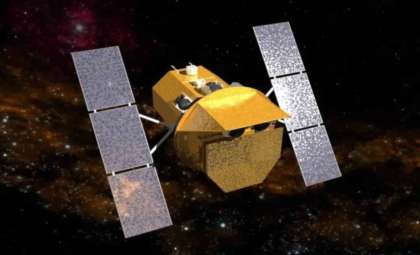
Fresh observations from NASA’s Chandra X-ray Observatory alongside IXPE have detected distinctive behaviors in the jet’s particles, showing contrasting dynamics between X-ray and radio frequencies. These latest discoveries advance our understanding of jet mechanics, shaking up existing theories on how these intense particle streams originate and change over time.
Understanding the Structure of a Colossal Black Hole Jet
Commonly referred to as Cen A, Centaurus A ranks among the brightest galaxies visible from our vantage point on Earth. Its central black hole launches jets of particles and energy that span vast portions of space. Detailed observations using multiple wavelengths expose distinct jet traits seen both in X-ray and radio emissions. Chandra’s X-ray imaging highlights energetic zones near the jet’s origin while IXPE’s polarization data map electromagnetic wave behavior along the jet.

The evidence points to intense particle acceleration driving the powerful X-ray light emitted by this jet, setting it apart from what radio signals reveal. Some scientists propose that Centaurus A’s jet formation might be linked to a galactic merger with a smaller neighbor millions of years ago, a dramatic incident influencing the jet’s structure and path. As observed by the University of Michigan research group, “The jet in X-rays is different from the jet in radio waves…The X-ray data traces a unique picture that you can’t see in any other wavelength,” highlighting novel facets of these extraordinary phenomena.
Unraveling Complex Particle Motions within the Jet
Insights from University of Michigan researchers focus on intriguing "knots"—bright, knotty sections along the jet that have been monitored through more than 20 years of Chandra data. These knots display surprising speed variations, with some appearing to move near light speed. One knot’s apparent velocity even surpasses light speed, an optical illusion caused by the angle of observation relative to Earth, emphasizing the jet’s extreme velocities and complexities.
David Bogensberger, the study’s lead author, notes that “radio and X-ray jet knots move differently”, revealing a divergence between findings at various wavelengths. Whereas radio observations suggested that knots closer to the black hole move fastest, newer X-ray measurements locate the swiftest knot in the jet’s central region. This unexpected discovery suggests subtle but important differences in particle motions across the electromagnetic spectrum, deepening the intricacy of black hole jet dynamics.
Advancing Our Grasp of Cosmic Jet Phenomena
These new revelations about Centaurus A’s jet expand the scientific framework surrounding high-energy astrophysical jets and their origin stories. Being one of the most nearby jet systems to Earth, Centaurus A serves as a key observational target for refining astrophysical models and experimental techniques. Researchers remain hopeful, with Bogensberger commenting, “there’s a lot we still don’t really know about how jets work in the X-ray band,” signaling the critical need for ongoing research to decode the processes powering these energetic particles.
The current study enriches the high-energy astrophysics discipline by demonstrating how cutting-edge telescopes and polarimetry instruments can illuminate cosmic events once inaccessible to us.
- Categories:
- Astronomy ,
- News ,
- Nasa







0 comments
Sign in to Comment