
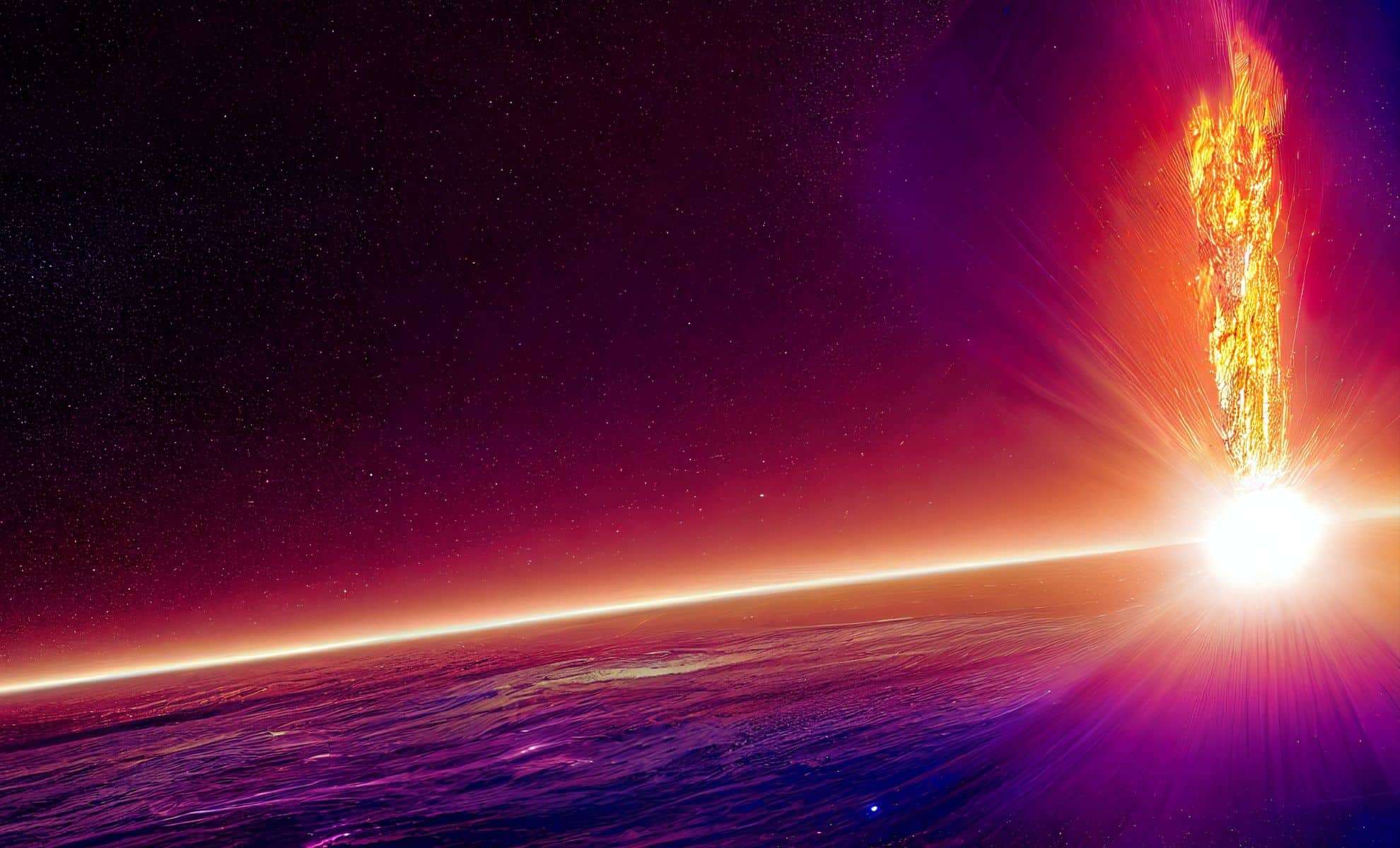
Recent research published in Science Advances suggests that Earth's hospitable conditions owe their existence to a dramatic cosmic collision. Scientists at the University of Bern pieced together Earth's early chemical history, revealing that our planet began as a dry, barren landscape. It was only after colliding with a water-bearing planetary body—likely Theia—that Earth became capable of supporting life.
A Parched Start: Early Earth’s Harsh Environment
In its infancy, as Earth coalesced from the cloud of dust and gas orbiting the young Sun, it was far from the life-supporting world we know. It lacked volatile elements such as hydrogen, carbon, and sulfur—essential building blocks for life. These elements condensed in the cooler outer reaches of the solar system, beyond the proto-Earth’s initial formation zone. This challenges previous assumptions that Earth's life-essential chemistry developed gradually.
By examining isotopic signatures in meteorites and Earth rocks, the Bern group discovered that Earth’s distinctive chemistry was established incredibly quickly—within three million years of the solar system’s origin. Lead investigator Pascal Kruttasch notes: “The solar system formed roughly 4,568 million years ago. For Earth’s chemistry to have locked in within just 3 million years is astonishingly rapid.”

Precision Through Advanced Isotope Techniques
The study’s accuracy stems from cutting-edge isotope geochemistry. Researchers utilized a finely tuned "cosmic clock" that tracks the decay of manganese-53 to chromium-53, which has a half-life near 3.8 million years. This tool allows the dating of primordial planetary materials with exceptional precision, reducing uncertainties to under a million years.
Such high-resolution data were achieved thanks to the Bern laboratory’s renown in isotope analysis. As co-author Klaus Mezger explains: "These measurements were feasible because the University of Bern possesses world-leading expertise and infrastructure to analyze extraterrestrial samples and leads the field in isotope geochemistry."
This approach not only mapped out the timeline for Earth’s volatile losses but also improved insights into how building blocks of planets form and change in nascent star systems.
The Mars-Sized Collision That Changed Everything
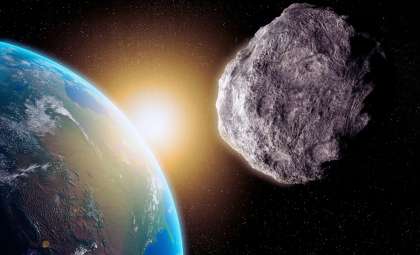
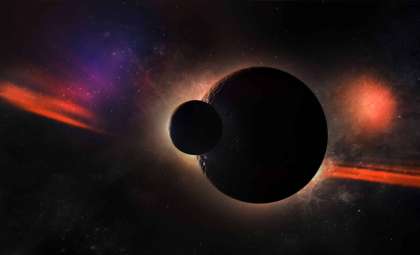
According to the team, Earth’s shift from a lifeless, dry rock to a water-rich environment depended on an enormous impact event. The protoplanet Theia, thought to have originated far from the Sun in a zone abundant with volatiles, struck early Earth late in its formation. This colossal impact not only created the Moon but also delivered vital elements for life.
Kruttasch emphasizes: “Our findings indicate proto-Earth started as a dry planet. It was likely the collision with Theia that introduced volatiles, ultimately allowing life to emerge.”
Without this dramatic encounter, Earth could have remained a barren world akin to Mercury or Venus. The study underscores that Earth's capacity to support life is the result of a rare cosmic accident rather than an inevitable progression.
Life as a Fortunate Cosmic Outcome
These results lend support to the hypothesis that planets hospitable to life may be much rarer than previously thought. If Earth's habitability hinged on such a specific and violent event, then life elsewhere in the cosmos might be scarcer than many optimistic scenarios propose.
Mezger points out: “Earth’s life-friendly nature stems not from gradual development but from a chance impact with a water-rich celestial body. This illustrates that life-friendly conditions are far from guaranteed in the universe.”
This insight reshapes how we search for habitable exoplanets, emphasizing that simply residing in a ‘habitable zone’ is insufficient; geological history and impact events also play crucial roles in establishing life-supporting chemistry.
Remaining Mysteries Surrounding Theia’s Impact
While the study sheds light on early Earth’s chemistry, significant questions about the Theia collision remain unresolved. Although current models explain Moon formation and some isotopic parallels between Earth and Moon, a comprehensive theory encompassing all physical and chemical data is still lacking.
Kruttasch acknowledges this complexity: “Our understanding of this collision is incomplete. We need models that explain both the physical attributes and the chemical and isotopic compositions of Earth and its satellite.”
Ongoing research aims to merge isotopic evidence with detailed simulations of planetary impacts, which could ultimately unravel how this singular cosmic event delivered life’s essential ingredients to our planet.
- Categories:
- News







0 comments
Sign in to Comment