
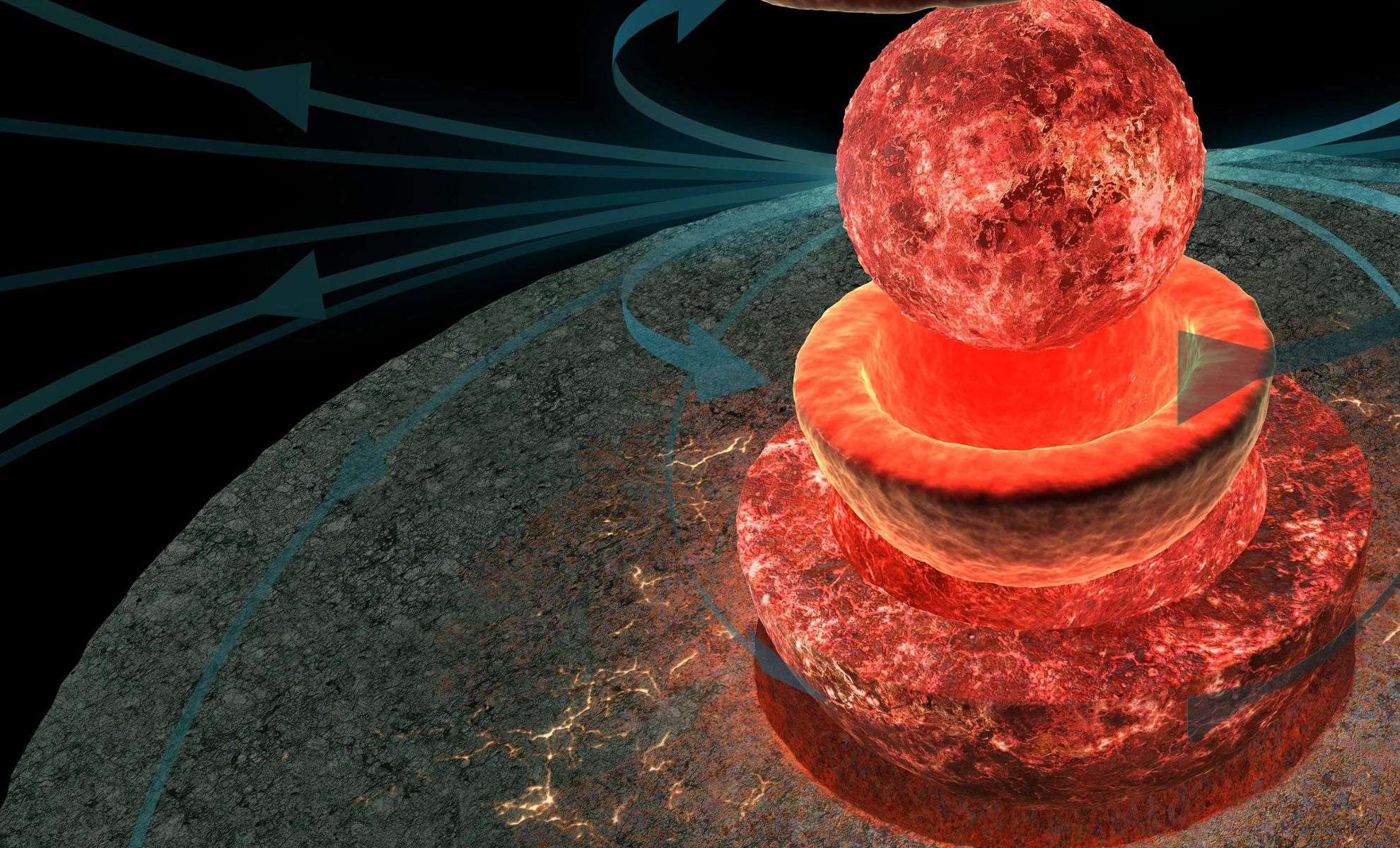
The Moon’s tranquil exterior conceals many mysteries, including the surprising magnetic properties found in some lunar rocks. While Earth boasts a powerful magnetic shield generated by its core, the Moon’s magnetic field is much weaker. Nevertheless, certain rocks on the Moon’s far side exhibit unexpectedly strong magnetization.
Scientists at the Massachusetts Institute of Technology (MIT) have introduced a compelling hypothesis: a colossal impact event may have temporarily intensified the Moon’s faint ancient magnetic field.
Unraveling Lunar Magnetism
Back in 1959, the Soviet Luna 1 mission revealed that, unlike Earth, the Moon lacks a strong inherent magnetic field. Later studies confirmed that the Moon’s magnetism is generally weak and mostly localized in its crust from solar particle interactions.

Yet, lunar samples retrieved by the Apollo missions showed evidence of magnets that once witnessed far stronger magnetic fields. This led to the belief that an ancient lunar dynamo, possibly within the Moon’s core, generated a more robust magnetic field long ago. Still, the precise cause behind these intensely magnetic lunar rocks remains a subject of investigation.
Impact-Induced Magnetic Enhancement
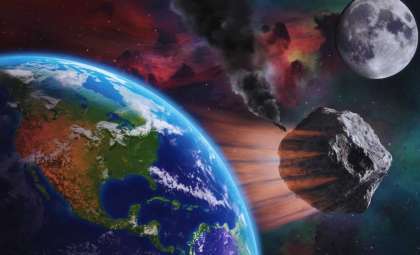
MIT planetary scientist Isaac Narrett and colleagues propose a fresh explanation that shifts focus from a long-lasting dynamo to an enormous collision event. Their model suggests that such an impact would have produced an expansive plasma cloud, which temporarily boosted the Moon’s weak magnetic field. This sudden magnetic surge could account for the highly magnetized rocks located near the Moon’s south pole.
Unlike Earth’s consistently active geomagnetic field, the Moon’s is faint today. However, simulations from the team indicate that the Moon’s modest magnetic field could have been transiently intensified by a powerful impact shockwave, sustaining elevated magnetism for only about 40 minutes.
The Influence of Plasma Dynamics and Shockwaves
The team’s models concentrated on how plasma clouds, generated by impact vaporization, interact with magnetic fields. When a large object strikes the Moon’s surface, it vaporizes material, creating a dense cloud of charged plasma particles that can amplify the existing magnetic field temporarily.
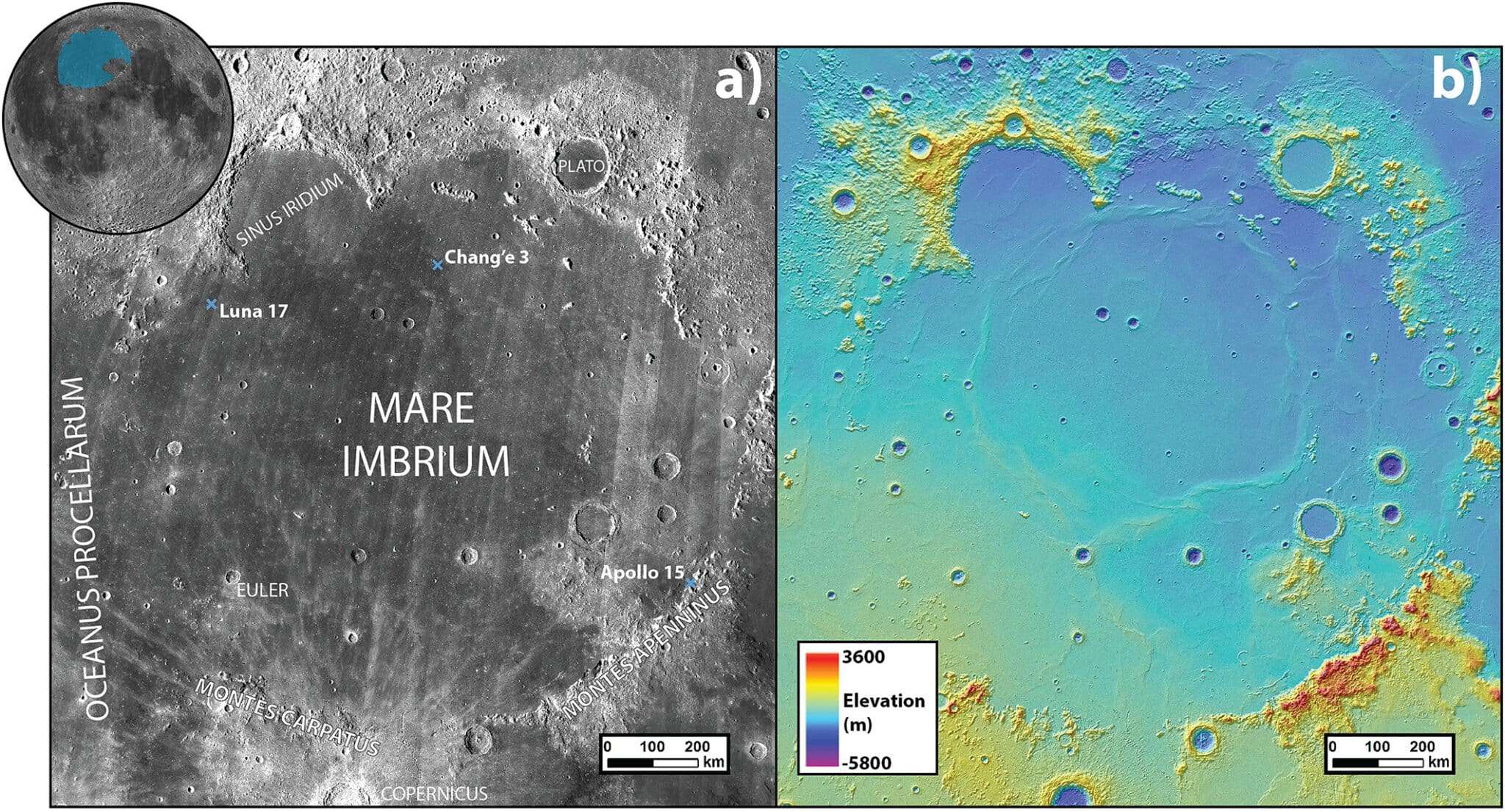
Specifically, the shockwave from the formation of the Mare Imbrium basin would have propagated to the far side of the Moon. This shockwave combined with the plasma cloud likely enhanced the Moon’s magnetic field during that brief interval. As the plasma cooled, electron alignment within the lunar rocks would have resulted in lasting magnetization.
Future Lunar Missions to Validate Findings
This new research offers a vital piece in the puzzle of lunar magnetism, suggesting a combined role of both an ancient core dynamo and large impact events. Understanding this interplay could be pivotal as astronauts prepare to visit the lunar south pole under NASA’s Artemis Program.
Future sample retrievals and magnetic studies could confirm whether the magnetism observed in lunar rocks matches the predictions of this impact-driven theory.
For now, the origin of the Moon’s magnetic anomalies continues to intrigue scientists, with Narrett and his team’s work providing a fresh lens to explore the dynamic history of our celestial neighbor.
- Categories:
- News




0 comments
Sign in to Comment