
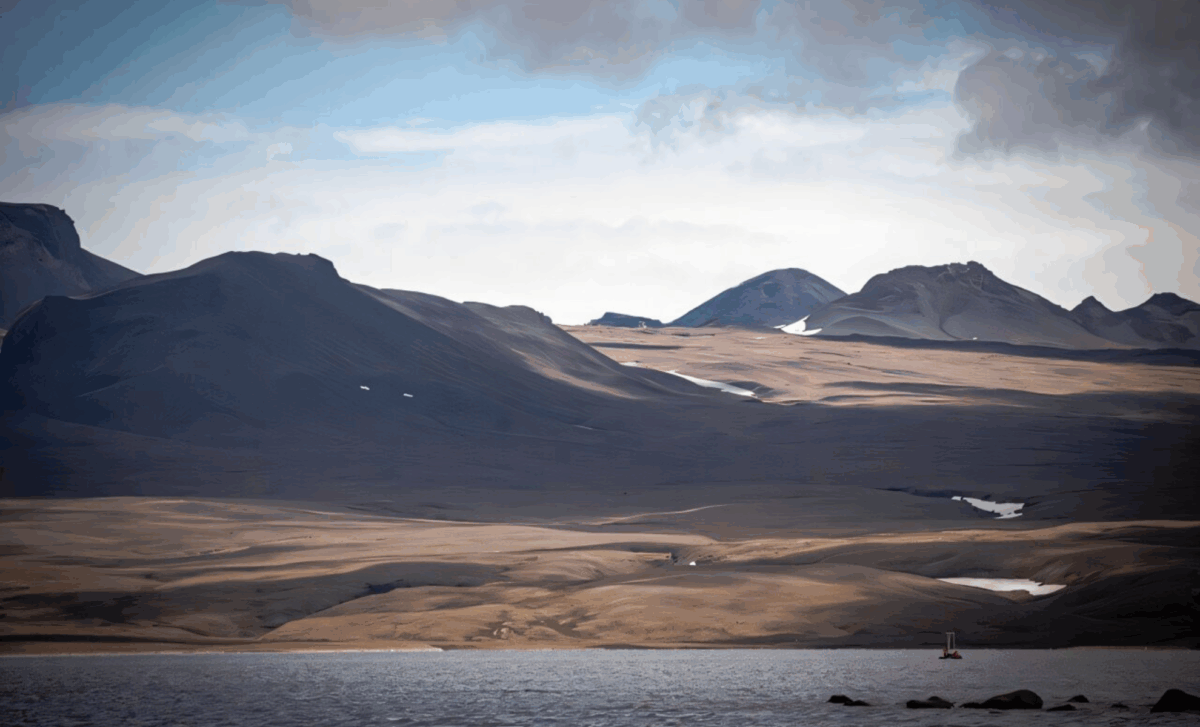
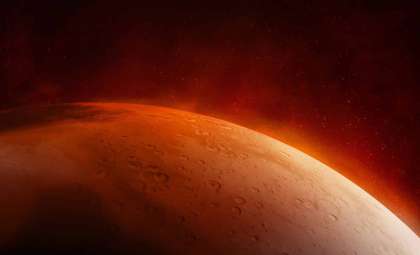
Researchers are leveraging Iceland’s volcanic mudrocks to better understand upcoming samples from Mars. These volcanic sedimentary rocks, formed from basalt, closely resemble the minerals found in Martian soils, providing an ideal proxy to study Mars’ ancient geologic conditions. A new study published in American Mineralogist investigates how Earth's volcanic landscapes can illuminate Mars’ past.
Volcanic Mudrocks from Iceland Offer Insight into Mars’ Early Environment
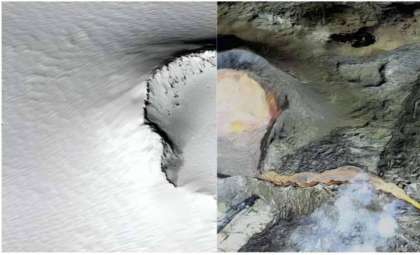
The mudrocks of Iceland—still in early sedimentary phases—are gaining attention as natural analogs to Martian sediment. Their mineral composition, which emerges from volcanic origins, makes them a valuable resource for studying how minerals interact with water—a key factor in assessing Mars’ potential for past life.
“On Mars, we are exploring minerals that preserve a signature of ancient water but have also been buried and compressed into a rock over time,” said Michael Thorpe, a research scientist at the University of Maryland and NASA’s Goddard Space Flight Center. “On the flip side, on Earth in Iceland, we are uncovering very young sediments that have similar minerals but haven’t gone through that rock-forming process yet.”
Add Cosmo Herald as a Preferred Source

Iceland’s mudrocks give scientists a unique opportunity to examine minerals that may parallel those on Mars billions of years ago before its water supply vanished. Remaining in an early, relatively unaltered stage, these sediments provide critical clues about how mineralogy may transform under Martian-like conditions over time.
Studying these youthful minerals is vital for answering questions regarding Mars’ climate history and its habitability prospects.
“What happened on Mars to allow these, what we would call ‘juvenile,’ mineral phases to last in the sedimentary rock record?” asked Thorpe. “Did it happen when the planet lost its water? Was it just because it was really cold like Iceland? Or are there other factors at play here?”
Deciphering Mars’ Geology Through Earth’s Fresh Sediments
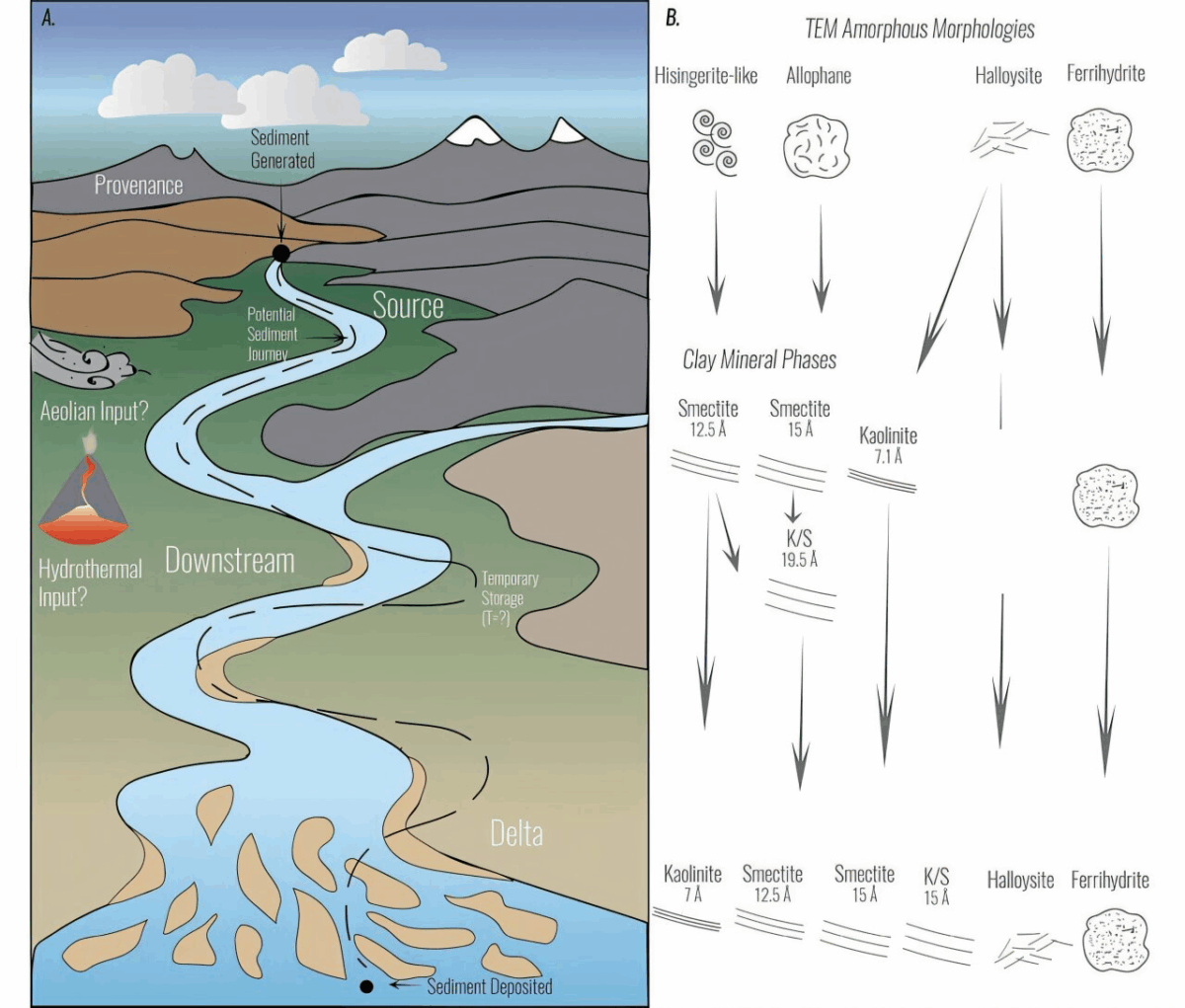
The strategy of using Iceland’s undisturbed mudrocks extends beyond mineral comparison to understanding the geological evolution of the Martian surface. These young mudrocks from Iceland resemble Martian sediment prior to extensive alteration, making them a window into early Mars environments.
“As we’re preparing for these precious samples to make their journey from Mars, it’s becoming clear that we need to find cutting-edge techniques to give us a better understanding of what to expect when they arrive in our labs on Earth,” said Thorpe.
Investigating how water interacts with Icelandic minerals helps predict the weathering history that Martian minerals might have undergone. This research is pivotal as space agencies, including NASA, plan missions to retrieve Mars samples in the near future, ensuring scientists are equipped to analyze their complex makeup.
The Challenge of Complex Mineral Grains in Martian Analogs
One obstacle in examining Icelandic mudrocks—and by analogy, Mars samples—is their intricate sediment grains. These grains often contain multiple minerals with varying crystallinity, including some amorphous phases, making analysis difficult.
“These samples are mixtures of highly crystalline materials, other rocks and minerals that are more highly disordered, and even some materials that are amorphous,” explained Eric Dooryhee, former program manager for NSLS-II’s Hard X-ray Scattering & Spectroscopy program. “The mixture of signals coming from these differently structured materials is difficult to analyze in a qualitative way.”
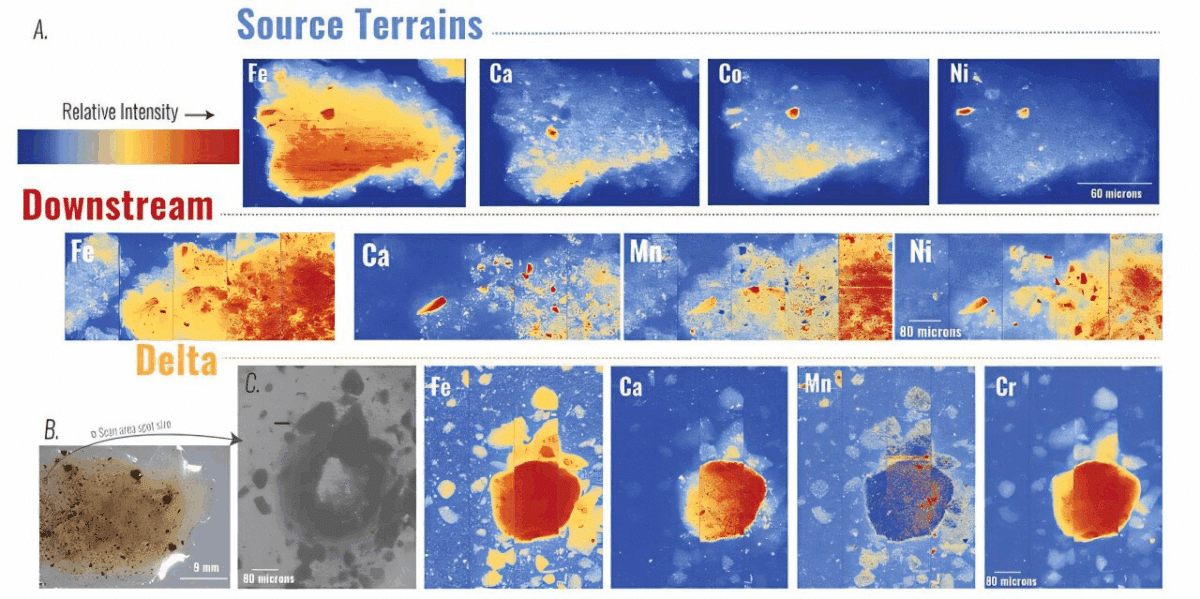
To address this, advanced analytical tools have been developed to break down the chemical complexity within each grain, enabling researchers to precisely identify constituent elements and mineral types in tiny rock fragments.
“We were able to capture the microheterogeneity of these tiny samples, the variation of their chemical structure, right down to trace elements,” said Juergen Thieme, an adjunct professor at Stony Brook University. “This level of detail is critical for understanding not only how these minerals formed but also what they can tell us about Mars’ past environment.”
Advanced Analytics Prepare Scientists for Incoming Mars Samples
As teams anticipate receiving samples from Mars, refined analytical approaches have become critical. The complexity of Martian mineralogy, which may mirror disordered phases found in Earth mudrocks, requires preparation with state-of-the-art techniques.
“These techniques are something we are still trying to perfect, which is why I like this kind of research,” said Dooryhee.
Collaboration between research scientists and facilities such as the National Synchrotron Light Source II (NSLS-II) is advancing these methods to guarantee that when Martian samples arrive, experts can decode all the complex data effectively.
Studying the weathering and evolution of minerals within Iceland’s volcanic settings lays the groundwork for interpreting Martian geology. Enhancements in analytical capabilities promise to extend our insight not only into Mars’ past but also key processes shaping Earth’s surface.
Linking Terrestrial and Martian Rock Studies
Exploring Icelandic mudrocks opens new pathways for decoding Mars’ geologic legacy. By examining Earth-based counterparts, researchers strengthen their ability to analyze and interpret Martian rocks when they arrive domestically. As Thorpe emphasized, “It’s an amazing opportunity” to utilize familiar minerals to prepare for the analytical challenges posed by Martian geology. The findings, highlighted in American Mineralogist, underscore the essential role of Earth’s geology in unveiling planetary secrets beyond our world.
- Categories:
- News








0 comments
Sign in to Comment