
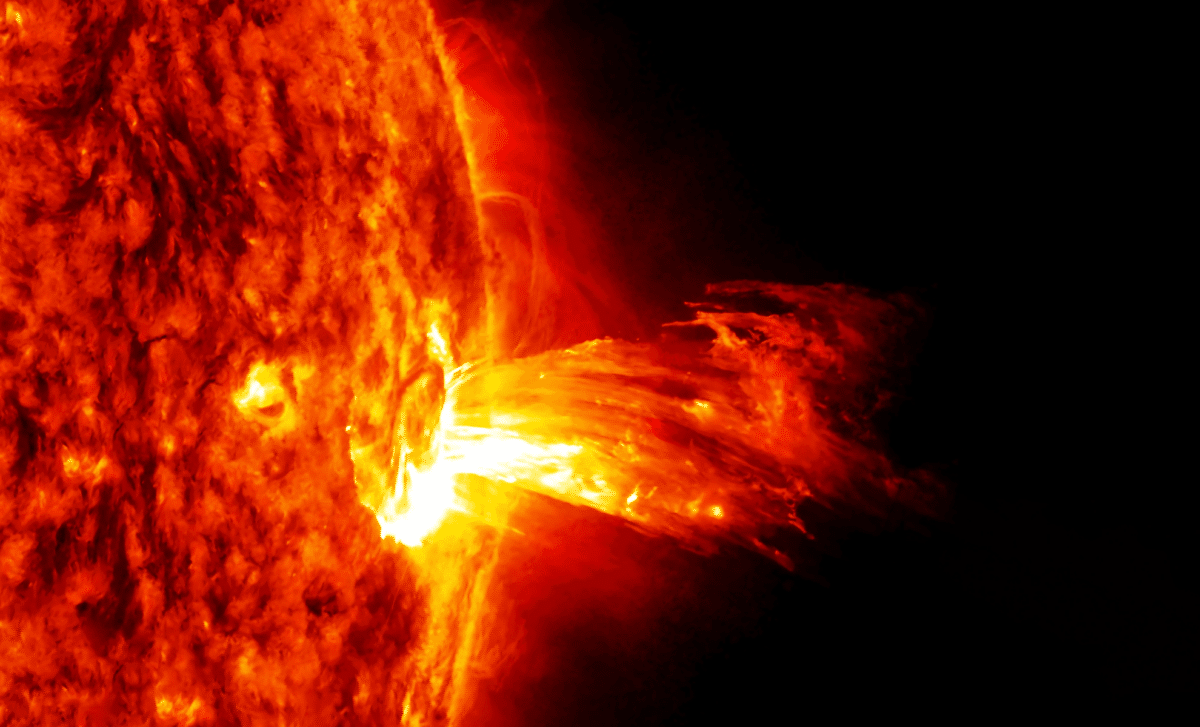
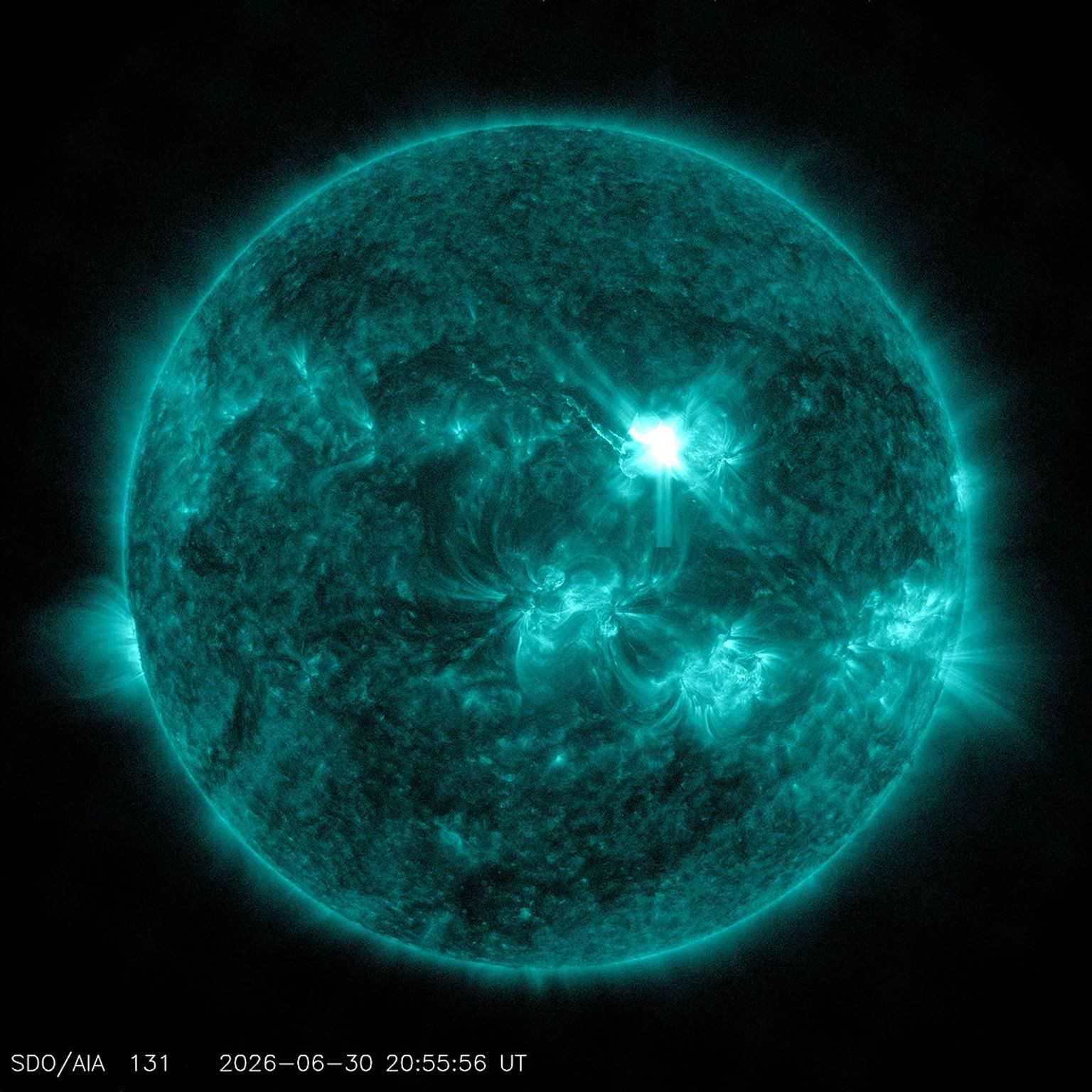
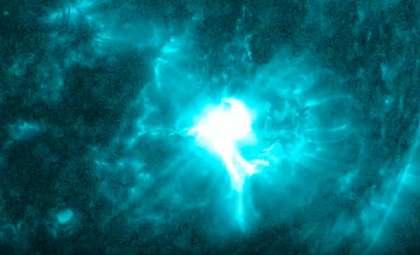
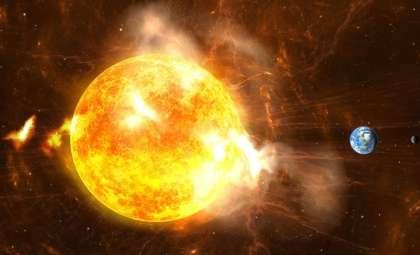
The Sun has unleashed a significant X-class solar flare, highlighting the increasing intensity of Solar Cycle 25 and signaling that our star is entering a highly active period. This event reached its peak at 4:50 p.m. ET on June 30, earning an X1.1 rating, the top tier used to classify solar flares. NASA reported the flare was observed by its dedicated Solar Dynamics Observatory, which continually monitors solar activity and its potential effects throughout the solar system.
Another Intense Solar Flare Demonstrates Heightened Solar Activity
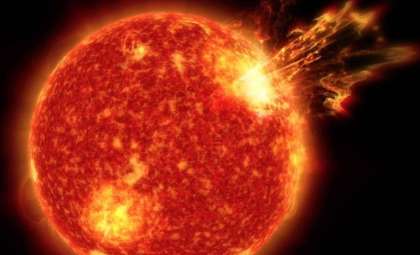
The recent solar explosion falls within the X-class category, designating it among the most powerful flares ever recorded. The number following the letter quantifies its intensity within that range; however, an X1.1 flare still represents a massive energy discharge capable of impacting near-Earth space. These flares originate when magnetic energy accumulated in the Sun’s atmosphere suddenly escapes, propelling charged particles and unleashing strong radiation across multiple wavelengths.
In contrast to coronal mass ejections, which hurl enormous amounts of solar material into space, flare radiation travels at light speed, reaching Earth in just over eight minutes. This swift arrival can disrupt radio transmissions almost immediately after the burst. As Solar Cycle 25 nears its peak, the more frequent intense flares are capturing the attention of scientists, offering valuable insights into the Sun’s magnetic dynamics and enhancing space weather prediction capabilities.

NASA Maintains Continuous Monitoring of the Sun
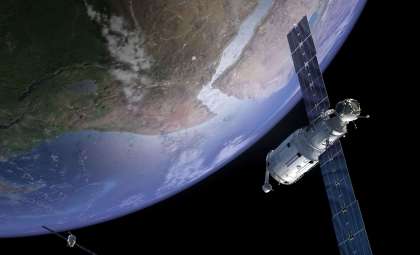
The eruption was documented by NASA’s Solar Dynamics Observatory, a key instrument dedicated to observing solar phenomena. Working around the clock, this spacecraft provides comprehensive images of the Sun across various wavelengths. Its data enables scientists to track sunspots, magnetic shifts, solar flare developments, and other changing features in real time. NASA emphasizes that solar flares are powerful energy bursts that can influence both space-borne and terrestrial technologies.
Information collected aids researchers in understanding solar activity trends and refining predictive models. This observatory is part of a broader network of missions studying the Sun, its outer layers, and the energetic particles flowing through space. With solar activity intensifying during this cycle, these high-quality observations have become indispensable for heliophysics research.
The Earthly Effects of a Single Solar Flare
While many solar flares pass without noticeable impact for most people, the stronger ones can briefly disrupt essential technologies. High-frequency radio transmissions may face interruptions, especially over sunlit areas, and navigation systems could experience reduced accuracy during heightened solar activity. Satellite operators must remain vigilant, as increased radiation can potentially harm spacecraft electronics and systems.
Astronauts beyond Earth's protective magnetic shield are at higher risk during significant solar events, making vigilant space weather monitoring critical for mission safety. Earth’s power grids are also closely observed, particularly when flares coincide with coronal mass ejections capable of disturbing the planet’s magnetic environment. Although this alert focused on the flare alone, each major event serves as a reminder that solar activity holds real-world implications beyond academic study.
Solar Cycle 25 Fuels a Rise in Strong Solar Flares
The uptick in intense solar eruptions aligns with the typical progression of Solar Cycle 25, an approximately 11-year cycle characterized by fluctuations in the Sun’s magnetic state. As the cycle heads toward its peak, the emergence of larger sunspot clusters fosters conditions favorable for frequent and powerful flares. Scientists note that recent months have seen a steady flow of notable solar events, bolstering expectations for continued heightened activity.
Continued observation of these flares helps scientists enhance forecasting methods and deepen understanding of solar magnetism. Forecast centers like the NOAA Space Weather Prediction Center actively assess each flare’s potential impact on Earth’s space environment and issue alerts if necessary. Each new solar flare adds vital data, improving our capacity to predict and adapt to the ever-changing influence of our vibrant Sun.
- Categories:
- News





0 comments
Sign in to Comment