
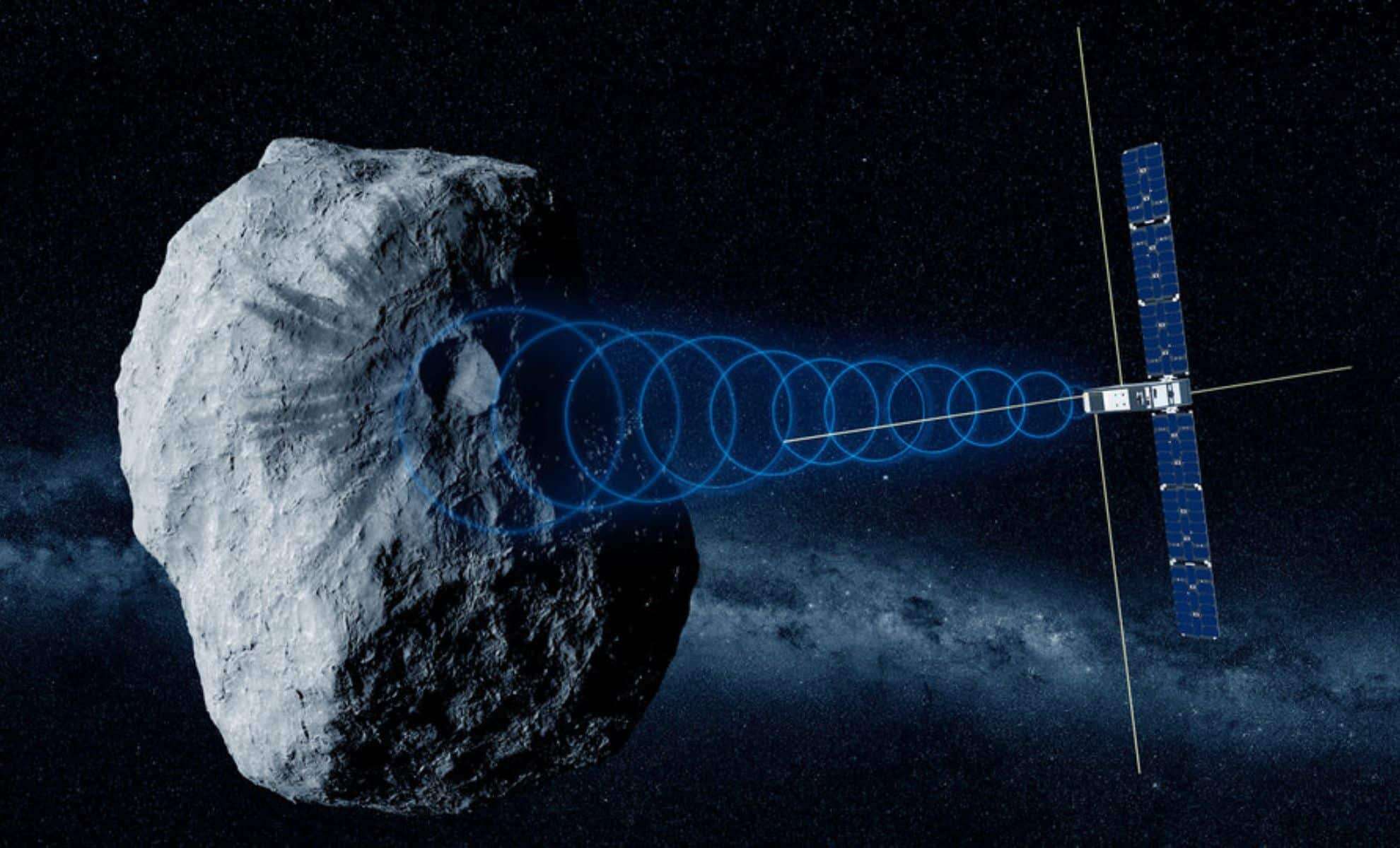
ESA’s Hera spacecraft has successfully received its first communications from the two onboard CubeSats, Milani and Juventas, marking an important step in this planetary defense mission.
Since launching on October 7, these compact CubeSats are journeying toward the asteroid Dimorphos to perform detailed observations following NASA’s 2022 DART (Double Asteroid Redirection Test) impact. This milestone represents ESA’s debut of CubeSats operating beyond Earth’s immediate vicinity, paving the way for future planetary defense innovations.
Verifying CubeSat Systems in Flight
After deployment, each CubeSat underwent a comprehensive series of system checks. About the size of shoeboxes, Milani and Juventas completed a "stowed checkout," during which mission teams confirmed their power supplies, stability, and communication systems. The teams also validated avionics, payload functions, and inter-satellite links over the course of an hour, ensuring that the Cubesats are ready for their upcoming deep-space operations. Hera’s CubeSat Engineer, Franco Perez Lissi, emphasized the mission’s technical milestone, stating, “This commissioning is a significant achievement for ESA and our industrial partners,” highlighting the critical success of integrating CubeSats into deep-space missions.

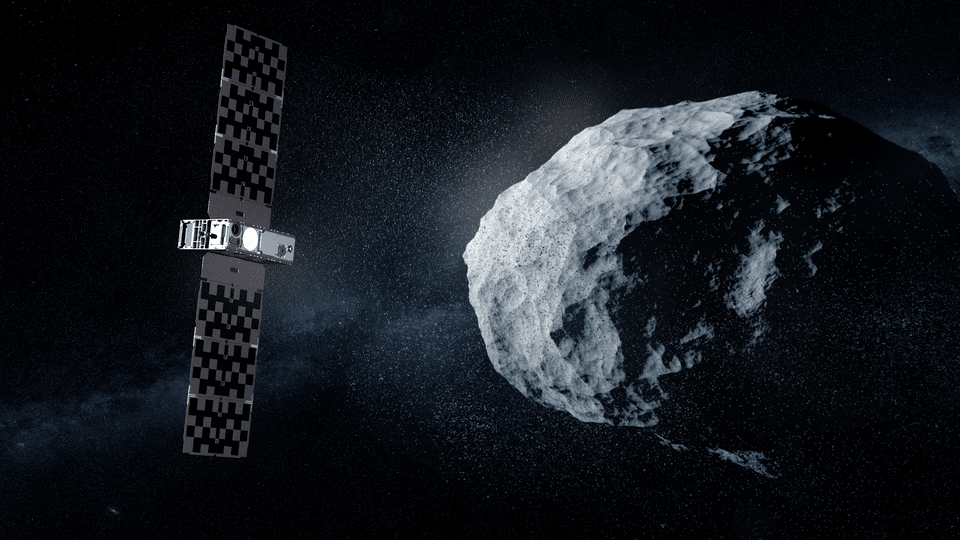
Each CubeSat has a distinct scientific task planned for the exploration of Dimorphos. Juventas, developed by GOMspace, carries a radar instrument designed to investigate the asteroid’s interior structure—an unprecedented application of radar technology on an asteroid. Meanwhile, Milani, created by Tyvak International, will analyze the asteroid’s surface composition through multispectral imaging to shed light on its mineralogy and physical characteristics. Both CubeSats will stay folded inside Hera until the spacecraft’s arrival at Dimorphos in 2026, when they will be deployed for close-range data acquisition in the asteroid’s low-gravity environment.
Maintaining Communication and System Health
During the transit to Dimorphos, ESA will intermittently power up the CubeSats to carry out health diagnostics, recharge batteries, and upload software updates. These scheduled check-ins are vital to ensuring the Cubesats remain fully functional ahead of their scientific tasks. Sylvain Lodiot, who manages Hera operations, explained the stringent ground protocols, noting, “We validated the entire ground command infrastructure, from data transfer to monitoring,” coordinated through ESA’s European Space Security and Education Centre (ESEC). This comprehensive monitoring ensures steady communication despite the huge distances involved.
To facilitate reliable contact over millions of kilometers, ESA has implemented a specialized control framework for the CubeSats. This enables mission control to track CubeSat status and execute crucial software and hardware modifications as required. Reactivations are planned every two months as part of the strategy designed to keep the CubeSats mission-ready for their approach to Dimorphos, some 11 million kilometers away from Earth.
A Landmark for Planetary Defense and Small Satellite Exploration
Introducing CubeSats into deep-space missions sets a new precedent in planetary defense, complementing the achievements of NASA’s DART mission. With Milani and Juventas, ESA aims to collect critical data regarding Dimorphos’s internal structure and surface composition, providing insight into how the asteroid responded to the DART collision. These findings will be instrumental for advancing kinetic impact deflection techniques should Earth face a potential asteroid threat.
Demonstrating CubeSats’ capabilities in a deep-space setting also reinforces their role in enhancing traditional space missions. Through miniaturized, yet sophisticated instruments, Milani and Juventas exemplify ESA’s innovative approach to planetary defense and space exploration.
- Categories:
- Astronomy ,
- News








0 comments
Sign in to Comment