
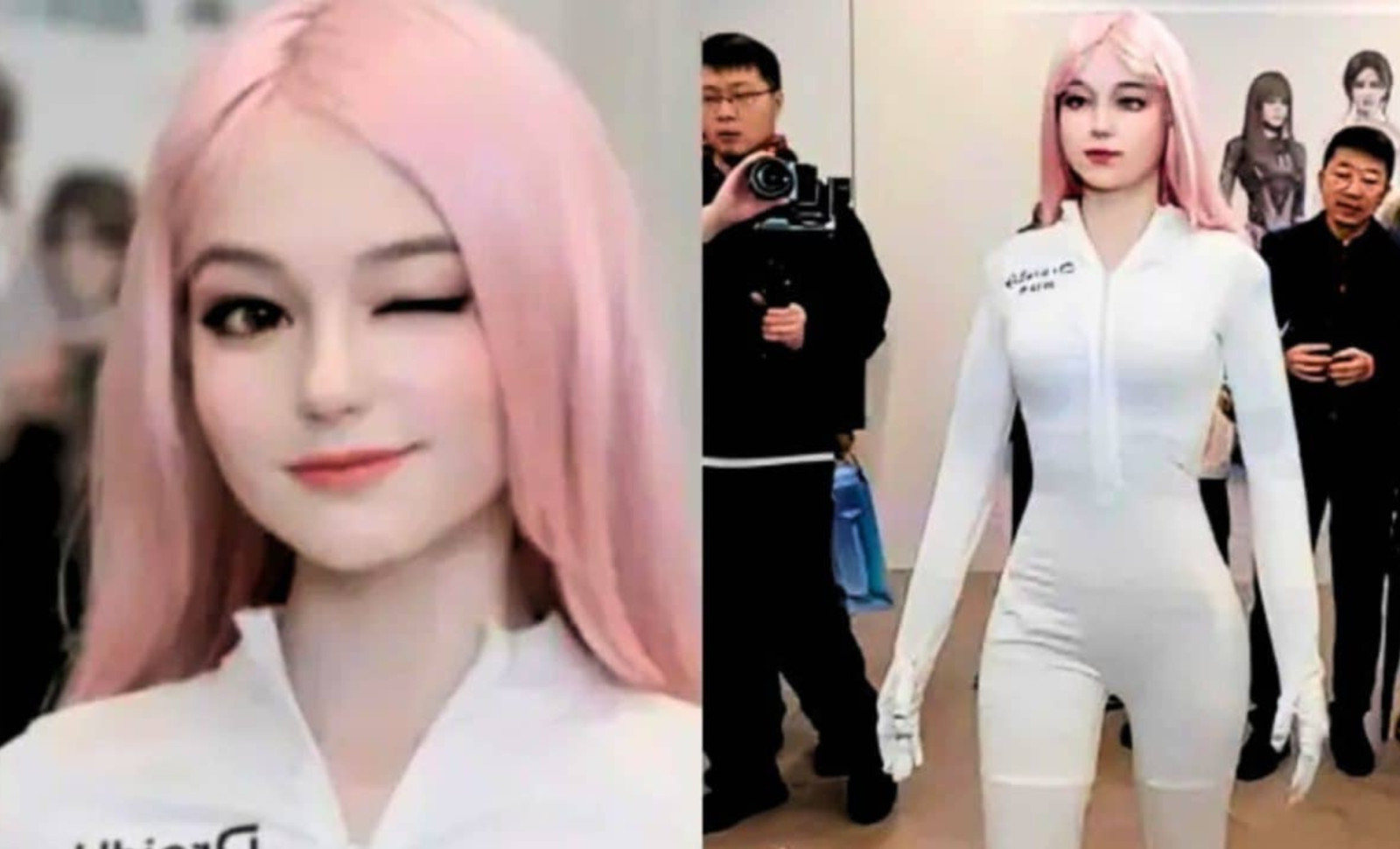
Typical robots are immediately recognizable by their mechanical sounds, stiff movements, or halting pauses. Moya defies these norms entirely. When Shanghai-based DroidUp unveiled their latest humanoid earlier this year, audiences on Chinese social media were captivated by its smooth motions, ability to smile, maintain eye contact, and nod — responses ranging from awe to discomfort.
This discomfort is linked to what scientists term the uncanny valley, where human-like machines seem eerily off, triggering unease. While many robot engineers avoid this zone by designing distinctly mechanical appearances, DroidUp chose to push beyond it, aiming for a more lifelike presence.
Revealed in Shanghai in early 2026, Moya measures 1.65 meters, weighs 32 kilograms, and boasts a walking posture accuracy rate of 92 percent, per the manufacturer. To strengthen realism during interaction, it maintains a body temperature between 32 and 36 degrees Celsius. The robot replicates human micro-expressions, holds steady eye contact, and intriguingly, operates without traditional motor joints in its limbs. DroidUp brands it as the first fully biomimetic embodied intelligent robot, designed to imitate not just the look but the authentic movement of living human tissue.

Innovating Robotic Movement Mechanics
Most humanoid robots rely on electric servos or hydraulic actuators fixed in rigid frameworks, causing abrupt, segmented motions due to force concentration at fixed pivots. Humans, in contrast, have a more integrated movement approach where the body adjusts naturally as limbs move.
Moya’s arms and legs function through pneumatic artificial muscles—air-filled chambers that contract and relax dynamically. This spreads force evenly instead of localizing it at joints, producing seamless fluid movement. The underlying skeleton is crafted from lightweight composite materials shaped to match actual human bone structure. This offers realistic attachment points for the artificial muscles mirroring our musculoskeletal system. Its spine flexes and rotates naturally, allowing torso and shoulder shifts akin to a human reaching out. There are no rigid stops mid-motion; the gestures appear intentional and natural—essential for prolonged human-robot interaction.
AI-Driven Control for Natural Movement
Using flexible, pneumatic muscles presents complex control challenges absent in rigid robots. These muscles react differently depending on external conditions such as load, air pressure variations, and fatigue, making standard motor-control algorithms ineffective since commands yield varying outcomes.
DroidUp’s solution is an embodied intelligence framework that anticipates muscle deformation before executing movement. Instead of issuing commands and correcting errors afterward, Moya’s system predicts how its muscles will behave and adjusts simultaneously.
As Interesting Engineering explains, this enables Moya to fine-tune posture and force proactively, avoiding overcorrection or snapping motions. Footage shows its torso and shoulder movements blend smoothly and continuously during reaching tasks, reflecting deliberate, fluid motion rather than reactive fixes.
Designed for Interaction, Not Automation
DroidUp is not aiming for industrial use. The South China Morning Post reports the company focuses on healthcare and educational contexts where robots engage closely with people over long periods. Here, uncanny or unsettling machines are unacceptable despite technical prowess. The micro-expressions, regulated body temperature, and natural gait serve practical purposes to foster trust and comfort during extended human contact.
The wider robotics industry splits between distinctly mechanical designs avoiding the uncanny valley, and highly capable machines optimized for strength and endurance beyond human limits.
DroidUp advocates for a third path: embracing soft robotics technology and the precision of biological movements as essential for robots designed to collaborate with humans. Achieving this requires seamless integration of materials science, AI control, thermal regulation, and facial expression mechanics — none overshadowing the others.
From Prototype to Practical Use
Currently a prototype, Moya’s platform details remain largely under wraps. RoboHorizon’s coverage hints it may utilize the Walker 3 chassis, though this is unconfirmed by DroidUp. A key engineering hurdle remains boosting force output.
Pneumatic muscles traditionally generate less raw power versus hydraulic or electric systems of comparable size. Balancing greater strength without compromising Moya’s smooth fluidity is the team’s ongoing challenge.
Future iterations might combine small electric motors for heavy tasks alongside pneumatic muscles for nuanced control and spinal articulation. With an estimated base price near 1.2 million yuan, Moya targets institutional buyers primarily in healthcare and education, aiming for commercial availability by late 2026.
- Categories:
- News






0 comments
Sign in to Comment