
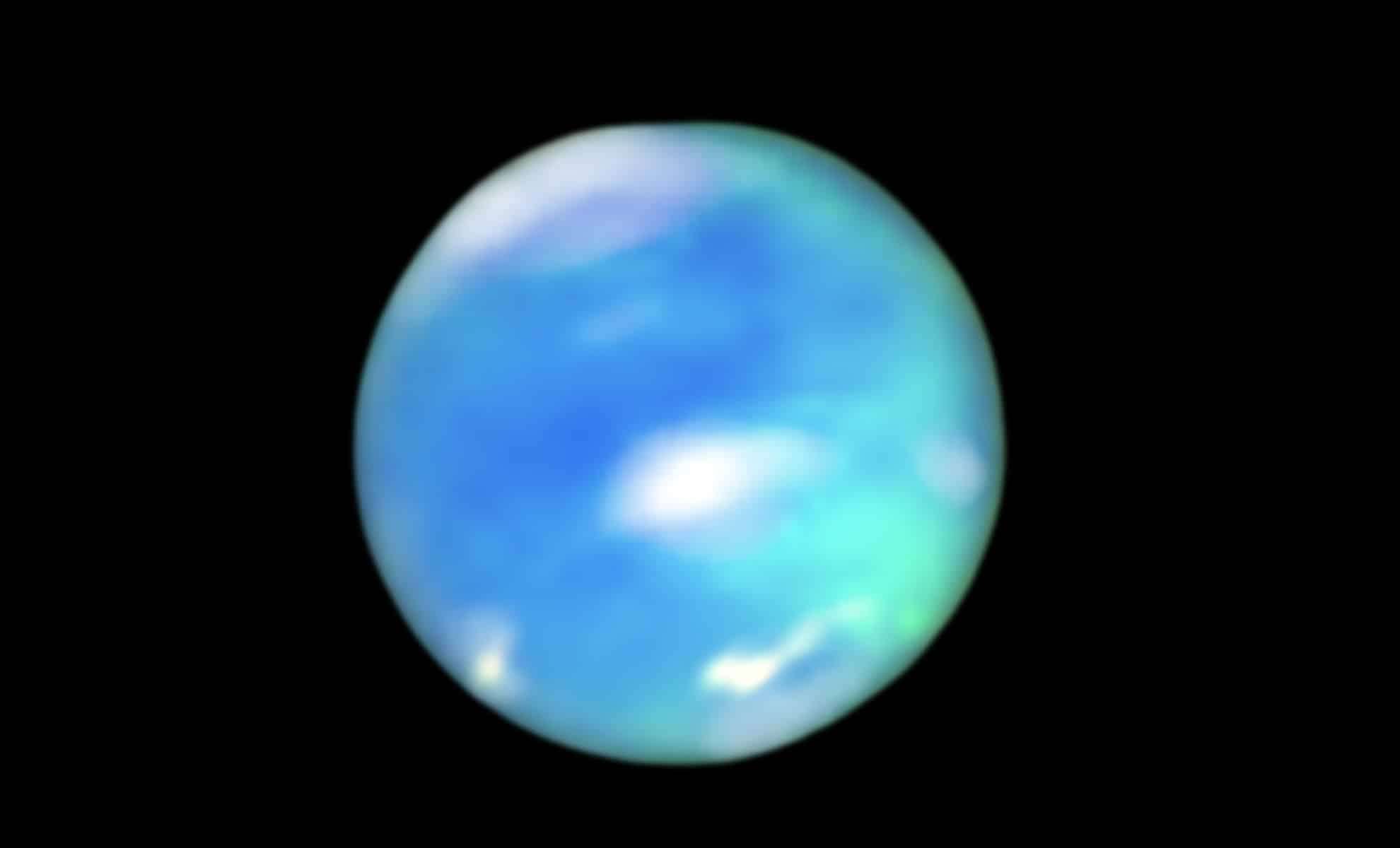
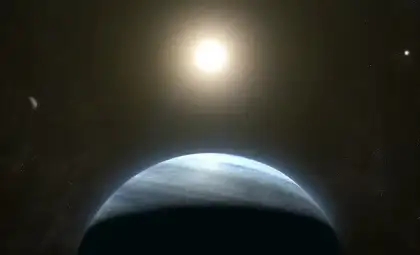
NASA’s James Webb Space Telescope has achieved a groundbreaking feat by vividly detecting auroras in Neptune’s upper atmosphere for the first time. This discovery unveils a long-sought atmospheric phenomenon, providing new insight into the ice giant’s unusual magnetic environment, as highlighted in NASA Science. Webb’s near-infrared capabilities have made visible these elusive auroral displays, illuminating previously inaccessible details about Neptune’s magnetic behavior.
Decades-Old Mystery Finally Illuminated
Early indications of auroral presence were recorded during the 1989 Voyager 2 mission, yet direct imaging remained unattainable—until Webb’s observations in June 2023 using the Near-Infrared Spectrograph (NIRSpec) definitively captured the vibrant auroras glowing in Neptune’s upper atmosphere.
“The clarity and intricacy of Neptune’s auroral patterns captured by Webb’s near-infrared sensors were astonishing,” remarked Henrik Melin, who led the research team. “It’s remarkable not just to detect these auroras, but to see such clear structural detail.”

These striking displays appear as cyan-hued patches in Webb’s data, generated when charged particles, primarily originating from the Sun, collide with Neptune’s atmospheric gases, emitting light in the process.
Detecting the Signature of Ionized Hydrogen
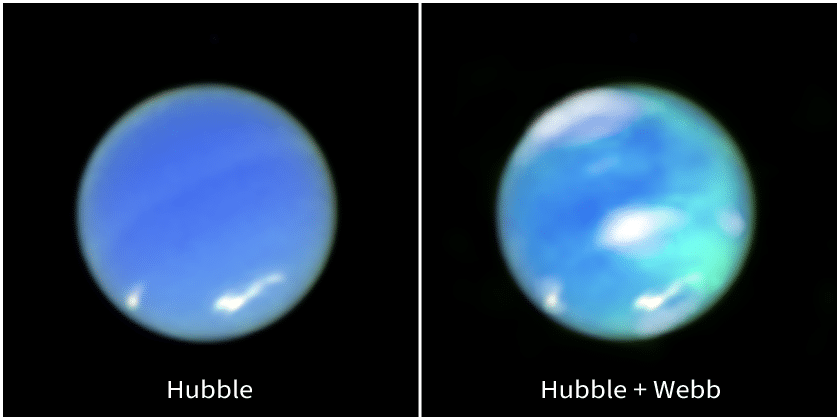
Beyond imagery, Webb identified a defining spectral feature — a distinct emission line from H₃⁺, the ionized hydrogen molecule long associated with auroral activity in gas giants.
Heidi Hammel, an interdisciplinary scientist on the Webb project, commented, “While H₃⁺ has served as a hallmark of auroras on Jupiter, Saturn, and Uranus, Webb is the first instrument capable of confirming its presence accompanying Neptune’s auroras.”
Interestingly, Neptune’s auroras differ markedly in location compared to Earth’s, occurring near mid-latitude regions analogous to the position of South America on Earth, rather than at the poles.
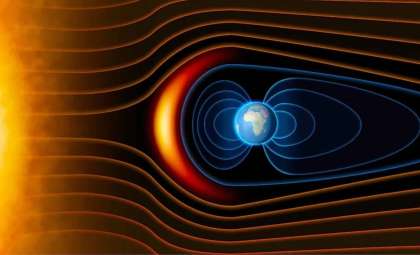
This atypical placement stems from Neptune’s dramatically tilted magnetic field—measured to be 47 degrees off its rotation axis by Voyager 2—which allows auroral activity far from traditional polar zones, complicating detection and forecasting efforts.
Unusually Low Temperatures Shed Light on Auroral Behavior
In addition to capturing these glow events, Webb’s measurements revealed the temperature of Neptune’s ionosphere for the first time since the Voyager 2 mission, yielding startling results.
“The upper atmosphere has cooled substantially, dropping by several hundred degrees since 1989,” said Melin. “Our 2023 readings show temperatures barely above half of those recorded three decades ago.”
This significant cooling likely obscured the auroras from earlier instruments, highlighting Neptune’s dynamic atmospheric fluctuations despite its vast distance — 30 times farther from the Sun than Earth.
Such dramatic temperature shifts not only explain the historical absence of clear auroral detection but also raise intriguing questions about the long-term influences of solar activity on distant ice giants.
Exploring Neptune’s Complex Magnetic Dynamics
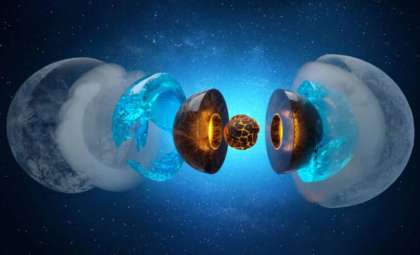
The Webb data offer more than spectacular visuals—this information provides essential clues toward understanding Neptune’s distinctive and asymmetric magnetic field, one of the solar system’s most unusual.
Future observations aiming to monitor Neptune across an entire 11-year solar cycle could reveal how solar variations affect its magnetosphere, potentially unlocking secrets about the planet’s internal structure beneath the clouds.
Leigh Fletcher, co-author of the study, emphasized, “This breakthrough demonstrates the critical role of infrared instruments on upcoming missions to Uranus and Neptune. Webb has opened a vital window into the hidden ionospheres of the giant planets.”
By finally revealing Neptune’s previously unseen auroral displays, the James Webb Space Telescope continues to revolutionize our understanding of the remote and frozen edges of our solar system.
- Categories:
- News






0 comments
Sign in to Comment