
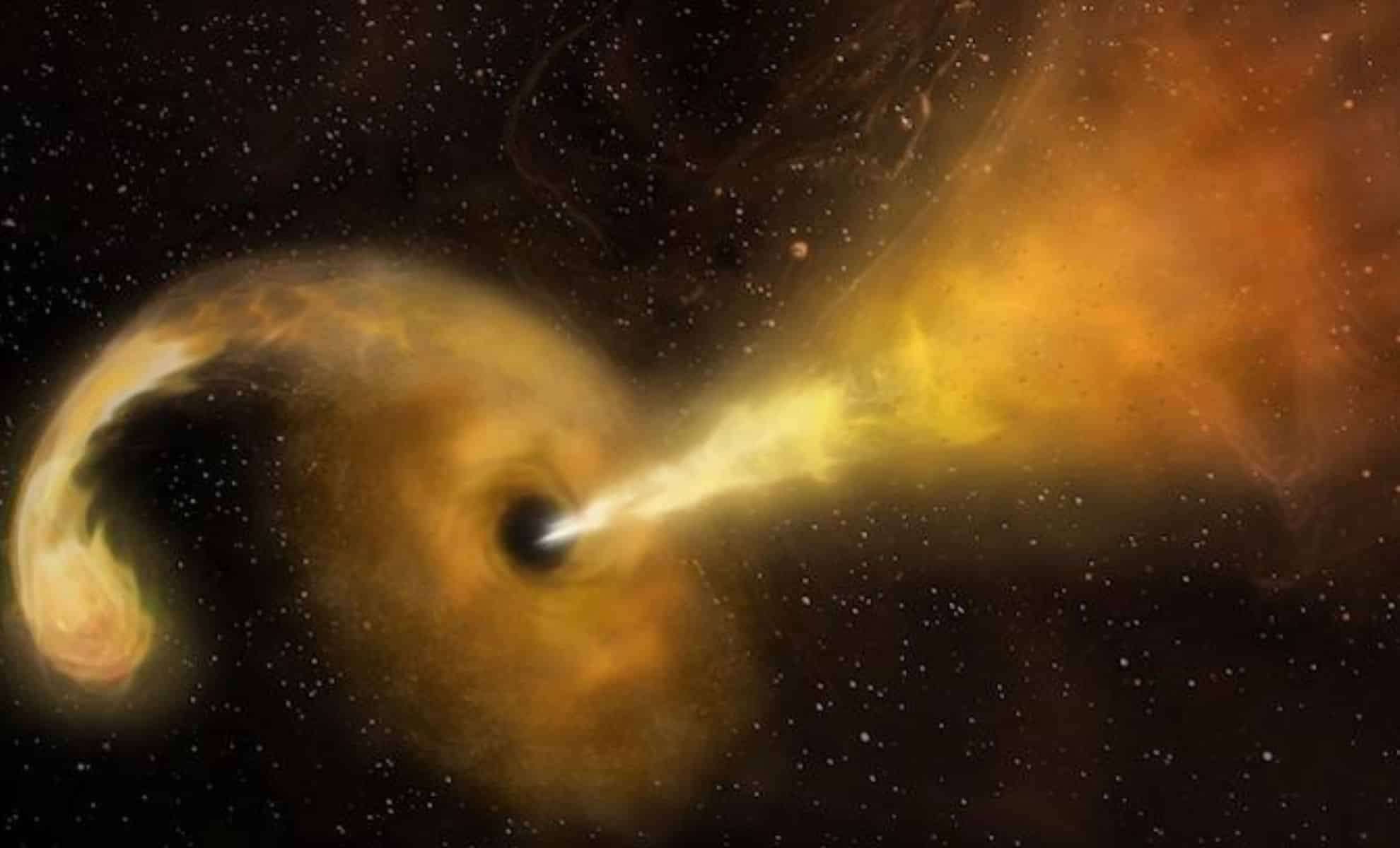
Researchers have recently identified a cosmic explosion that could transform current views about astrophysical events. Labeled EP240408a, this event was initially detected by the Einstein Probe on April 8, 2024, and at first, it resembled a classic gamma-ray burst (GRB)—an intense emission of X-rays from space. But subsequent observations involving multiple telescopes—both terrestrial and space-based—measured emissions across ultraviolet, optical, near-infrared, radio, X-rays, and gamma rays, revealing anomalies unlike anything documented before.
The discovery has stirred excitement among astrophysicists. The explosive event’s unique features challenge established definitions of gamma-ray bursts, igniting speculation that EP240408a could represent a previously unknown cosmic occurrence. The precise nature of this phenomenon remains elusive, with scientists actively investigating its origins.
Could This Be a Novel Cosmic Phenomenon?
At first, EP240408a exhibited traits typically associated with gamma-ray bursts, which are known for brief yet extraordinarily bright blasts of X-rays and gamma rays. These bursts typically last from seconds to several hours. However, EP240408a presented unusual behavior: a ten-second initial X-ray flare followed by an extended plateau emission that lasted about four days, then a rapid fade within a single day. This extended timeframe far exceeds that of most gamma-ray bursts, which usually conclude within hours.

“EP240408a fits some characteristics seen in various known phenomena but does not completely align with any,” explains Brendan O’Connor, an astronomer at Carnegie Mellon University and lead researcher on the project. “Its brief but highly luminous nature defies typical explanations, leaving open the possibility that we are witnessing a new class of event.”
Despite its X-ray brilliance, the explosion lacked expected patterns common to other cosmic explosions. As noted by O’Connor, “Events this bright in X-rays generally coincide with strong radio emissions, yet EP240408a showed no detectable radio waves.” This absence perplexed astronomers, since prior evidence implied such energetic blasts should also emit significant radio signals.
Examining the Tidal Disruption Event Explanation
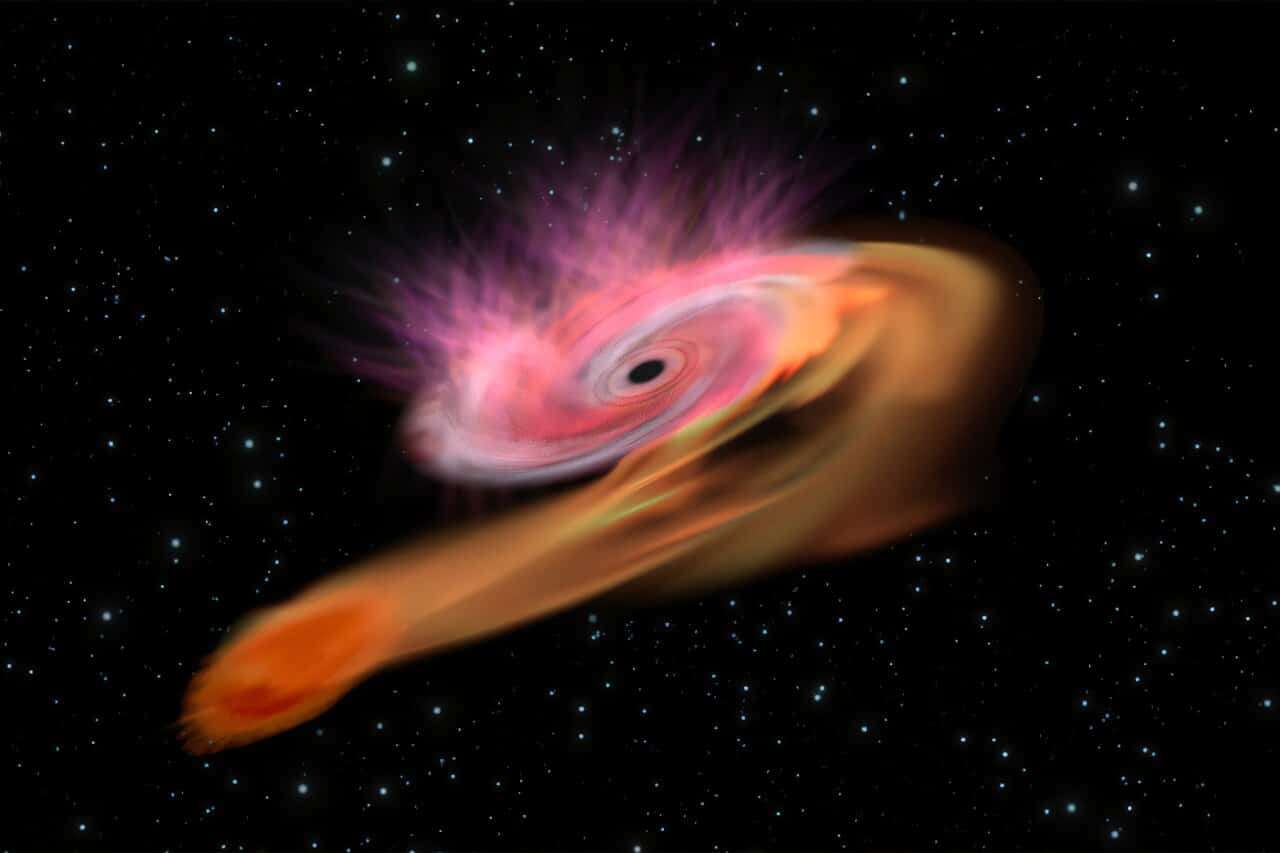
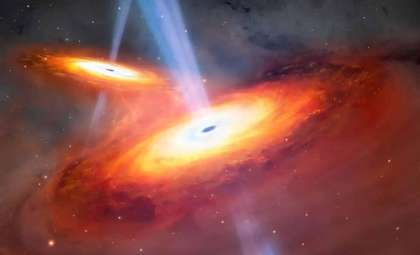
After excluding several scenarios, scientists proposed that EP240408a was likely a tidal disruption event (TDE), where a black hole tears apart and consumes a star. This process can create powerful, high-velocity jets of stellar material. If these jets point toward Earth, they could explain the unusual light signatures observed in EP240408a.
In this case, researchers suspect the burst resulted from a medium-sized black hole disrupting a white dwarf star, the dense core left after a star exhausts its fuel. The gravitational forces would generate a swift jet directed at Earth, enabling detection of this rare cosmic event.
Yet, the missing radio signals remain an enigma. According to O’Connor, “Typically, prolonged bright X-ray sources have strong radio emissions,” which EP240408a lacks. One potential reason is the jet material has not decelerated sufficiently to create radio waves, a process that can take hundreds or thousands of days, possibly explaining why radio waves were absent immediately after the event.
Implications for Understanding Gamma-Ray Bursts
Should EP240408a be verified as a TDE, it could reveal a new category blending traits of gamma-ray bursts with distinct qualities. Its deviation from known gamma-ray burst classifications prompts reconsideration of how these energetic events are categorized, suggesting a broader diversity of cosmic explosions exists beyond current knowledge.
This finding also prompts fresh inquiries into black hole behavior and stellar interactions. Confirming this theory would imply medium-sized black holes exert a more profound influence on their surroundings than previously recognized, potentially advancing comprehension of black hole physics, star life cycles, and galactic dynamics.
Advancing the Exploration of Cosmic Explosions
Going forward, astronomers will continue monitoring EP240408a and related phenomena. Additional data, especially at radio wavelengths, is crucial for uncovering its origin. Should radio emissions eventually emerge, the TDE theory would gain strong support. Persistent radio silence, however, might hint that EP240408a represents an exceptionally rare type of gamma-ray burst or possibly an entirely new kind of transient cosmic event.
The observations gathered from instruments like the Nuclear Spectroscopic Telescope Array (NuSTAR), Swift, and the Very Large Array (VLA) have already yielded valuable insights, yet much remains to be learned. Scientists remain hopeful that ongoing investigations will confirm or challenge the tidal disruption hypothesis, ultimately refining theoretical models of cosmic explosions.
In the long term, studies of EP240408a could not only illuminate the nature of this extraordinary cosmic blast but also steer future astronomical research in new directions. Recognizing such events as part of a broader class may profoundly reshape our understanding of universal processes.
This article has been republished from the following materials. Note: material may have been edited for length and content. For further information, please contact the cited source.
- Categories:
- News






0 comments
Sign in to Comment