
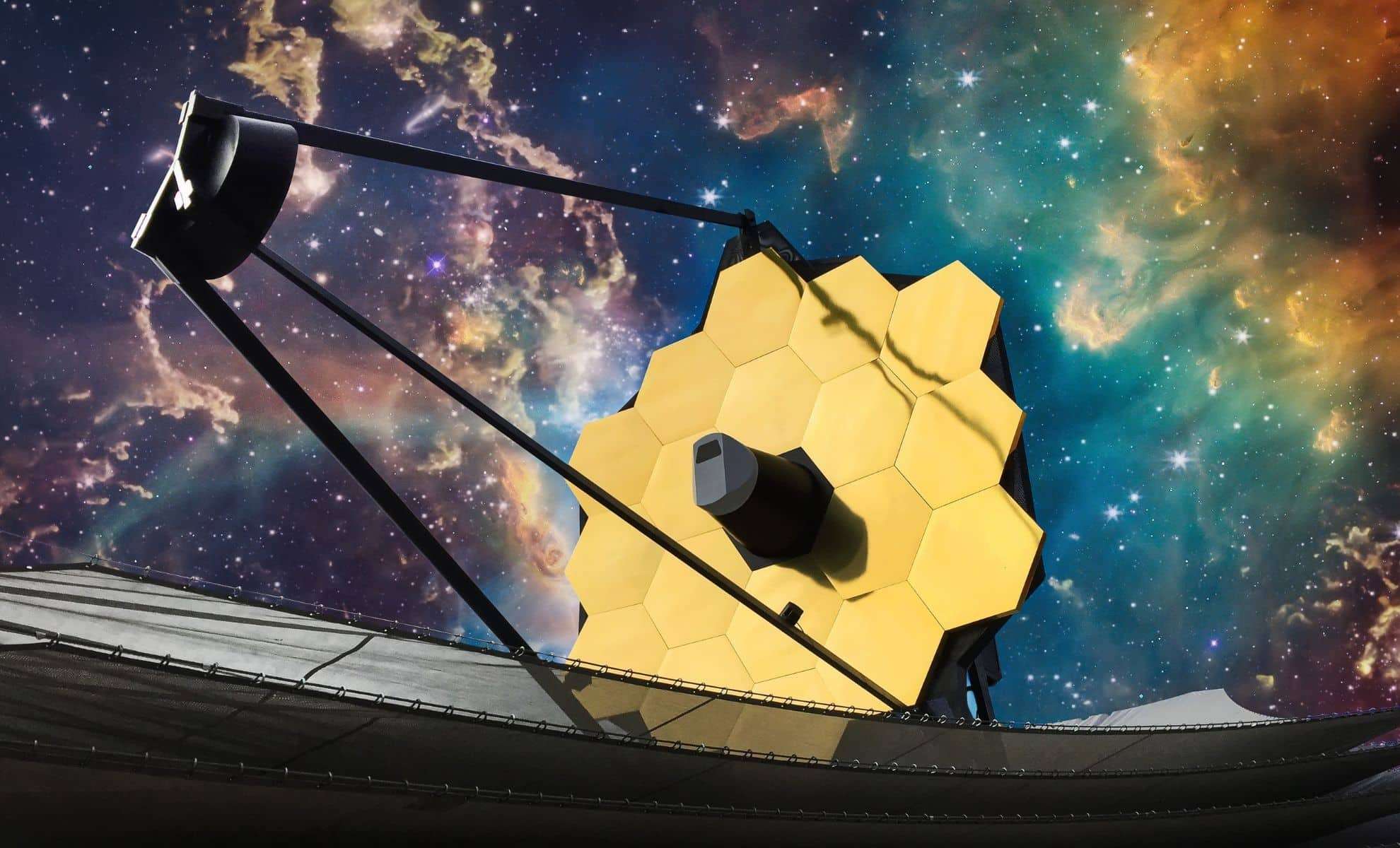
A recent investigation featured in the Astrophysical Journal Letters has revealed an intriguing and perplexing discovery: the universe is growing at a pace that challenges established cosmological theories. By harnessing the extraordinary capabilities of the James Webb Space Telescope (JWST), scientists have revisited a longstanding enigma that may compel a major shift in our cosmic understanding.
Imagine re-running a complex calculation with an improved tool, only to arrive at the same puzzling outcome.
Conflicting Expansion Rates
For some time, astronomers have grappled with conflicting figures for the universe’s expansion speed—the so-called Hubble constant. Different approaches produce discordant results.

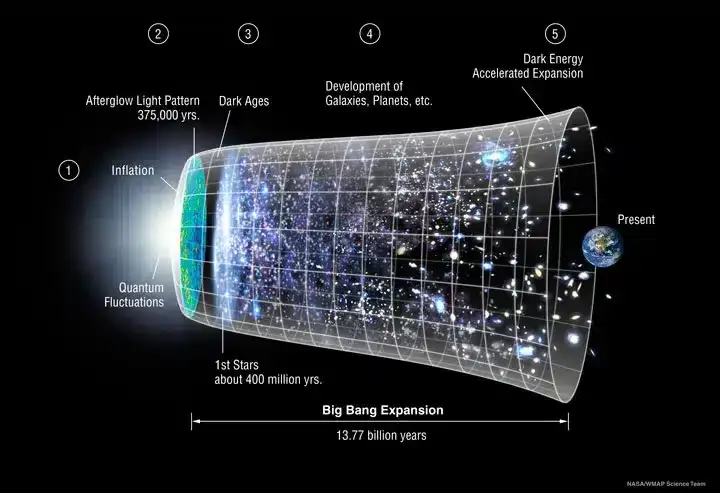
One technique examines the primordial universe through the ancient cosmic microwave background (CMB) radiation—relic light dating back roughly 380,000 years after the Big Bang. This approach, rooted in the Lambda Cold Dark Matter framework, suggests an expansion rate near 67 kilometers per second per megaparsec.
The alternate method relies on observing nearer, luminous markers such as Cepheid variable stars and Type Ia supernovae, which act as cosmic distance indicators. These methods consistently calculate a faster expansion, closer to 73 km/s/Mpc. This significant mismatch is known as the Hubble tension, and it remains a central puzzle in contemporary cosmology.
The Role of the James Webb Telescope
Some experts suspected that errors in data from the Hubble Space Telescope—perhaps due to overlapping starlight or resolution constraints—might explain the discrepancy. However, this hypothesis has been challenged by new JWST observations.
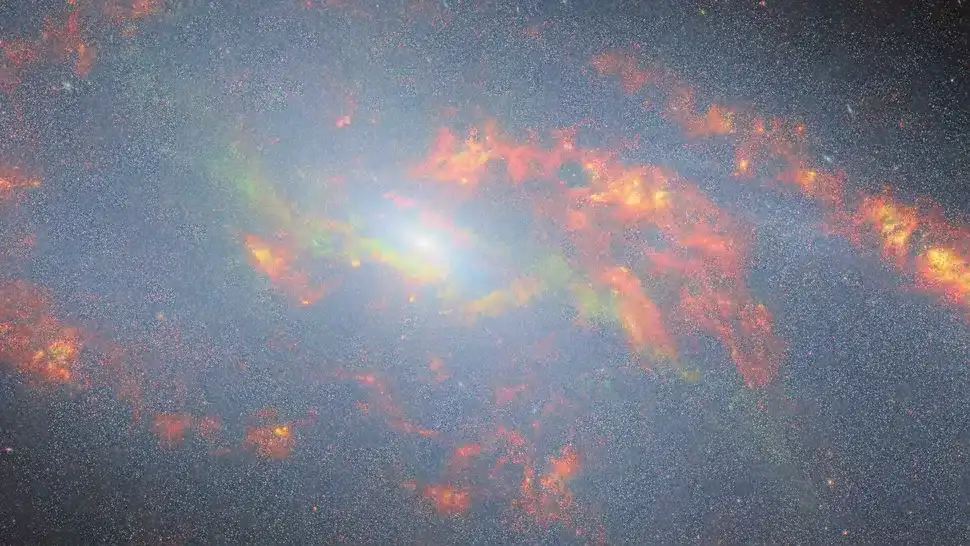
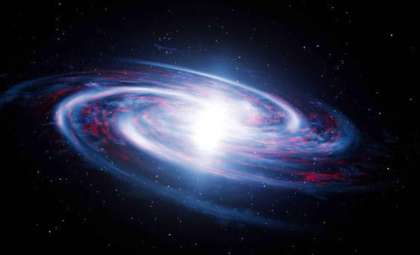
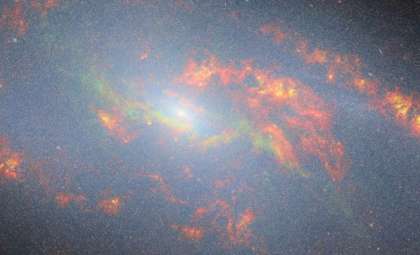
Nobel Prize winner Adam Riess and collaborators used JWST to monitor more than 1,000 Cepheid stars within five galaxies, including Messier 106, a spiral galaxy roughly 23 million light-years distant. Thanks to JWST’s advanced infrared capabilities, they could observe these stars with exceptional clarity, penetrating cosmic dust.
Remarkably, their findings nearly exactly matched previous Hubble measurements. Riess commented, “We have now covered the full range of what Hubble observed, allowing us to dismiss measurement error as the root cause of the Hubble tension with high confidence.”
Webb’s data derived an expansion rate close to 72.6 km/s/Mpc, just slightly below Hubble’s 72.8 km/s/Mpc, effectively ruling out instrumental error.
What Does This Mean?
With two top-tier space telescopes in agreement, the inconsistency must stem from our theoretical models. Riess explains, “The gap between observed expansion speeds and predictions from the standard cosmological model implies our cosmic comprehension might be incomplete.”
It’s akin to following a trusted recipe precisely yet consistently ending up with an unexpected outcome. Maybe the recipe lacks a key element.
This hidden factor could be phenomena such as early dark energy, a speculative force pushing the universe’s expansion shortly after its birth. Other proposals include unusual particles, novel dark matter properties, or primordial magnetic fields that distorted spacetime in complex ways.
The Path Forward in Cosmology
JWST’s breakthrough marks a pivotal moment. By corroborating Hubble’s expansion rate, it dispels the final doubts about measurement errors being behind the Hubble tension. Siyang Li, a Johns Hopkins graduate student on the project, remarked, “JWST’s observations offer us the clearest and most detailed views of the universe to date.”
The next challenge lies with theoreticians. According to cosmologist Marc Kamionkowski, who was not part of the study, “One explanation for the Hubble tension may be missing physics in our understanding of the early universe.” He mentions possibilities ranging from new particle physics to unconventional energy dynamics occurring moments after the Big Bang.
Though definitive solutions remain elusive, this mystery is inspiring a fresh wave of theoretical innovation.
- Categories:
- News




0 comments
Sign in to Comment