
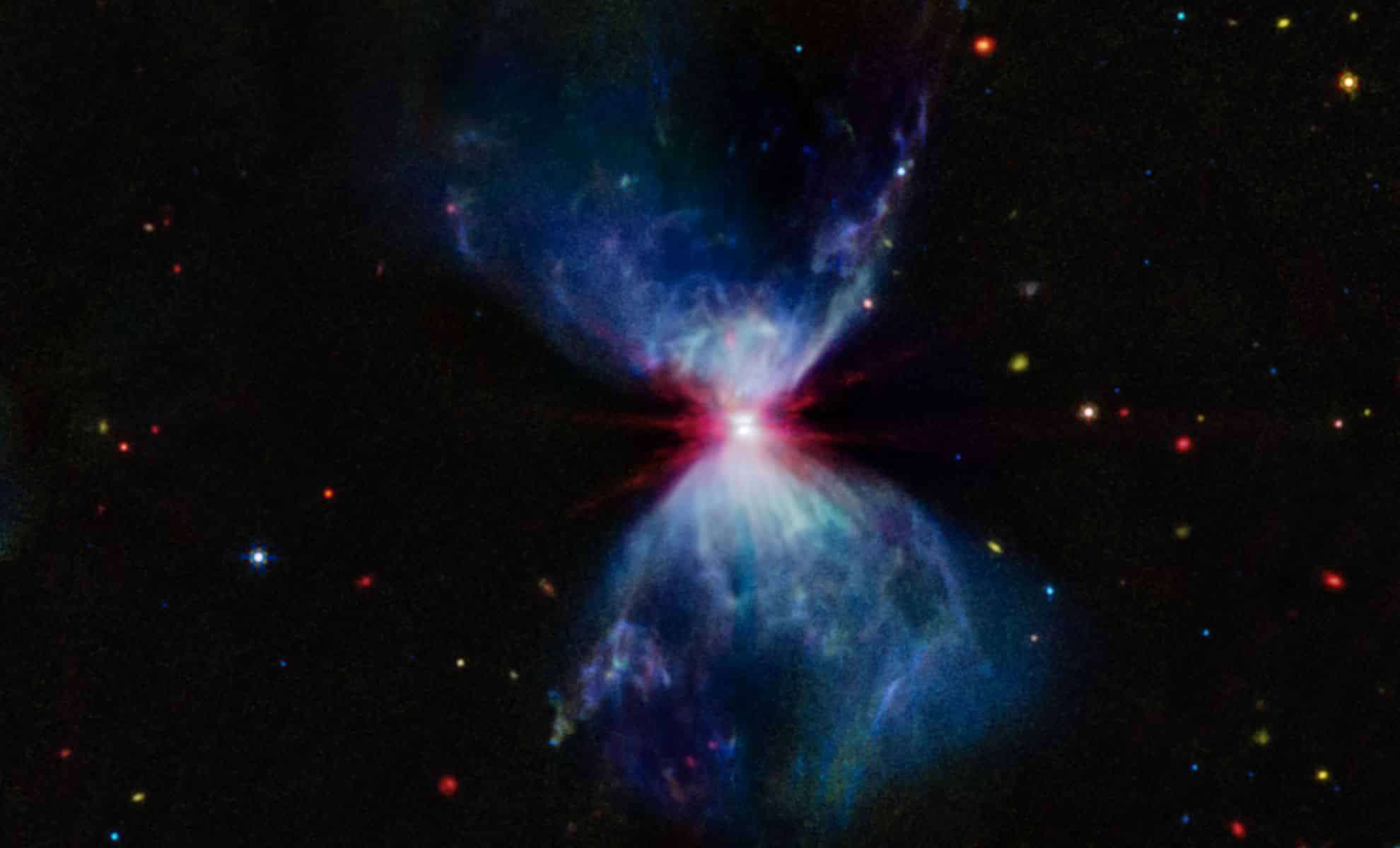
The James Webb Space Telescope (JWST) has delivered an extraordinary view into the earliest phases of stellar birth, revealing a protostar's dramatic evolution inside a radiant hourglass-shaped nebula.
This breakthrough observation sheds light on the complex mechanisms driving star formation and enhances our understanding of how young stars develop and interact with their surroundings.
Exploring Protostar L1527
At the heart of this discovery lies protostar L1527, embedded within the dense molecular cloud named L1527. Using the JWST’s Mid-Infrared Instrument (MIRI), astronomers have captured vivid imagery showcasing the protostar as it undergoes critical developmental changes.


This protostar, estimated to be about 100,000 years old, is actively gathering mass from its surrounding protoplanetary disk. The distinctive hourglass form visible in the imagery arises from powerful bipolar outflows emitted by the protostar that encounter and shape the enclosing molecular cloud.
Insights from Mid-Infrared Observations
The MIRI capture reveals intricate details of the protostar's immediate environment. At the center of the hourglass, the protostar is circled by a thick protoplanetary disk viewed edge-on, appearing as a dark band.
Material from this disk feeds the protostar, which in turn generates energetic outflows impacting the molecular cloud, producing bow shocks. These interactions illuminate filamentary features that form the hourglass shape, offering a dynamic look at star formation in progress.
Gas, Dust, and Their Roles
The mid-infrared data from MIRI distinguishes among the different components surrounding the protostar. Blue hues indicate the presence of polycyclic aromatic hydrocarbons, while red regions highlight dense concentrations of dust and gas around the young star.
This contrast provides valuable clues about how the protostar’s outflows are reshaping their surroundings, improving our grasp of the intricate processes active during the initial phases of stellar creation.
Protostar's Path Forward
As the protostar continues to develop, it will process and redistribute much of the surrounding material. Over time, its powerful jets and outflows are expected to clear away the molecular cloud, eventually revealing the star more clearly.
JWST’s detailed monitoring of this progression offers critical insight into the evolving dynamics between young stars and their formative environments.
Consequences for Star Formation Understanding
The close-up views of L1527 yield important knowledge about star formation mechanisms. The interplay between the protostar’s energetic outflows and the molecular cloud not only configures the local area but can also influence star formation activity nearby, either triggering or inhibiting the birth of new stars depending on conditions.
Effects on the Star-Forming Neighborhood
As the protostar matures, its ongoing interaction with the ambient molecular cloud will impact the broader stellar nursery. Jets and outflows emanating from L1527 have the power to compress gas, facilitating new star formation, or to disperse material, suppressing further stellar births. These insights provide a window into the forces shaping star formation zones.
The Crucial Role of the James Webb Space Telescope
The James Webb Space Telescope, developed in partnership between NASA, the European Space Agency (ESA), and the Canadian Space Agency (CSA), is revolutionizing our comprehension of the cosmos. Observations like those of protostar L1527 equip scientists with vital data that unravel the mysteries of how stars and planetary systems emerge.
Looking Ahead: New Horizons in Cosmic Discovery
Discoveries stemming from JWST’s findings not only deepen our understanding of star formation but also set the stage for future explorations that will decode the processes governing the origin and growth of stars throughout the galaxy and beyond. The telescope's continuing mission promises to unlock many more cosmic secrets.
- Categories:
- Astronomy ,
- Space ,
- Nasa ,
- Aircraft



0 comments
Sign in to Comment